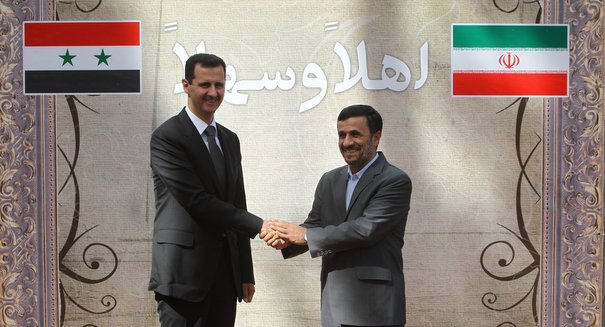
Iran’s influence in the Middle East is threatened by domestic divisions between Ayatollah Khamenei and President Ahmadinejad as well as the continuing upheaval in Syria, which could undermine Tehran’s principal ally in the region.
Assad Regime in Syria Crucial to IranThis was adapted from an interview originally published by CFR.org.
After months of opposition in Syria to the rule of President Bashar al-Assad, if the Syrian government were to fall “ it would be a tremendous blow to the Iranian regime,” says Iran expert, Karim Sadjadpour. Not only is Syria Iran’s chief regional ally, Syria is the country which allows Iran to supply its “crown jewel” in the Middle East, the Hezbollah movement in Lebanon. He also says that it is unlikely that the comments made by Iran’s foreign minister over the weekend that Syria should take account of the views of the protestors was a serious remark. He says that Iran believes strongly that one should not give in to protestors because to do so “doesn’t alleviate the pressure, it projects weakness and invites even more pressure.”
How is Iran reacting to the upheavals in the Arab world? They’ve been fairly quiet haven’t they?
I’m sure they aspire to influence the upheavals and power vacuums that are taking place in various Arab countries as much as possible, but their ability to do so is somewhat limited. I don’t see Iranian influence being a major factor, for example, in post-Ghaddafi Libya . There aren’t strong cultural or religious links between the two countries. Iran has perhaps greater inroads with the Muslim Brotherhood in Egypt given their mutual ties to Hamas, but it’s unlikely that proud, predominantly Sunni Arab Egypt will take its cues from Shiite Iran.
Initially Iran wholeheartedly embraced the Arab upheavals when it appeared that only U.S.-allied autocracies were at risk, but the uprisings in Syria are hugely concerning to Tehran. The Assad family in Damascus has been Iran’s only regional ally since the 1979 revolution, and if it were to fall it would be a tremendous blow to the Iranian regime. Hezbollah in Lebanon is the crown jewel of the Iranian revolution, and Syria has been the key conduit to Iran’s patronage of it. If the Assad regime were to fall it would make it logistically very difficult for Iran to continue to support Hezbollah the same way it has over the past few decades.
What do you think about the comments over the weekend from the Iranian foreign minister who said that Syria should listen to the protests of its people?
I think the violence and brutality in Syria escalated to such a level that Iran was forced to publicly acknowledge it. But I am sure that at the same time, in private, the Iranians have offered Assad their unequivocal support and advised him not to compromise or reform. While publicly they’ve asked the Assad regime to listen to the voice of the people, I am sure privately they’ve advised him not to succumb to popular demands. The long held strategy and philosophy of the hardliners in Iran is that you never compromise under pressure because it doesn’t alleviate the pressure; it projects weakness and invites even more pressure.
We’re at a loss to know exactly what’s going on, but are there signs that the Iranians are giving tangible support through their intelligence and other security agencies to the Assad regime?
Given how crucial the Syrian-Iranian relationship is to Iran, I am sure that Tehran is offering everything it possibly can to buoy Assad, whether it’s financial, tactical, or military support. We’ve heard that Iran has offered Syria technological aid to help control the internet and jam satellite broadcast. I suspect Iran is doing everything in its power to ensure is that the Assad regime does not fall.
Has anything come of Iran’s efforts to reopen relations with Egypt?
Despite the fact that the chief impediment, from Iran’s vantage point, to better relations with Egypt was President Hosni Mubarak and his alliance with the United States, this issue is still complicated in Tehran. Supreme Leader Ayatollah Ali Khamenei sees it as his duty to remain loyal to the policies and ideals of Ayatollah Khomenei, and the breaking of ties with Egypt was something that Khomeini initiated given late-President Anwar Sadat’s friendship with the Shah of Iran.
If Egypt maintains its close rapport with the United States—including its strong military alliance–I think it could be some time before Egypt and Iran normalize relations. Another point of contention is the street in Tehran named after Sadat’s assassin, Khalid Islambouli. Egypt has long requested that Iran change the name of that street and Iran has long refused.
On other international issues affecting Iran, what do you think will happen to the American hikers who were recently sentenced to eight years in prison?
I think the term we should be using is no longer “hikers” but “hostages.” Iran has made it very clear that they would like to barter these young men for Iranians who are in U.S. prisons for various reasons, whether it be arms trading or other illicit activities. What I find interesting is that when you look at Iran’s neighbors Dubai and Turkey, they’ve managed to build thriving economies by trading in goods and services. Yet Iran, even 32 years after the Iranian revolution and subsequent hostage taking, remains in the business of trading in human beings.
It is somewhat reminiscent of the hostages which Iran took not only in 1979, but also the hostage taking in 1980s Lebanon via Hezbollah. It is very difficult for the U.S. government to deal with hostage taking because the concern is that if you release Iranian prisoners in exchange for Americans, you are simply rewarding bad behavior and encouraging hostage taking in the future.
On the internal situation, there are continuing reports of people close to the Supreme Leader Khamenei seeking to get rid of President Mahmoud Ahmadinejad. How big a split is there in the leadership in Iran?
I think Ayatollah Khamenei and his royal court grew tired of Ahmadinejad’s insubordination and delusions of grandeur and wanted to put him in his place. That said, I think Khamenei will want to keep Ahmadinejad in office until his term ends in 2013 because Khameni’s modus operandi is to wield power without accountability; that requires a president who has accountability without power. So a weakened, lame-duck Ahmadinejad who can absorb popular criticism for deteriorating economic conditions or political and social repression is ideal for Khamenei. He can continue to try and project the image of a magnanimous guide staying above the fray, though I think far fewer people are fooled by this ruse after the contested 2009 election.
I thought it was interesting over the weekend that Mehdi Karrubi who was one of the leaders of the opposition to Ahmadinejad in 2009, has been not even seen by his wife for six weeks, and is reportedly been under psychiatric pressure to “confess” to crimes.
Both Karrubi and Mir Hossein Moussavi have been essentially in solitary confinement for the better part of the last year. I think the regime was shrewd not to send them to Evin prison, which could have provoked an international or domestic outcry. Instead their homes are their prisons. They are not allowed to see anyone, they’re not allowed contact with the outside world. An advisor to Karoubi told me that if they were in Evin they’d at least be allowed 30 minutes daily “outdoor time”, which they are currently deprived.
Looking at the Iranian opposition and comparing it to the opposition movements elsewhere in the Middle East, I think there is one key distinction. Whereas the opposition movements in places like Syria, Egypt, and Libya have all been seemingly united in wanting to bring down their respective regimes, the Iranian opposition still remains divided about their precise endgame.
People like Moussavi and Karrubi who were participants in the 1979 revolution, and up until 2009 were insiders in the Islamic Republic, still claim that they are seeking a reform of the system. But I think many among Iran’s younger generations would like to see a more dramatic change. I think that’s one reason, among many, why you haven’t seen the protests in Iran snowball like they have elsewhere in the Middle East; the Iranian opposition has yet to coalesce around a common end game.
Do you get the impression if students, if they had their druthers would like a different kind of regime?
In my experience few younger generation Iranians, many of whom have access to the internet and satellite television, and have traveled to nearby countries like Turkey and Dubai, think that having a Supreme Leader who purports to be the Prophet’s representative on earth, is an attractive form of government in the 21st century.
Yet at the same time I think the word ‘revolution’ is not romanticized in Iran the same way it is currently in the Arab world. My friend Rami Khouri, a well-regarded Arab intellectual, recently wrote that it is condescending to refer to the current upheavals in the Arab world as an “Arab Spring”, they should be referred to as “Arab Revolutions”.
In Iran I think it’s precisely the opposite. Given the experience of the last 32 years, the term “revolution” doesn’t have positive connotations for many Iranians. It represents intolerance, repression, and backwardness. “Spring” on the other hand has positive connotations, a rebirth of sorts, something more progressive and tolerant. I suspect far more Iranians would welcome an Iranian spring rather than another unpredictable revolution.
Karim Sadjadpour is a senior fellow at the Carnegie Endowment for International Peace, where he focuses on Iran and U.S. foreign policy toward the Middle East.
Carnegie India does not take institutional positions on public policy issues; the views represented herein are those of the author(s) and do not necessarily reflect the views of Carnegie, its staff, or its trustees.
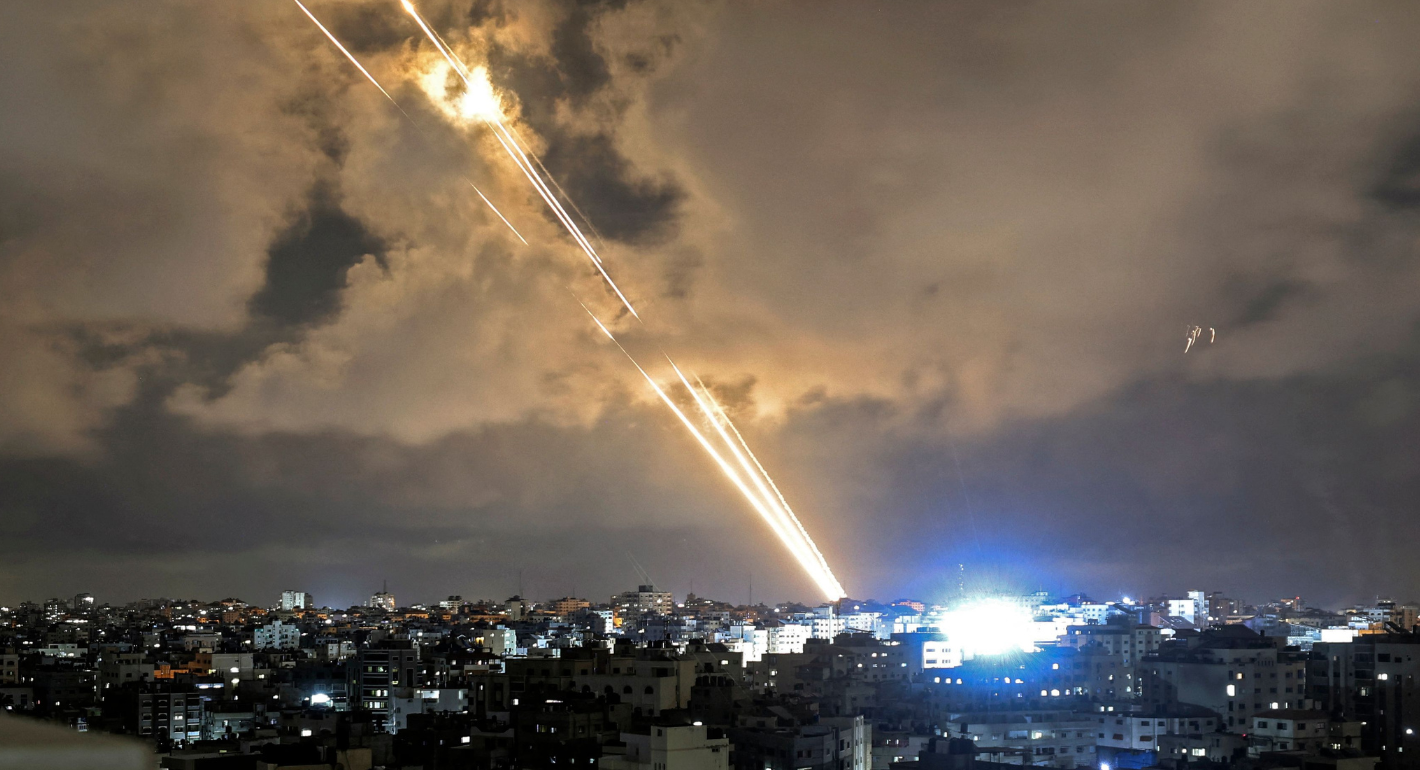
An Israeli response to Iran’s October 1 attack is imminent. The key question is of its intensity and potential fallout, both within Iran, in terms of nuclear security policy changes, and across the broader region. The coming days are likely to reshape West Asia irreversibly.
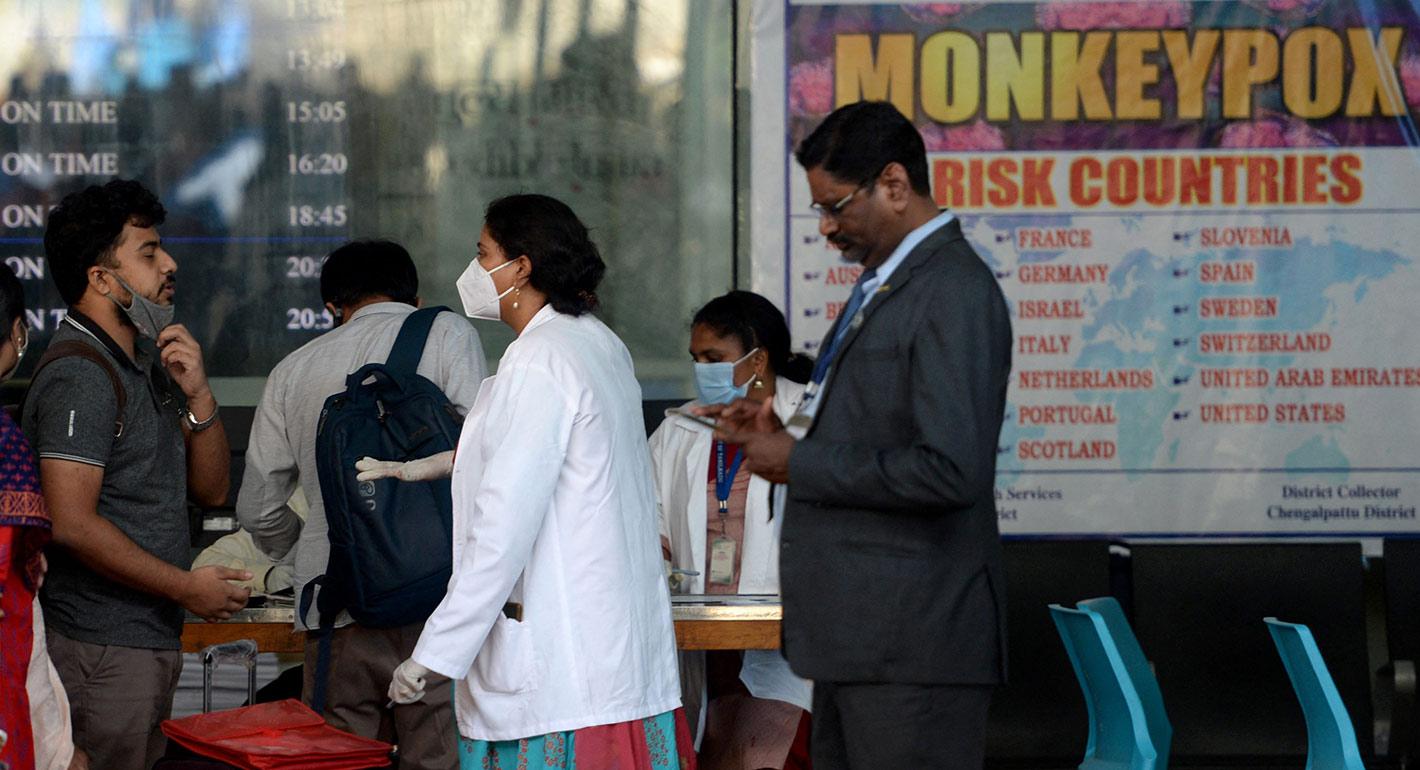
In India, biotechnology has played an important role in helping stakeholders in academia, industry, and government develop new pandemic-related technology, from test kits to respiratory devices. But these biotechnology advancements can go further to strengthen India’s public health capacity.
The uncertain origin of the coronavirus has focused attention on gain-of-function research—studying viruses to learn how they spread. How can countries work together to ensure stringent safety standards?