

Q&A
Christopher Boucek
{
  "authors": [
    "Christopher Boucek"
  ],
  "type": "other",
  "centerAffiliationAll": "",
  "centers": [
    "Carnegie Endowment for International Peace",
    "Malcolm H. Kerr Carnegie Middle East Center"
  ],
  "collections": [],
  "englishNewsletterAll": "",
  "nonEnglishNewsletterAll": "",
  "primaryCenter": "Carnegie Endowment for International Peace",
  "programAffiliation": "",
  "programs": [],
  "projects": [],
  "regions": [
    "Middle East",
    "Saudi Arabia",
    "Gulf"
  ],
  "topics": [
    "Security"
  ]
}
Source: Getty
The Carnegie Endowment offers a first-of-its-kind interactive site to explore the people, places, and organizations that impacted the lives of eleven prominent Saudi terrorists known as the “Saudi Eleven.”
Saudi Arabia released the names of 85 of its most wanted terrorists shortly after the formation of al-Qaeda in the Arabian Peninsula (AQAP) in January 2009. Eleven of those men shared a similar story: Each had been detained at Guantanamo Bay, underwent rehabilitation after returning to Saudi Arabia, and subsequently fled to Yemen and joined AQAP. Secret U.S. government documents recently released by WikiLeaks offer unprecedented insight into how the “Saudi Eleven” embraced jihad.
Ten years after 9/11, this interactive site offers a first-of-its-kind opportunity to explore the people, places, and organizations that impacted each individual’s radicalization and, for some, their ultimate renouncement of radical Islam. By representing relationships visually, users can explore important figures and patterns of behavior common to the Saudi Eleven. Only through a better understanding of the social and other connections between all of the actors tied to global terrorism can more effective strategies be crafted to reduce the threat.

Each person, place, and organization is represented as an interconnected icon. Visitors can click on an icon to see basic biographical information, or click on the lines connecting any two icons to learn more about the relationship. Each member of the Saudi Eleven has their own unique timeline, which allows users to see how a particular individual’s experience unfolded chronologically. Individual’s movements around the world are also plotted on a map. Visit the site to journey through the lives of some of the world’s most dangerous terrorists.

Former Associate, Middle East Program
Boucek was an associate in the Carnegie Middle East Program where his research focused on security challenges in the Arabian Peninsula and Northern Africa.
Recent Work
Christopher Boucek

Christopher Boucek, Karim Sadjadpour
Carnegie India does not take institutional positions on public policy issues; the views represented herein are those of the author(s) and do not necessarily reflect the views of Carnegie, its staff, or its trustees.

In any defense establishment, change is an ongoing process. However, despite the best of intentions, existing bureaucracies, bound by habit and years of socialization, have their limits in implementing transformative change.

Anit Mukherjee

After the chill in ties between 2020 and 2024 that brought India–China relations to their lowest point in several decades, the two countries have engaged each other afresh. This paper argues that there are predominantly four imperatives guiding India’s approach to China, and they exist in an order of priority.

Saheb Singh Chadha

This piece argues that the present Indian strategy, based on opportunistic diversification and utilization of limited strategic reserves, remains inadequate when confronting supply disruptions. It evaluates India’s options in the short, medium, and long terms.

Vrinda Sahai

This piece examines India’s response to U.S. sanctions and tariffs, specifically assessing the immediate market consequences, such as alterations in import costs, and the broader strategic implications for India’s energy security and foreign policy orientation.
Vrinda Sahai
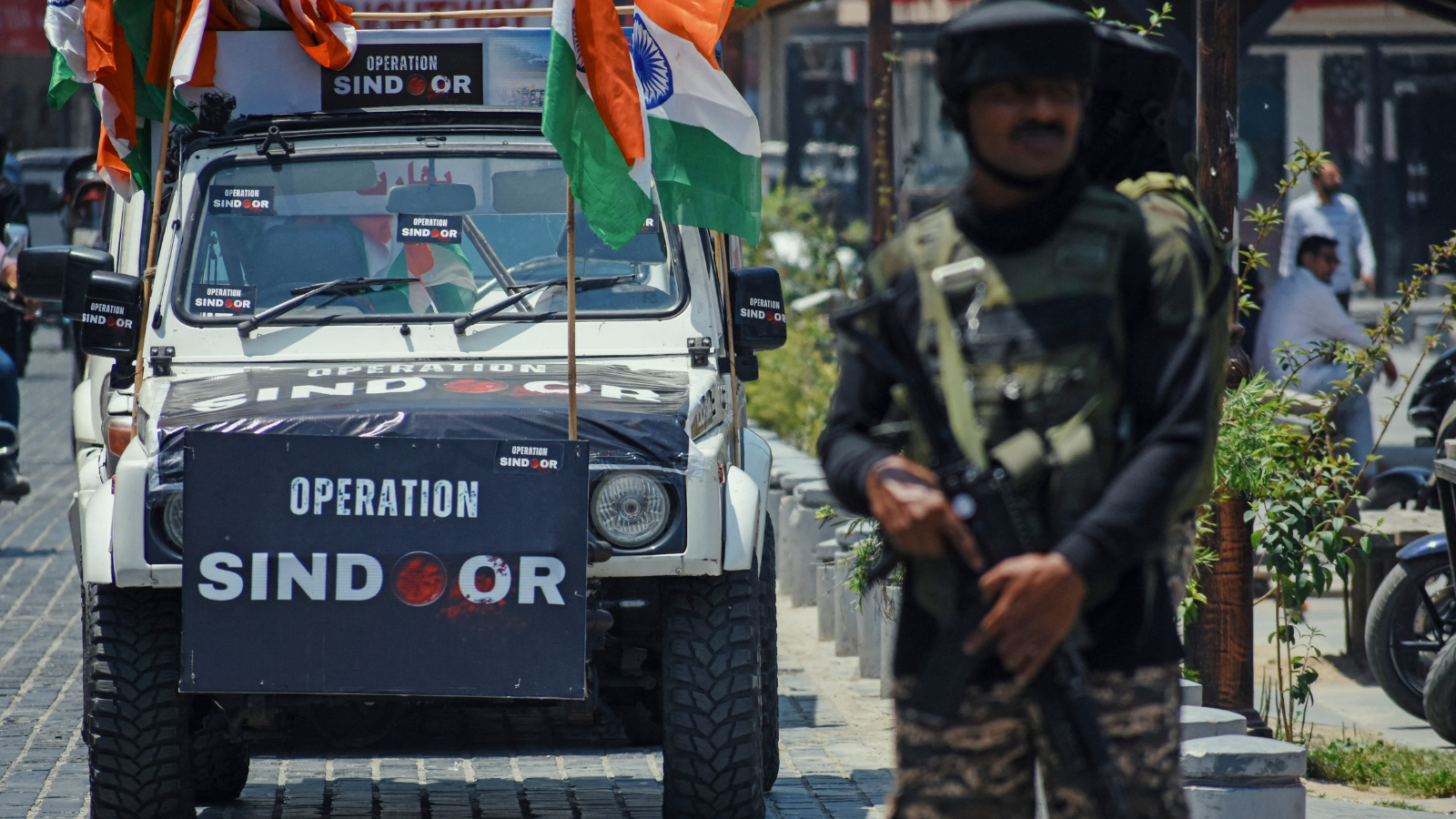
The India-Pakistan conflict that played out between May 6 and May 10, 2025, offers several military lessons. This article presents key takeaways from Operation Sindoor and breaks down how India’s preparations shaped the outcome and what more is needed to strengthen future readiness.
Dinakar Peri