

Paper
George Perkovich
{
  "authors": [
    "George Perkovich"
  ],
  "type": "other",
  "centerAffiliationAll": "dc",
  "centers": [
    "Carnegie Endowment for International Peace"
  ],
  "collections": [
    "U.S. Nuclear Policy"
  ],
  "englishNewsletterAll": "ctw",
  "nonEnglishNewsletterAll": "",
  "primaryCenter": "Carnegie Endowment for International Peace",
  "programAffiliation": "NPP",
  "programs": [
    "Nuclear Policy"
  ],
  "projects": [],
  "regions": [
    "North America",
    "United States",
    "Caucasus",
    "Russia"
  ],
  "topics": [
    "Nuclear Policy"
  ]
}
Source: Getty
Recent developments in international security that narrow the utility of nuclear weapons in deterring war may alter the role nuclear weapons play in the dialogue between the imperatives of war prevention and justness.
Source: Thinking About Strategy

"It cannot be right to acquiesce uncritically for the rest of human history, in a system that maintains peace between potential adversaries partly by the threat of colossal disaster. Any serious moral stance must recognize a duty, alongside that of striving to reduce the costs and risks of nuclear armouries and maximizing their war-prevention benefits so long as they continue to exist, to work towards a world in which security can be maintained without incurring at all the burdens which they entail."1
The moral stance to which Quinlan referred has much to do with the doctrine of Just War. Indeed, in 2007 Quinlan and Charles Guthrie published a monograpgh on the topic: Just War: The Just War Tradition: Ethics in Modern Warfare. This continued Sir Michael's long effort to reconcile doctrines and policies of nuclear deterrence with ethical principles he cherished as a conscious Catholic.
The present essay seeks to extend the dialogue between the imperatives of war prevention - specifically the role of nuclear deterrence in it - and justness. In doing so I look beyond the ethical tradition that Sir Michael explored so intently and thoughtfully. I draw briefly on research in evolutionary biology, psychology and politics to widen the meaning and importance of justice, while reflecting on recent developments in international security that narrow the utility of nuclear weapons in deterring war. I conclude by suggesting that these new perspectives add weight and feasability to the imperative that Quinaln recognized to work toward a world without nuclear weapons.
1. Michael Quinlan, Thinking about Nuclear Weapons, Oxford University Press, 2009, p. 54.

Japan Chair for a World Without Nuclear Weapons, Senior Fellow
George Perkovich is the Japan Chair for a World Without Nuclear Weapons and a senior fellow in the Carnegie Endowment for International Peace’s Nuclear Policy Program. He works primarily on nuclear deterrence, nonproliferation, and disarmament issues.
Recent Work
George Perkovich
George Perkovich
Carnegie India does not take institutional positions on public policy issues; the views represented herein are those of the author(s) and do not necessarily reflect the views of Carnegie, its staff, or its trustees.

How is AI reshaping space security, creating governance challenges, and where does international diplomacy stand today?


Tejas Bharadwaj, Almudena Azcárate Ortega

This piece argues that India’s central challenge is not managing a single flashpoint but resolving the underlying tension between expansion and institutional coherency of the BRICS grouping.

Vrinda Sahai

The U.S.–India semiconductor cooperation story is well-stocked with top-level strategic intent. What remains unresolved, however, are some underlying challenges that will determine whether the cooperation actually functions. Three such friction points stand out.

Shruti Mittal
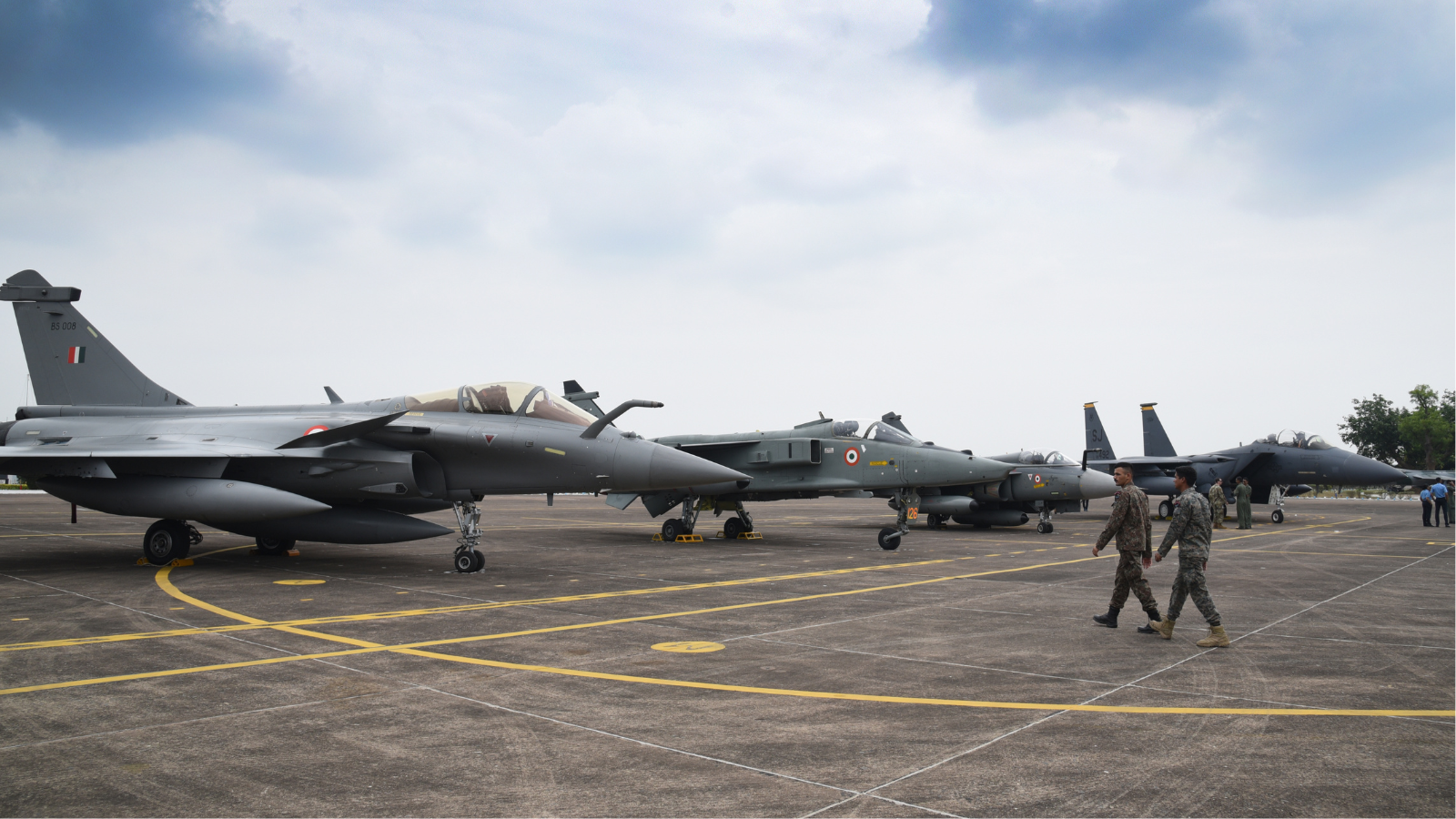
India and the United States are close to concluding a Reciprocal Defense Procurement Agreement (RDPA) that will allow firms from the two countries to sell to each other’s defense establishments more easily. While this may not remedy the specific grievances both sides may have regarding larger bilateral issues, an RDPA could restore some momentum, following the trade deal announcement.

Konark Bhandari

On the last day of the India AI Impact Summit, India signed Pax Silica, a U.S.-led declaration seemingly focused on semiconductors. While India’s accession to the same was not entirely unforeseen, becoming a signatory nation this quickly was not on the cards either.
Konark Bhandari