New allegations surfaced this week in the Associated Press that a previously unknown complex in Syria may have been used to clandestinely enrich uranium.
In a Q&A, Mark Hibbs analyzes the claims in the context of what is known about Syria’s nuclear program. Hibbs argues that the allegations underline the challenges in preventing the spread of uranium enrichment capabilities and that more must be done to stop nuclear technology and know-how from falling into the wrong hands.
Are the allegations that Syria may have enriched uranium based on new information?
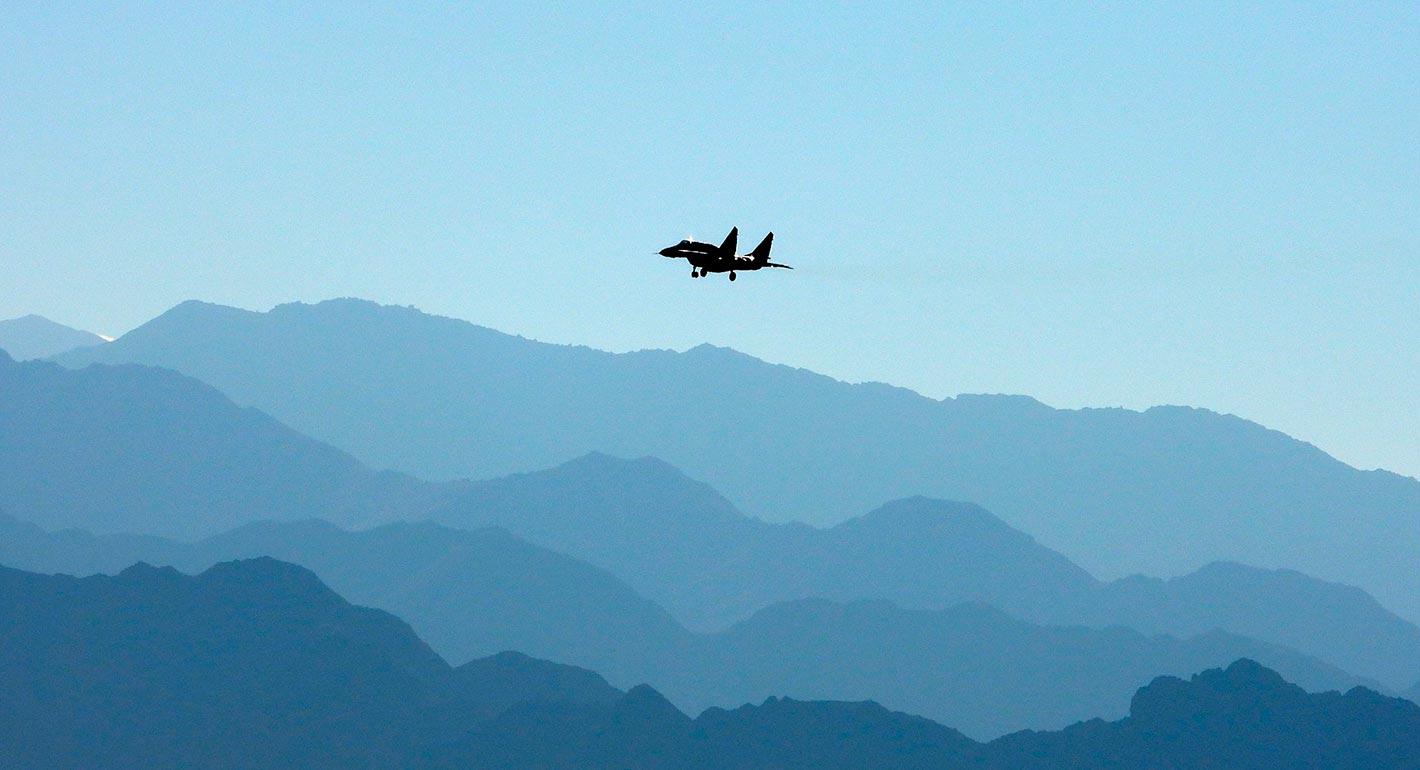
No. The International Atomic Energy Agency (IAEA) has been investigating Syria’s nuclear program since late 2007, when Israeli aircraft destroyed an installation that Israel and the United States asserted was a clandestine nuclear reactor built with assistance from North Korea. During that investigation, the IAEA found some evidence suggesting that a few other sites could have been part of a hidden nuclear program in Syria.
In June, the IAEA told its board of governors that evidence brought forth during its investigation pointed to the conclusion that the site bombed by Israel, Dair Alzour, was “very likely” a nuclear reactor. The board then cited Syria for noncompliance with its IAEA safeguards agreement.
The location named in media reports this week—Al Hasakah—is a different location and was one of several sites that the IAEA had requested Syria to explain and permit inspectors to visit. Al Hasakah was not seen by the IAEA as related to the reactor project. Until now, Syria has refused to provide the IAEA access to it and other sites.
What kind of evidence does the IAEA have that suggests Syria’s undeclared nuclear activity went beyond the construction of the reactor destroyed by Israel?
Some of the information was provided to the IAEA by its member states. Some was derived from open sources, including an unconfirmed and alarming media report from Kuwait in 2006 that said since 2004 relatives of Syrian President Bashar Al-Assad were engaged in secret nuclear work at Al Hasakah, and that this work employed former nuclear experts and equipment from Iraq, Iran, and the Soviet Union. The media report suggested that a uranium enrichment plant may have been located at the site and claimed that the information was derived from Western European intelligence agencies. The report has never been confirmed.
Beginning in 2009, aerial photographs of the site at Al Hasakah—clearly identified as a textile production factory—appeared to IAEA experts to resemble plans for a centrifuge enrichment plant that Libya planned to set up with foreign help about a decade ago. Currently, the Syrian textile plant complex is much larger than the uranium enrichment plant that Iran set up in Natanz in recent years.
Why do the Al Hasakah allegations matter if the IAEA’s board of governors has already cited Syria for noncompliance with its safeguards agreement?
Beginning in 2007, the IAEA and its members focused on the allegations of clandestine reactor construction. Because the installation identified as a reactor had been destroyed, it was widely assumed that the Israeli bombing attack had put an end to any clandestine nuclear program in Syria. But were evidence to appear suggesting that Syria had tried to process nuclear material—or, especially, enrich uranium—that would raise concern because these activities could be meant to produce fuel for a nuclear weapon and could be carried out in unknown locations. The record of clandestine centrifuge uranium enrichment programs elsewhere—in Iraq, Iran, Libya, and North Korea—is that the technology is fungible and comparatively easy to hide.
Where could Syria have obtained the know-how to enrich uranium?
During the early 1990s, Pakistan’s intelligence service, ISI, reported to Prime Minister Nawaz Sharif that the head of Pakistan’s uranium enrichment program, A.Q. Khan, had travelled to Algeria, China, Iran, and Syria. According to a senior Syrian nuclear official in 2007, Khan had previously approached Syria with an offer for bilateral cooperation but the offer was rejected by Syria. Khan sold Pakistan’s uranium enrichment know-how to Iran, Libya, and North Korea, but there has never been any evidence confirmed that this know-how was sold to Syria from Pakistan’s program.
Is it possible that Al Hasakah was never a nuclear facility?
Sure. Unlike sites that the IAEA suspected were related to the clandestine reactor project in Syria, from 2008 through 2011 the IAEA never named Al Hasakah in its reports to the board of governors as a location it was interested in. The fact that information about this site was leaked to the media beginning about a year after the IAEA obtained it may testify less to the acuteness of current concerns about Syrian nuclear activities and more to the failure of the IAEA and its member states to corroborate the alarming Kuwaiti media report that nuclear activities have taken place there.
So far, no procurement information has surfaced that point to a dedicated project to build a clandestine uranium enrichment facility in Syria. In 2009, a few internet websites published aerial photographs of a remote site in Myanmar and speculated that a building located on that site was a nuclear reactor. Before that, however, the IAEA had investigated the site and had confirmed that the building in question was a machine shop, not a nuclear installation.
How can allegations surrounding Al Hasakah and the other sites that the IAEA wants to inspect be cleared up?
After the IAEA board of governors cited Syria for noncompliance and referred the matter to the Security Council, the IAEA has continued to pursue the matter with Syria, thus far without any concrete results. No further action was taken in the Security Council because of opposition from China and Russia. Both argued that the attack on the reactor in 2007 had put an end to the program.
It is conceivable that the outstanding nuclear allegations could be raised by the Security Council’s five permanent members together with human rights issues all these states are prepared to raise concerning Syria’s repression of dissent in the country. But unless the Syrian regime permits international inspectors to visit the sites, there is little the IAEA can do. Because there is no acute evidence at hand that Syria is making nuclear fuel or enriching uranium, this issue will be eclipsed by far more immediate issues in Syria.
Were Syria to permit the IAEA to visit Al Hasakah now or in the future, there is little expectation that inspectors would find any evidence that Syria has enriched uranium in the facility. If the site had in the past been used for this purpose, it is highly likely that any related installation has been thoroughly scrubbed clean.
The allegations surrounding Al Hasakah underline the challenges in preventing the spread of uranium enrichment capabilities. If a country with a track record of poor compliance with IAEA safeguards obtains this know-how, without its binding consent to allow international inspections and provide information about specific activities, it might be virtually impossible for the IAEA to get to the bottom of any allegations that that country is secretly enriching uranium. For this reason, the IAEA has encouraged all states to conclude a so-called additional protocol with the IAEA, obligating them to provide more information about their nuclear-related activities. Syria has not concluded an additional protocol with the IAEA.