

Commentary
Maria Lipman
{
  "authors": [
    "Maria Lipman"
  ],
  "type": "legacyinthemedia",
  "centerAffiliationAll": "",
  "centers": [
    "Carnegie Endowment for International Peace",
    "Carnegie Russia Eurasia Center"
  ],
  "collections": [],
  "englishNewsletterAll": "",
  "nonEnglishNewsletterAll": "",
  "primaryCenter": "Carnegie Russia Eurasia Center",
  "programAffiliation": "",
  "programs": [],
  "projects": [],
  "regions": [
    "Caucasus",
    "Russia"
  ],
  "topics": [
    "Political Reform"
  ]
}
Source: Getty
If the growing Russian popular movement remains committed and tenacious, organized political challenges to Vladimir Putin’s power will eventually follow.
Source: Washington Post

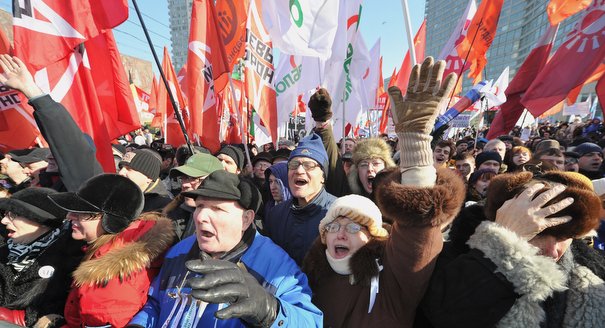
But the turnout in Moscow last Saturday — an unprecedented uprising in post-Communist Russia — demonstrated that a new generation of Russians no longer believe that activism is pointless. The vast majority of the tens of thousands protesting the fraudulent results of the Dec. 4 parliamentary elections are themselves too young to recall the enthusiasm of the late 1980s or the disappointment that followed. But like their parents’ generation 20 years ago, they are ready to commit their individual efforts to a common cause.
In the face of this surging public anger, the government has shown unusual restraint. Since Putin became Russia’s leader, even tiny political actions have commonly ended in beatings and detentions. Earlier last week, hundreds of election protesters were arrested, with some sentenced to two weeks in jail. But Saturday’s rally was authorized, and police did not resort to violence. Whereas earlier political rallies had been ignored by state-controlled television, reporting about the Saturday protests was at the top of state news broadcasts (though anti-Putin chants and slogans were omitted).
After several days of silence regarding Saturday’s events, Putin’s annual call-in show with the people opened Thursday with a question about the protests. The prime minister’s response sounded conciliatory: He was glad to see “young and active people who . . . clearly articulate their positions,” he said. “If this is the result of ‘Putin’s regime,’ ” he said, “this is good. I see nothing of the extraordinary about this.” On the issue of election rigging, he was evasive, but he made clear that there would be no recount or cancellation of results. He dismissed the outrage over fraudulent elections as “attacks” of “secondary” importance and said that the “main goal is the next presidential election.”
Putin’s reelection as president next spring looked, only a few weeks ago, to be a done deal. But now, more might be made of polls showing that the number of those ready to vote for him has steadily declined in the past year. This trend will be hard to reverse, and expectations are running high that the March election will be rigged. After volunteer observers of the Dec. 4 voting exposed the extensive and shameless tricks used to favor Putin’s United Russia party, many more can be expected to seek to observe the vote in March.
Though he is still in charge of the state’s budget and law enforcement, and his political establishment remains loyal, Putin is weakened. It’s not yet clear how — or even whether — this rise of public activism, inconceivable last month, could be converted into a political process that would dismantle the Kremlin political monopoly. Political operators such as the deputy head of the Kremlin administration, Vladislav Surkov, had effectively marginalized all undesired forces and figures. Russia’s political field had been reduced to barren ground filled with generally tame opposition parties. Political speakers at Saturday’s protests came from diverse, marginal groups; some of them were has-beens of the 1990s. Of the new figures, Alexei Navalny, a blogger and anti-corruption campaigner arrested after last week’s protests, had emerged as a talented online organizer. But he has yet to prove himself as an offline politician.
Activists are calling for a large-scale effort to prove allegations of election fraud in court. “We need to mobilize lawyers . . . [and] students of law and keep pecking, pecking, pecking,” Elena Panfilova, director of Transparency International in Russia, wrote Monday in the newspaper Vedomosti. Russian court rulings are notorious for being bent in favor of government administrators. But with public pressure rising, at least some judges may choose to act as responsible citizens. And “once we’ve pecked through a first hole,” Panfilova wrote, “it will get easier.”
Public approval was a cornerstone of Putin’s uncontested power: Few would challenge a leader whose popularity exceeds all other political figures by very large margins. But Putin’s popularity has been declining. The crowds chanting “Russia without Putin” last weekend further dispelled Putin’s aura of invincibility. When a Dec. 24 rally was proposed on Facebook this week, more than 23,000 people signed up in two days.
Twenty years ago the first blow to the Communist regime came from within the establishment: Mikhail Gorbachev eased the party’s grip on power, giving people freedom, and the regime collapsed soon after. This time, the blows are being dealt by the people: young, urban citizens who are used to making their own choices.
To reconsolidate his power, Putin will surely draw on the resources at his discretion. But if the popular movement remains committed and tenacious, organized political challenge to his power will eventually follow. Whatever forces and figures may be empowered as a result would owe their success to the people. This would be a crucial step toward democracy in Russia.
Former Scholar in Residence, Society and Regions Program, Editor in Chief, Pro et Contra, Moscow Center
Lipman was the editor in chief of the Pro et Contra journal, published by the Carnegie Moscow Center. She was also the expert of the Carnegie Moscow Center’s Society and Regions Program.
Recent Work
Maria Lipman
Maria Lipman
Carnegie India does not take institutional positions on public policy issues; the views represented herein are those of the author(s) and do not necessarily reflect the views of Carnegie, its staff, or its trustees.
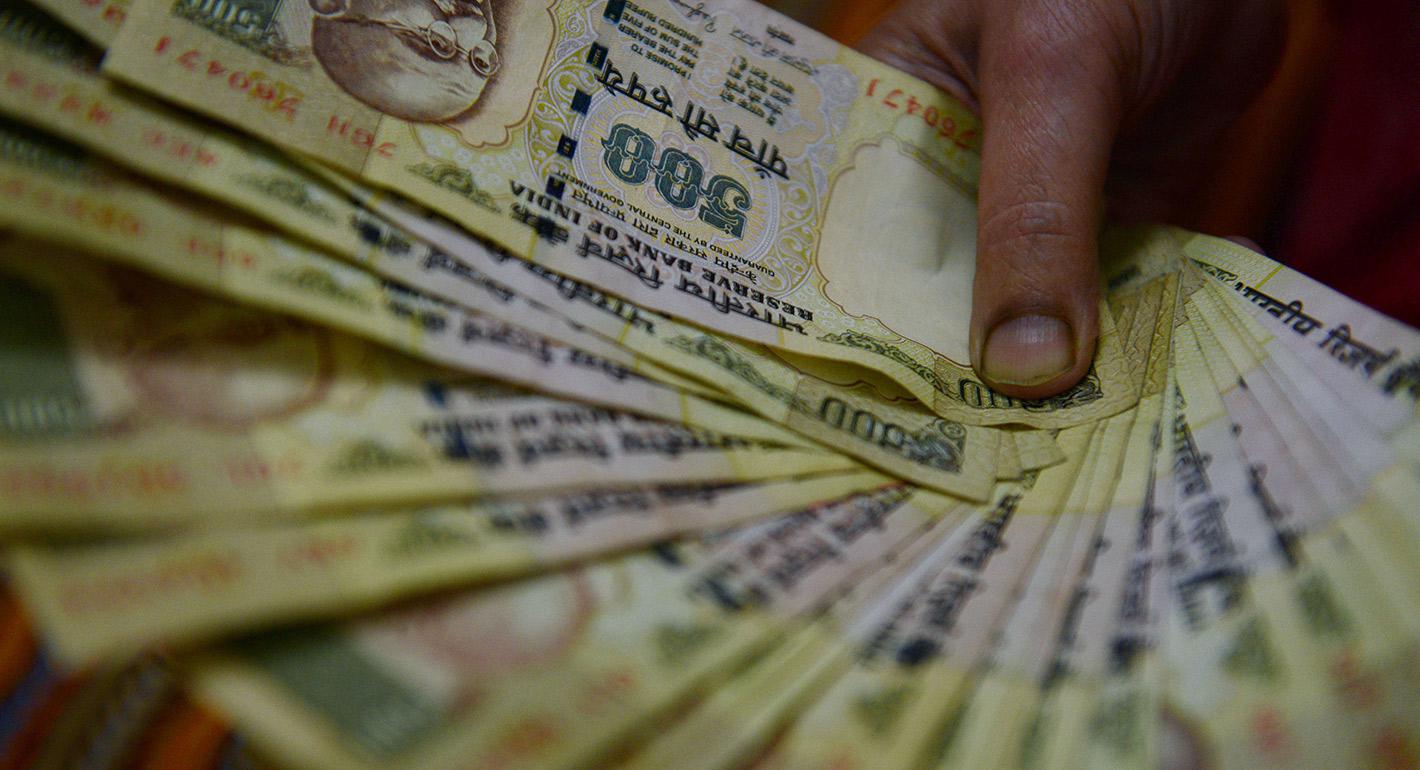
As India’s economy recovers from the coronavirus pandemic, Indian businesses need efficient financial structures to regain their ground. Key reforms to India’s Insolvency and Bankruptcy Code could fill these gaps.

Anirudh Burman

Access to cross-border data is an integral piece of the law enforcement puzzle. India is well placed to lead the discussions on international data agreements subject to undertaking necessary surveillance reforms.

Smriti Parsheera, Prateek Jha
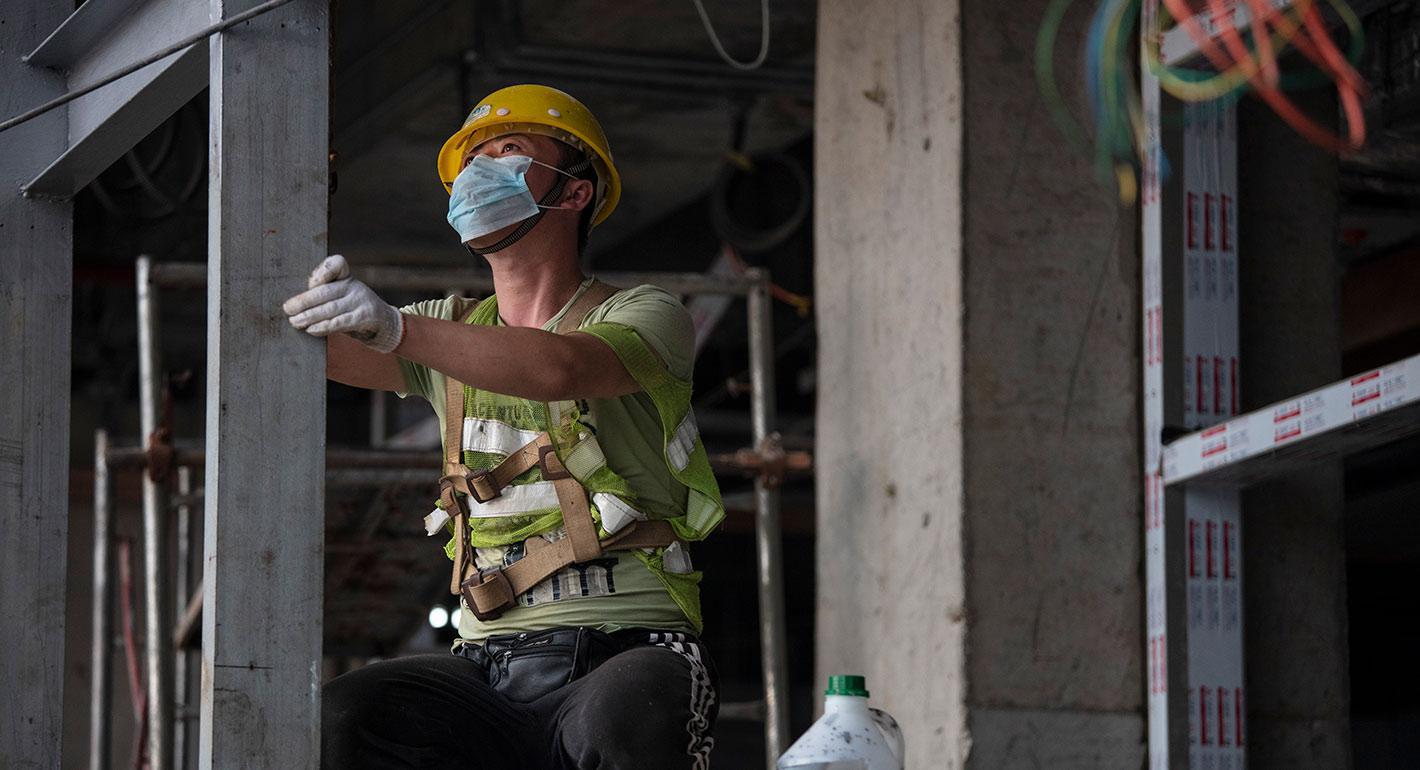
After the coronavirus pandemic wanes, how will China’s reorientation of the Belt and Road Initiative to address global health concerns influence its relationships with South Asian countries?
Deep Pal, Rahul Bhatia
Early in the outbreak, government researchers forecast several high-risk scenarios that were downplayed or ignored in public messaging.
Gautam I. Menon
Governments around the world are turning to new forms of digital surveillance to monitor the spread of the coronavirus, though they are mostly using existing laws to do so.
Anirudh Burman