

In The Media
David Rothkopf
{
  "authors": [
    "David Rothkopf"
  ],
  "type": "legacyinthemedia",
  "centerAffiliationAll": "",
  "centers": [
    "Carnegie Endowment for International Peace"
  ],
  "collections": [],
  "englishNewsletterAll": "",
  "nonEnglishNewsletterAll": "",
  "primaryCenter": "Carnegie Endowment for International Peace",
  "programAffiliation": "",
  "programs": [],
  "projects": [],
  "regions": [
    "North America",
    "United States",
    "Western Europe"
  ],
  "topics": [
    "Political Reform",
    "Economy"
  ]
}
Source: Getty
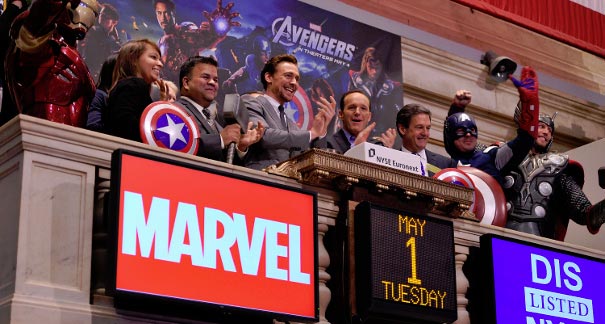
As the world watches Hollywood superheroes conduct battle, real world politicians and businesspeople are locked in similarly intense and damaging contests of will.
Source: Foreign Policy

In the movie and the actual, considerably less noisy planet Earth, the battle lines were a bit blurry. In the movie, the so-called heroes are motivated by loyalty to a guy who was seeking to harness a mysterious, powerful, blue, and swirlingly 3-D power source on behalf of the Hollywood-imagined military industrial complex with a heart of gold upon which our world depends. Among their band are a narcissistic billionaire arms merchant, a demigod bent on defeating his half brother, a former assassin, and a gentle soul whom we don't start rooting for until he suppresses his better instincts and lets his anger-management issues take over (even if it means slapping around his fellow "heroes" to comic effect).
All of us who follow business and politics closely know that in real life it is even more difficult to tell who is on whose side because the good guys tend not to wear tights -- or inevitably win in the end. So, for example, in the United States, Americans watched as President Barack Obama's deep-pocketed friends at his super PAC unleashed a commercial attacking deep-pocketed Mitt Romney for having been a venture capitalist who restructured businesses with profits in mind. The effort played in counterpoint to the simultaneous saga of the bank still bearing the name of America's alpha plutocrat, J.P. Morgan, as it lost $2 billion thanks to trading mistakes just days after its chief executive was making his most recent public plea to keep regulators off the back of banks.
Obama was seeking to deliver a lasting blow to Romney's reputation, hoping to permanently cast him in the role of rapacious fat cat before Romney could offer himself up with his preferred identity, that of competent supermanager. Obama's eagerness to strike the blow this early in the campaign was perhaps due to his acute awareness of the politicians vs. businesspeople saga currently taking place across the Atlantic and its potential consequences for the U.S. elections this November. Because if Europe blows up, Obama is likely to go the way of the almost a dozen other incumbents struck down for their perceived complicity in making a mess of the finances of essentially the entire developed world. Unless, that is, Romney is seen as a malevolent force who can't be trusted to replace Obama.
In Europe, it is also sometimes hard to know who is on whose side by their job description. But essentially, Germany's politicians and bureaucrats have taken a position that they describe as being "pro-fiscal responsibility" but that also happens to be "pro-banking." It suggests that wayward countries should effectively bear all the costs of the bad deals made by the financial community when lending to those countries earlier. They suggest it creates a "moral hazard" if countries do not cover all their debts while turning a blind eye to the equally obvious moral hazard associated with letting banks make reckless loans without fearing any consequences. In France and Greece, meanwhile, politicians have taken a different stance from their German counterparts, suggesting looking out for people is as important as protecting the shareholders of big financial institutions -- even as they downplayed the complicity of governments in getting everyone into this mess to begin with.
In other words, high drama and, with nary a superhero in sight, plenty of the slam-bang conflict and moral ambiguity that seems to play well with ticket-buying audiences these days.
Absent steroidal men in capes or high-tech rocket suits in the midst of these showdowns over economic ideology in the United States and Europe, there has been one set of actors you could root for, the one every audience likes best: themselves. Because this week we saw important evidence that an empowered public is the best and only available superhero.
We saw that in the elections in France and Greece that gave people the opportunity to do what Europe's leaders were unwilling to -- they led. They reset the agenda and they insisted political leaders were accountable. They tossed out Germany's fairly dependable supporter, Nicolas Sarkozy, in France, and they ushered in a political upheaval in Greece that now has the world on edge wondering whether a Greek departure from the eurozone is inevitable. They also delivered a Hulk-like blow to Chancellor Angela Merkel's party in local elections in North Rhine-Westphalia, Germany's most populous state.
This stood in stark contrast with what was simultaneously happening in the business community. This past week, in instance after instance, we saw that even in an age of mind-blowingly excessive pay packages for top executives -- allegedly to compensate them for the high-stakes decisions they must make and the risks they must assume -- business leaders have become extraordinarily adept at avoiding taking responsibility for their actions.
It's a bitter irony. Champions of markets talk about the ruthless accountability they demand. But what of all those bankers demanding that the people of Greece pay for years because the financial community made too much cash available on too easy terms for the feckless leaders of that country? They're still making the big bucks. They still have their jobs. And they're still demanding to be made whole. Or what about Jamie Dimon at JPMorgan Chase? If a chief executive can avoid assuming responsibility for wildly inappropriate trading within his bank, what message does it send? He sacrificed some of his colleagues but held onto his own job.
Or, for that matter, what about Rupert Murdoch and the phone-hacking scandal that has his closest executives being indicted and his son losing his job? Why does the buck not stop with the man who has collected the most bucks of all? Or what about Aubrey McClendon at Chesapeake Energy, who created a private hedge fund within his company, gambled the company's money, and then, when discovered, tried to get away with offering little more than a thin apology?
Big financial institutions unhesitatingly call for the public sector to make them whole, to bail them out, and to stay off their backs when it comes to regulation. They collect the upside of their financial adventures but spread the costs among the population at large. CEOs of big companies similarly capture the upside but make their shareholders and colleagues pay the price for their failings.
It seems the rule for today's private sector is that the bigger the bank account, the less the accountability. It's an indictment of the oversight role played by boards and big institutional shareholders, not to mention regulators. But it also should be a disqualification for any sort of public support for or coddling of these enterprises, which continue -- even in the midst of crisis -- to seem devoted to the private enrichment of a relative few who wish to stretch or live beyond the law -- except of course, when they can bend the law or the government that enforces it to serve their needs.
So there you have it, folks: a Hollywood happy ending. Given half a chance, regular people power works. As for modern markets, until there is real accountability, they're the giant mechanized sea monsters threatening us all. It's time we found a few larger-than-life men and women to bring the bad guys leading them to justice. And if their shareholders won't do it, then voters can. A good place to start? How about kicking out the cronies and puppets and putting in place governments that demand a higher standard of behavior, in business and in politics?
Former Visiting Scholar
David Rothkopf was a visiting scholar at the Carnegie Endowment as well as the former CEO and editor in chief of the FP Group.
Recent Work
David Rothkopf
David Rothkopf
Carnegie India does not take institutional positions on public policy issues; the views represented herein are those of the author(s) and do not necessarily reflect the views of Carnegie, its staff, or its trustees.

How is AI reshaping space security, creating governance challenges, and where does international diplomacy stand today?


Tejas Bharadwaj, Almudena Azcárate Ortega

The U.S.–India semiconductor cooperation story is well-stocked with top-level strategic intent. What remains unresolved, however, are some underlying challenges that will determine whether the cooperation actually functions. Three such friction points stand out.

Shruti Mittal

On March 10, 2026, India’s Union Cabinet approved amendments to Press Note 3, a regulation that mandated government approval on all foreign direct investment (FDI) from countries sharing a land border with India. This amendment raises questions primarily about whether its stated benefits will materialize and if the risks have been adequately weighed. This piece will address the same.

Konark Bhandari

India and the United States are close to concluding a Reciprocal Defense Procurement Agreement (RDPA) that will allow firms from the two countries to sell to each other’s defense establishments more easily. While this may not remedy the specific grievances both sides may have regarding larger bilateral issues, an RDPA could restore some momentum, following the trade deal announcement.
Konark Bhandari

On the last day of the India AI Impact Summit, India signed Pax Silica, a U.S.-led declaration seemingly focused on semiconductors. While India’s accession to the same was not entirely unforeseen, becoming a signatory nation this quickly was not on the cards either.
Konark Bhandari