

Paper
Ibrahim Saif, Ahmed Ghoneim
{
  "authors": [
    "Ibrahim Saif"
  ],
  "type": "legacyinthemedia",
  "centerAffiliationAll": "",
  "centers": [
    "Carnegie Endowment for International Peace",
    "Malcolm H. Kerr Carnegie Middle East Center"
  ],
  "collections": [],
  "englishNewsletterAll": "",
  "nonEnglishNewsletterAll": "",
  "primaryCenter": "Malcolm H. Kerr Carnegie Middle East Center",
  "programAffiliation": "",
  "programs": [],
  "projects": [],
  "regions": [
    "Egypt",
    "Gulf",
    "Levant",
    "Maghreb"
  ],
  "topics": [
    "Education"
  ]
}
Source: Getty
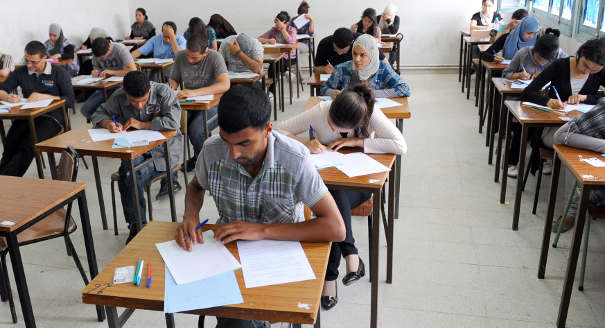
A shift in the nature of Arab educational systems toward incentivizing technical and vocational training is one possible long-term solution to the problem of unemployment among the youth of the Arab world.
Source: Al Hayat

Arab students continue to choose majors that the market does not demand, leaving the public sector to accommodate a large number of them. Yet, with high youth unemployment across the Arab world, it is clear that this system has not been sustainable for quite some time. Still, students continue to opt not to pursue disciplines that are in demand and that would help spur innovation and economic growth. Reasons for this seemingly irrational trend vary. Some argue that it is because there is a social stigma around manual work; others say that working conditions in vocational professions are substandard and hence people stay away from them. Others cite the financial incentives offered to university graduates that are fortunate enough to join the public sector.
Regardless of the cause, statistics spanning the past three decades show that the majority of Arab students choose academic disciplines over vocations and the arts. With a growing number of students moving toward academic fields of specialization, both the level of education Arab students attain and the number of years they spend in school have increased. Indeed, the average number of years of postsecondary schooling students receive in many Arab countries is now equivalent to the prevailing trends in middle-income countries—between six and seven years.In many such countries—in Asia and Latin America, for instance—more education has led to economic growth, which has in turn helped to improve productivity and to create a middle class that spearheads political reform and seeks to establish long-term stability. However, in the Arab world, quite the opposite has taken place, with improvements in the level of education resulting paradoxically in a crisis of the educated classes.
To understand the roots of the problem, one has to take a close look at the dynamics of Arab economies and incentive systems, as well as at the disciplines that have attracted Arab students. The highest percentage of students who complete university education choose social science majors (history, political science, languages, religion, and so on) for which national demand is relatively limited. A smaller number of students study engineering, medicine, and other disciplines in the fields of science and technology.
Needless to say, it is precisely the fields of science and technology that drive creativity and innovation—and economic growth. And generally speaking, the higher the level of development and income, the more benefits those who studied science and technology reap, and thus students are more likely to join such disciplines.
But given the rentier nature of Arab states, graduates of the social science disciplines have not had access to business opportunities in the private sector or satisfactory job opportunities generated by the economy. They have thus joined the public sector with its concomitant advantages and high wages. And that provides further incentives for students to continue selecting majors that are neither in high demand in the market nor easily absorbed by the economy. Thus, students keep choosing unsolicited majors and the public sector must absorb a large number of them. And though technical knowledge is in demand, it may not be the easiest or most lucrative career path. All this has resulted in an imbalance between the market and the labor force.
This dynamic has been in effect for at least the last three decades. It is therefore not surprising that the ratio of the labor force employed by the public sector to the total population in countries such as Saudi Arabia and Kuwait is the highest in the world. The situation is not much different in Egypt, where the public sector workforce exceeds 5 million people. This means that both high- and low-income countries are facing similar difficulties, although income is generated in different ways in those countries.
This dynamic has resulted in two things: First, the private sector has failed to expand existing or provide new incentives for entrants into the job market. That, in turn, has influenced the private sector’s decisions about the quality of the investments it chooses to pursue—if qualified employees are not available to carry out ambitious projects, the risk and cost of those investments are too high.
Second, rather than specializing in vocational and technical fields, students today are more inclined toward academic disciplines—and not because these subjects best reflect their capacities or aspirations. Academic disciplines simply make it easier for students to join the public sector and enjoy the job security and other benefits employment in that sector provides.
Yet, all these developments have taken place while Arab economies were generating job opportunities for technicians and skilled workers, a situation that has also prevailed in many high-income countries. Despite the fact that the available data indicate a tremendous imbalance between education and the labor market, and although the public sectors in Arab countries cannot continue to absorb increasing numbers of graduates in nonessential disciplines, the same trend has continued. The incentives to opt for vocational training are still too weak. At a social level, these majors are still viewed condescendingly despite the high material yield that can be generated by vocational jobs. And the working conditions in many vocational professions are still substandard and disorganized, with absolutely no social protection for workers.
A shift in the nature of Arab educational systems toward incentivizing technical and vocational training is one possible long-term solution to the problem of unemployment among the youth of the Arab world. Such a shift could also ease the pressure on the public sector. Addressing the lack of incentives for vocational training would in time yield graduates that better correspond to the needs of Arab economies, allowing for a reorientation toward job creation. In this way a solution could finally be found for a problem that, having endured for decades, can no longer be tolerated.

Former Senior Associate, Middle East Center
Saif is an economist specializing in the political economy of the Middle East. His research focuses on international trade and structural adjustment programs in developing countries, with emphasis on Jordan and the Middle East.
Recent Work
Ibrahim Saif, Ahmed Ghoneim
Ibrahim Saif, Muhammad Abu Rumman
It has been a rather long learning curve for New Delhi to separate presumed transcendental religious solidarity and the logic of national self-interest in engaging the Middle East.
C. Raja Mohan
As New Delhi prepares to host the Saudi Crown Prince Mohammed bin Salman, India must come to terms with an unfamiliar idea—“nationalism in Arabia”.
C. Raja Mohan
Saudi Crown Prince Mohammed bin Salman’s visit to India—as part of a larger tour of Asia, including Pakistan and China—should mark the consolidation of two important trends and help initiate a significant third.
C. Raja Mohan
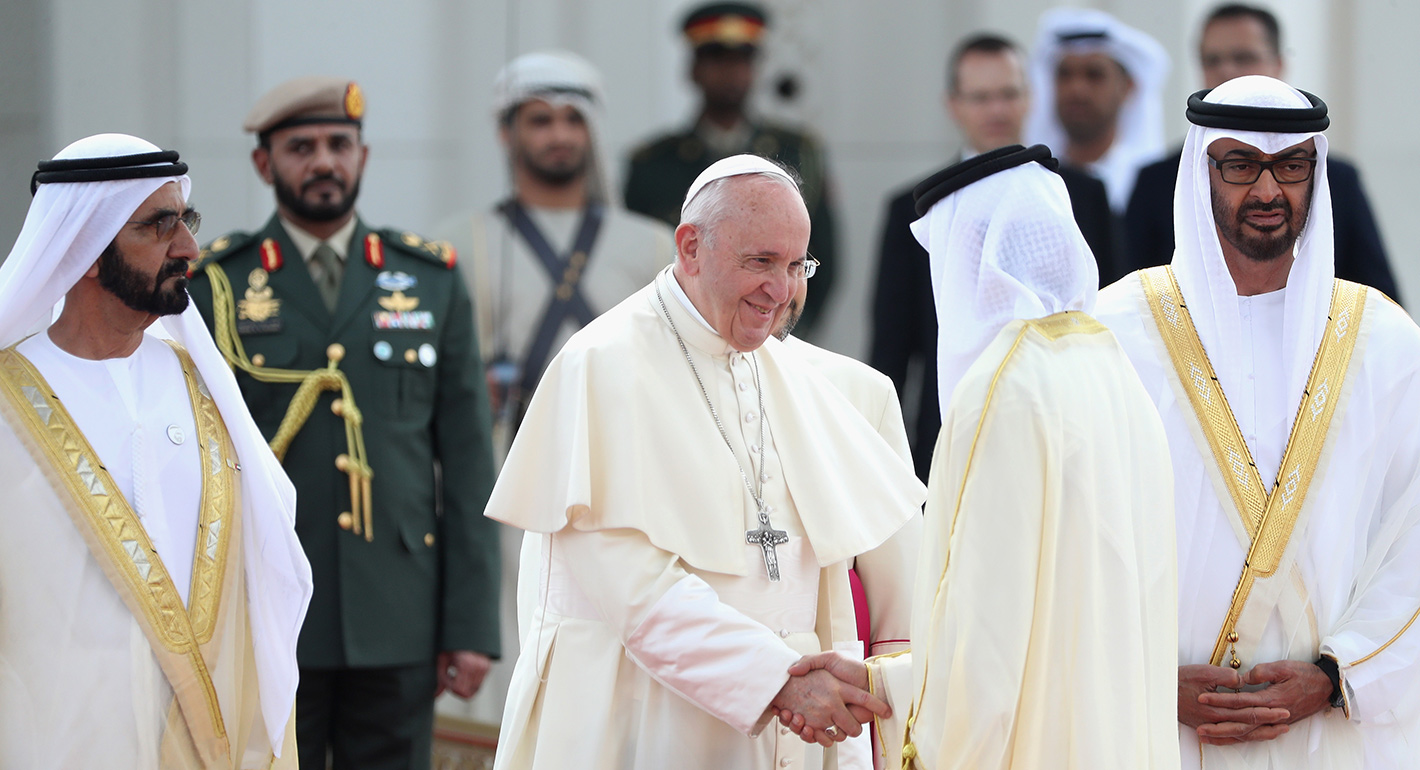
For both the United Arab Emirates and Saudi Arabia, the new emphasis on separating religion from politics and confronting “political Islam” is not a question of defining an abstract theory of the state. It is a considered response to the grave challenges they face.
C. Raja Mohan
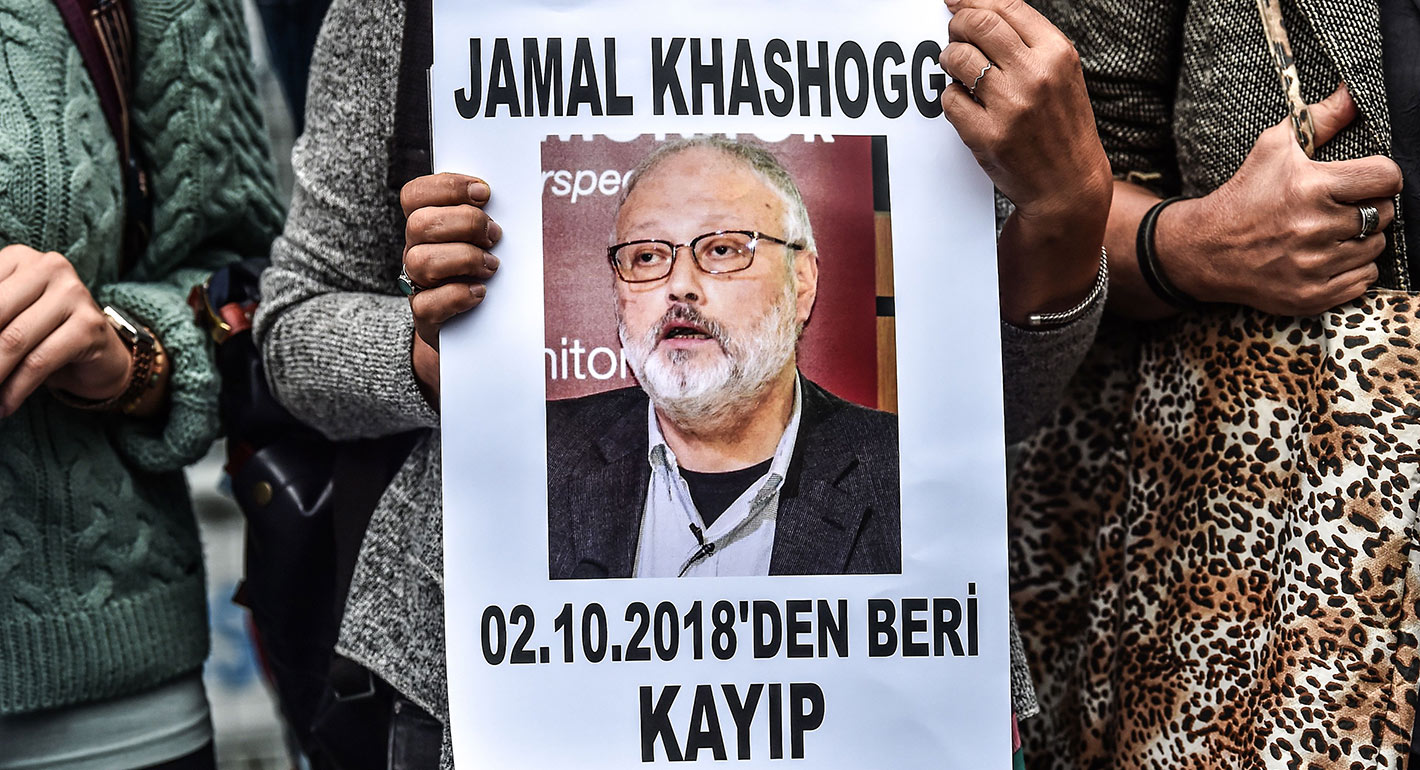
The outrageous murder of the Saudi dissident Jamal Khashoggi in the kingdom’s consulate in Istanbul has brought into sharp relief the deepening conflict between Riyadh and Ankara.
C. Raja Mohan