

Paper
Paul Salem
{
  "authors": [
    "Paul Salem"
  ],
  "type": "legacyinthemedia",
  "centerAffiliationAll": "",
  "centers": [
    "Carnegie Endowment for International Peace",
    "Malcolm H. Kerr Carnegie Middle East Center"
  ],
  "collections": [],
  "englishNewsletterAll": "",
  "nonEnglishNewsletterAll": "",
  "primaryCenter": "Malcolm H. Kerr Carnegie Middle East Center",
  "programAffiliation": "",
  "programs": [],
  "projects": [],
  "regions": [
    "Egypt",
    "Gulf",
    "Levant",
    "Maghreb",
    "Syria"
  ],
  "topics": [
    "Political Reform"
  ]
}
Source: Getty
Romney's inconsistent positions on foreign policy, coupled with the prospect of appointing hawkish cabinet ministers, risks greater conflict in the Middle East.
Source: National

The two candidates have profoundly different visions of domestic policy, but their positions on foreign policy are not as dramatically different.
Senior Fellow at the Middle East Institute
Paul Salem is a senior fellow at the Middle East Institute.
Recent Work
Paul Salem
Paul Salem

As India’s economy recovers from the coronavirus pandemic, Indian businesses need efficient financial structures to regain their ground. Key reforms to India’s Insolvency and Bankruptcy Code could fill these gaps.

Anirudh Burman

Access to cross-border data is an integral piece of the law enforcement puzzle. India is well placed to lead the discussions on international data agreements subject to undertaking necessary surveillance reforms.

Smriti Parsheera, Prateek Jha

After the coronavirus pandemic wanes, how will China’s reorientation of the Belt and Road Initiative to address global health concerns influence its relationships with South Asian countries?

Deep Pal, Rahul Bhatia
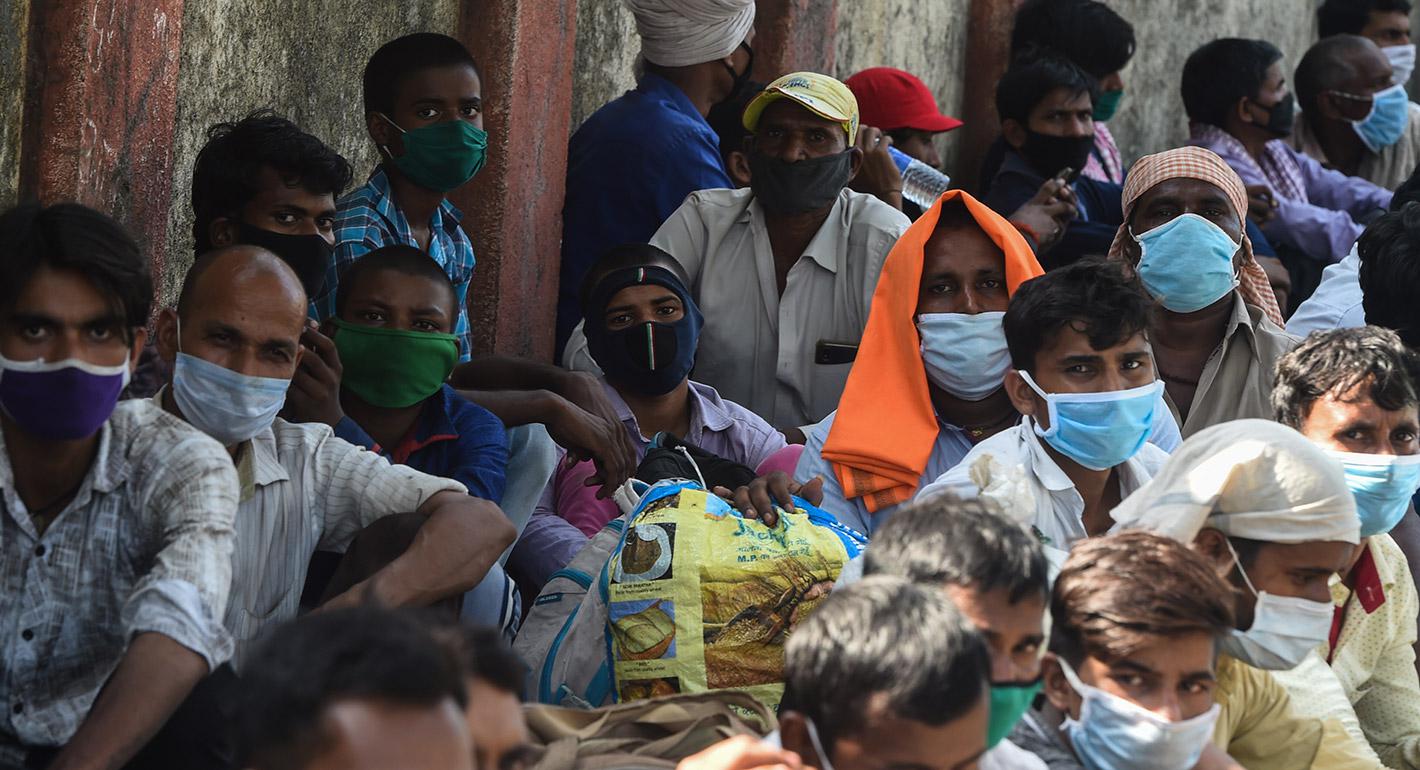
Early in the outbreak, government researchers forecast several high-risk scenarios that were downplayed or ignored in public messaging.
Gautam I. Menon

Governments around the world are turning to new forms of digital surveillance to monitor the spread of the coronavirus, though they are mostly using existing laws to do so.
Anirudh Burman