

Commentary
Judy Dempsey
{
  "authors": [
    "Judy Dempsey"
  ],
  "type": "legacyinthemedia",
  "centerAffiliationAll": "",
  "centers": [
    "Carnegie Endowment for International Peace",
    "Carnegie Europe"
  ],
  "collections": [
    "Transatlantic Cooperation"
  ],
  "englishNewsletterAll": "",
  "nonEnglishNewsletterAll": "",
  "primaryCenter": "Carnegie Europe",
  "programAffiliation": "",
  "programs": [],
  "projects": [],
  "regions": [
    "Asia",
    "Europe"
  ],
  "topics": [
    "Foreign Policy",
    "Security"
  ]
}
Source: Getty
Between now and 2014, the 50 countries participating in the NATO-led mission in Afghanistan will have to empty their military bases and leave the landlocked country.
Source: New York Times

In fact, defense ministry officials across Europe are busy preparing to leave Afghanistan. Between now and 2014, when NATO’s combat mission is to end, the 50 countries participating in the mission, which includes non-NATO nations, will have to empty their military bases and leave a landlocked country where they have been based since 2003.
"It’s an enormous logistics challenge,” said Oana Lungescu, a NATO spokeswoman.
That's putting it mildly.
Heidi Reisinger, a security specialist at the NATO Defense College in Rome, said: “It’s a bit like a five-story apartment bloc with 50 tenants. They each have different things to transport, want to move at the same time and to different places. It makes coordination very difficult. So 50 trucks line up outside.”NATO estimates that it will need 125,000 shipping containers and 80,000 vehicles to transport equipment out of Afghanistan. That does not include transport aircraft for tanks and helicopters.
The British Defense Ministry said it would require a “major logistical operation” to bring back 11,000 containers and about 3,000 armed vehicles. “We will need partners to do that,” Philip Hammond, the British secretary of state for defense, said recently.
NATO has partners: Pakistan, with whom it has strained relations, and the three authoritarian Central Asian republics of Tajikistan, Turkmenistan and Uzbekistan. All four border Afghanistan and have provided NATO with essential supply routes and bases in return for generous financial and political compensation.
NATO has signed special political agreements with each of them to ensure safe routes out of Afghanistan. Given the security needs and the endemic corruption across the region, NATO experts say the charges for handling cargo, landing and transit rights, customs and border clearance papers will rocket upward. “It’s a bonanza for these countries,” Ms. Reisinger said.
NATO and foreign ministry officials declined to disclose the financial costs. They were also unwilling to discuss the worsening human rights conditions in the transit countries of Central Asia. Security analysts say that officials are turning a blind eye because they want a smooth withdrawal.
“The picture looks very bleak for international oversight and attention to human rights in the region,” said Jacqueline Hale, a Central Asia specialist in Brussels at the Open Society Foundations, which promotes democracy.
Nongovernmental organizations also have other concerns, like the equipment NATO leaves behind. They fear that stockpiles of equipment, vehicles and weapons could fuel a black market in the region. NATO officials say that sophisticated satellite and other surveillance equipment will not be left behind.
The biggest worry is the vacuum left by the departing 102,000 troops. Their presence has always been controversial, especially given the many civilian casualties of accidental bombings. But Western soldiers also provided physical and psychological protection for girls going to school and women learning skills banned by the Taliban.
“Governments have to devise a long-term development policy for Afghanistan for the post-combat phase,” said Elke Hoff, a legislator and defense spokeswoman for the Free Democratic Party, part of the German governing coalition. “That means confronting corruption and the weak security environment.”
NATO says that by the time this NATO mission ends, the Afghan security forces will have assumed control over the whole country. Ms. Hoff and many security analysts say the Afghan forces are far from ready.
“There is no credible plan for the future development of the Afghan forces,” said Anthony H. Cordesman, a military analyst with the Center for Strategic and International Studies, in Washington. He told a recent session of the U.S. House Armed Services Subcommittee on Oversight and Investigations that the forces were plagued by corruption, political alignments and their inability to deal with insurgents.
NATO says it is planning a new civilian mission in 2015 that will train, assist and advise Afghan security forces. The details and mandate have yet to be negotiated.
Afghanistan’s neighbors who have been critical of the NATO presence are aware of the potential for instability. But instead of working together to promote stability, Ms. Hale said they could use the threat of insecurity in Afghanistan to further suppress human rights in their own countries.
NATO and the European Union should not remain passive about that possibility. Once NATO’s combat mission is over, analysts say both should pursue a much more critical stance toward these regimes and a strategy to protect the human rights gains in Afghanistan. “There is so much unfinished business,” Ms. Hoff said.

Nonresident Senior Fellow, Carnegie Europe
Judy Dempsey is a nonresident senior fellow at Carnegie Europe
Recent Work
Judy Dempsey
Judy Dempsey
Carnegie India does not take institutional positions on public policy issues; the views represented herein are those of the author(s) and do not necessarily reflect the views of Carnegie, its staff, or its trustees.

In any defense establishment, change is an ongoing process. However, despite the best of intentions, existing bureaucracies, bound by habit and years of socialization, have their limits in implementing transformative change.

Anit Mukherjee

After the chill in ties between 2020 and 2024 that brought India–China relations to their lowest point in several decades, the two countries have engaged each other afresh. This paper argues that there are predominantly four imperatives guiding India’s approach to China, and they exist in an order of priority.

Saheb Singh Chadha

This piece argues that India’s central challenge is not managing a single flashpoint but resolving the underlying tension between expansion and institutional coherency of the BRICS grouping.

Vrinda Sahai
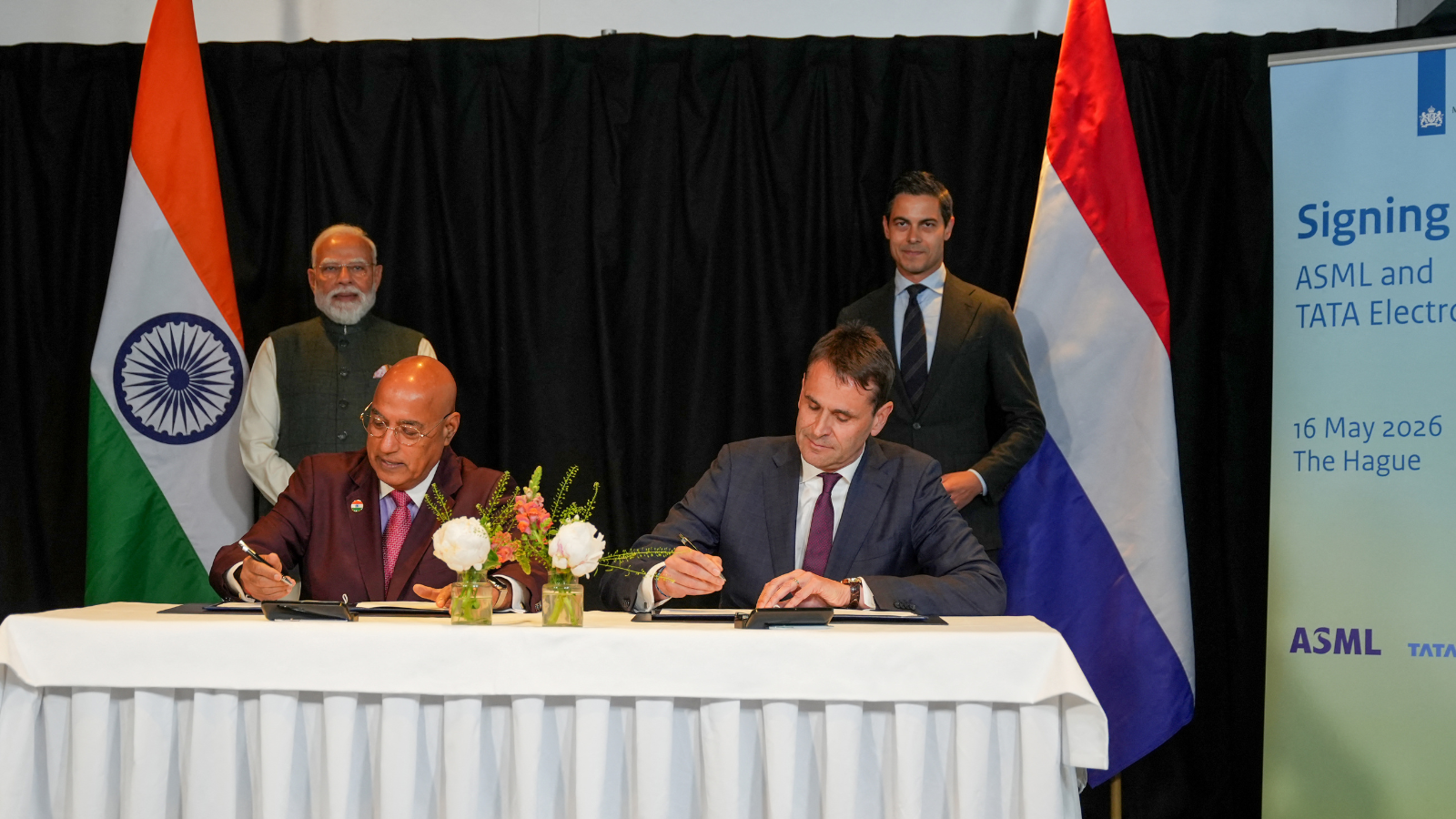
The ASML MoU with Tata Electronics is an indicator of how far the Indian semiconductor ecosystem has come. This ecosystem has been years in the making and represents real commercial logic.

Konark Bhandari

A partnership between India, a country of subcontinental size, and Africa, a continent of fifty-four countries, may seem asymmetric until one notes that both are home to nearly the same number of people—1.4 billion. This essay spells out the existing challenges to the partnership, its optimal potential, and the possible pathways to realize it over the next quarter-century.

Rajiv Bhatia