

Article
C. Raja Mohan, Darshana M. Baruah
{
  "authors": [
    "C. Raja Mohan"
  ],
  "type": "legacyinthemedia",
  "centerAffiliationAll": "dc",
  "centers": [
    "Carnegie Endowment for International Peace",
    "Carnegie India"
  ],
  "collections": [],
  "englishNewsletterAll": "ctw",
  "nonEnglishNewsletterAll": "",
  "primaryCenter": "Carnegie India",
  "programAffiliation": "SAP",
  "programs": [
    "South Asia"
  ],
  "projects": [],
  "regions": [
    "South Asia",
    "India",
    "East Asia",
    "China",
    "North America",
    "United States"
  ],
  "topics": [
    "Security",
    "Foreign Policy"
  ]
}
Source: Getty
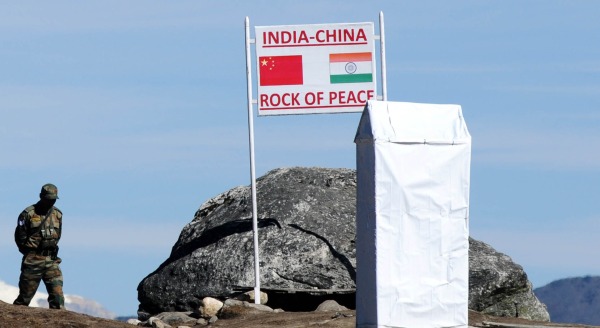
The U.S. position on whether India or China has sovereignty over the territory of Arunachal Pradesh will be increasingly important as the rivalry between those two emerging powers grows.
Source: Eurasia Review

In the East and South China Seas, which have become the new theaters of regional rivalry, Washington has carefully avoided backing the territorial claims of any of the parties – neither those of China nor of its allies. On the India-China border dispute, in contrast, we have been just reminded that Washington recognises India’s sovereignty over Arunachal Pradesh.
During her visit to Guwahati last week, the US ambassador to India, Nancy Powell, reportedly said that the United States acknowledges the McMahon Line as the legitimate border between India and China. Powell’s comments apparently came in response to questions from local reporters. The U.S. envoy added that this is not a new American position and has been in place since 1962, when New Delhi and Beijing clashed with each other.While that is a separate story in itself, Powell’s decision to reaffirm the U.S. approach to Arunachal and the McMahon Line might be of some political significance. It has been years since the United States formally articulated this long-standing position on the India-China border dispute. It is one thing for a country to have a position and entirely another for it to state it, or restate it, in public. What matters is the context.
At a moment when U.S.-China relations have entered an uncertain phase, and the India-China boundary dispute remains unresolved, American support to India’s sovereignty over Arunachal adds one more layer to the complex triangular relationship between Delhi, Beijing and Washington.
An American scholar, Jeff M. Smith, has recently published a brief account of how the Kennedy administration decided to back India against China on the McMahon Line. As India-China tensions on the border began to boil over in 1959, Smith writes, then US Secretary of State, Christian Archibald Herter, made it clear that Washington did not take sides in the territorial dispute between India and China.
As push came to shove in 1962, US Ambassador to India, John Kenneth Galbraith, pressed Washington to endorse Delhi’s territorial claims on the North East Frontier Agency (NEFA), since renamed as Arunachal Pradesh. The US State Department was reluctant and instead proposed a “study” of the issue, a classic bureaucratic device to delay and deny change! Galbraith would not give up and got President John F. Kennedy to overrule the State Department.
A week into the war, Galbraith announced the following in Delhi on October 27, 1962: “The McMahon Line is the accepted international border and is sanctioned by modern usage. Accordingly we regard it as the northern border of the [North East Frontier Agency] region.”
Note that Galbraith’s statement 50 years ago, and that of Powell last week, are silent on the disputed western sector in Kashmir. Smith tells us that Galbraith was not convinced of India’s claims of sovereignty over Aksai Chin. Washington’s current position is that Aksai Chin is a disputed area that is claimed by India but administered by China.
Smith, a fellow at the American Foreign Policy Council, concluded that American support to India’s sovereignty over Arunachal has been an enduring legacy from the Kennedy administration that has been forgotten in Washington, Delhi, and Beijing. “Not really,” Powell is saying. The State Department, like any good foreign office, can always remember when it wants to.
While the India-China border is relatively tranquil at the moment, the real challenge for U.S. policy comes in East Asia, where China’s growing power is testing American alliances. America’s allies that feel bullied by China have no option but to rely on US power. But many in Washington, despite the recently proclaimed pivot to Asia, are concerned about giving a blank check to allies.
An American commitment that is too strong and open-ended, they worry, might encourage the allies to provoke China and drag Washington into a fight against Beijing over small islands that America has no real reason to bother about.
An ambiguous American commitment, on the other hand, would leave China free to take one small bite at a time, none big enough to provoke an American reaction. If America must carefully navigate between the dangers of “entrapment” and “abandonment”, China is unlikely to make it easy for the United States.
This article was originally published in the Eurasia Review.
Former Nonresident Senior Fellow, Carnegie India
A leading analyst of India’s foreign policy, Mohan is also an expert on South Asian security, great-power relations in Asia, and arms control.
Recent Work

C. Raja Mohan, Darshana M. Baruah


Alexander Gabuev, Paul Haenle, C. Raja Mohan, …
Carnegie India does not take institutional positions on public policy issues; the views represented herein are those of the author(s) and do not necessarily reflect the views of Carnegie, its staff, or its trustees.

In any defense establishment, change is an ongoing process. However, despite the best of intentions, existing bureaucracies, bound by habit and years of socialization, have their limits in implementing transformative change.

Anit Mukherjee

As AI grows more sophisticated, as the supply chains that power it become more contested, and as access to frontier models becomes geopolitically charged, India must begin to ask a different set of questions. Not what applications it can build on someone else’s infrastructure but what the world needs.

Konark Bhandari

The Indian Ocean Region hosts one of the densest concentrations of subsea cables in the world. Yet, despite accounting for a significant share of global internet traffic, India’s participation remains limited.

Charukeshi Bhatt

How is AI reshaping space security, creating governance challenges, and where does international diplomacy stand today?


Tejas Bharadwaj, Almudena Azcárate Ortega

After the chill in ties between 2020 and 2024 that brought India–China relations to their lowest point in several decades, the two countries have engaged each other afresh. This paper argues that there are predominantly four imperatives guiding India’s approach to China, and they exist in an order of priority.

Saheb Singh Chadha