After the recent fighting in Gaza, both Israel and Hamas can point to military successes and limited losses, which could offer a way to escape the cycle of revenge that would have been triggered by the humiliation or defeat of either side.
The recent confrontation between Israel and Hamas in Gaza introduces new elements in the evolution of modern warfare. Operation Pillar of Defense was an intense, asymmetric, one-week confrontation between Israel, a highly sophisticated military machine that fought a disciplined and tight counter-force campaign and the uninhibited militias of a non-state actor, Hamas, that concentrated on a counter-value, anti-civilian strategy.
Learning lessons from Round 1 in 2008, the protagonists came to the 'rematch' extremely well prepared, each having perfected its chosen doctrine - for Hamas, its 'statistical' missile offensive and for Israel, its precise, surgical approach. Significantly, while producing limited damage, the outcome may be characterized as "win-win," with each side realizing significant strategic achievements. While similar developments in the evolution of warfare have already appeared in earlier conflicts (from Afghanistan to Lebanon), the recent conflagration may have introduced a more generic "ideal type" of warfare that points to new characteristics of warfare in general.
A few hallmarks of the recent exchange, likely to prove a more enduring legacy, are worth noting:
No-footprint campaign. Both Hamas and Israel elected to confine their exchange to the application of firepower, delivered mainly by manned aircraft and, increasingly, UAVs on one side (Israel) and diverse rockets (and mortars) on the other.
A war of flying objects (the transformation of firepower). Hamas deployed and employed a huge and diverse arsenal of short- and long-range rockets. Contra these, Israel, leveraging superior targeting intelligence, deployed precision offensive munitions on the attack and, for the first time in military history, a budding-yet-effective precise missile defense. Unprecedented successes were scored by the pre-emptive interdiction of the long-range Hamas delivery capability, together with the effective in-flight interception of a high percentage of its attacking rockets. In an important sense, the Israeli campaign demonstrated a new and innovative phase in the Revolution in Military Affairs—creating an effective combined precision guided system, both on the attack and in defense.
Intensity, yet limited collateral damage. The conflict was highly efficient, in the sense that much strategic interaction and maneuver was possible and achieved (on both sides), with a small number of casualties - approximately 150 deaths (mostly combatants) on the Palestinian side and a few (mostly civilian) Israelis - in 8 days of intense violent interaction. The damage sustained by purely civilian targets was also remarkably small thanks to the targeting policy of Israel on the one hand and its budding missile defense capability on the other. As a result, the conflict may also be characterized as morally efficient: the number of non-combatant casualties and the extent of collateral damage were quite small relative to historical experience, the volume of firepower on both sides and the magnitude of operations, especially considering the purposeful and doctrinal efforts by Hamas to inflict just such damage and casualties.
Moral hazards. This desirable moral efficiency may have introduced a serious undesirable moral hazard of delineating a mutually acceptable battleground. Not to diminish the extent of damage and pain, on the spectrum of conflict spanning from total war (Hiroshima) to representative conflict (Knights of the Roundtable), this conflict was further over to the latter end, something approaching a computer-game-war (though not quite, of course). From a strategic perspective, this dynamic may have enabled the gratuitous extension of hostilities, as the relative impunity may have allowed for less careful and focused decision making on targeting and termination by Hamas and on how and when to exit by Israel (not that forethought exit strategies have been the norm in Israeli campaigns in the past).
The Gaza exchange ended without a clear-cut military decision, yet with clear and substantial gains on both sides, political gains that were not correlated with operational outcomes in the field.
On the internal front, Israel demonstrated to its population not only its commitment, but also its growing ability to defend them, while driving home to Hamas the price Israel can levy in return for sustained harassment of Israel. On the international front, due mostly to the moral justification and operational efficiency of the campaign, Israel was able to wage this war without suffering the historical-normal international swell of publicly-motivated international pressure to desist and the interventions of such undesirable players (from her perspective) such as Turkey.
Hamas, on the other hand, was also able to seize on the conflict to demonstrate its commitment to avenge the killing of its military leader, to stand up to Israel militarily, and to enhance its position in the Palestinian political setting as well as its international standing as an indispensable party and increasingly legitimate partner.
If the recently negotiated ceasefire proves more enduring than its predecessors, it may be precisely because of the limited (if bruising) nature of the conflict that preceded it, together with the win-win nature of the outcome. For this outcome enables the parties to escape the 'normal' preoccupying and destabilizing imperative to avenge that attend cases of humiliation and total defeat.
Senior Fellow, Nuclear Policy Program, Technology and International Affairs Program
Levite was the principal deputy director general for policy at the Israeli Atomic Energy Commission from 2002 to 2007.
Jonathan Shimshoni
Massachusetts Institute of Technology
Jonathan (Yoni) Shimshoni served for 25 years with the IDF, in both field command and staff positions, culminating his career as Director of Planning for the Planning Division (J-2) with the rank of Brigadier General. He received his Ph.D. in Public Policy from the Woodrow Wilson School at Princeton, with a specialty in security policy. Yoni has taught at Princeton and has pursued research on strategic issues at MIT; he has published within the Cornell Studies in Security Affairs and in International Security on conventional deterrence, technology and doctrinal innovation, as well as in the leading Israeli daily (“Haaretz”). Yoni has served on several committees of the Israeli National Security Council and in the IDF reserves has continued to work extensively on challenging security issues – related to economics, technology, strategy and doctrine. In addition to these security and policy related endeavors, Yoni was Managing Partner of PWC Consulting in Israel and has led the establishment and management of a start-up company. He will be spending this coming year (2018-19) at the Woodrow Wilson Center in Washington, continuing research begun at SSP on societal warfare in the 21st century.
Carnegie India does not take institutional positions on public policy issues; the views represented herein are those of the author(s) and do not necessarily reflect the views of Carnegie, its staff, or its trustees.
In any defense establishment, change is an ongoing process. However, despite the best of intentions, existing bureaucracies, bound by habit and years of socialization, have their limits in implementing transformative change.
After the chill in ties between 2020 and 2024 that brought India–China relations to their lowest point in several decades, the two countries have engaged each other afresh. This paper argues that there are predominantly four imperatives guiding India’s approach to China, and they exist in an order of priority.
This piece argues that the present Indian strategy, based on opportunistic diversification and utilization of limited strategic reserves, remains inadequate when confronting supply disruptions. It evaluates India’s options in the short, medium, and long terms.
This piece examines India’s response to U.S. sanctions and tariffs, specifically assessing the immediate market consequences, such as alterations in import costs, and the broader strategic implications for India’s energy security and foreign policy orientation.
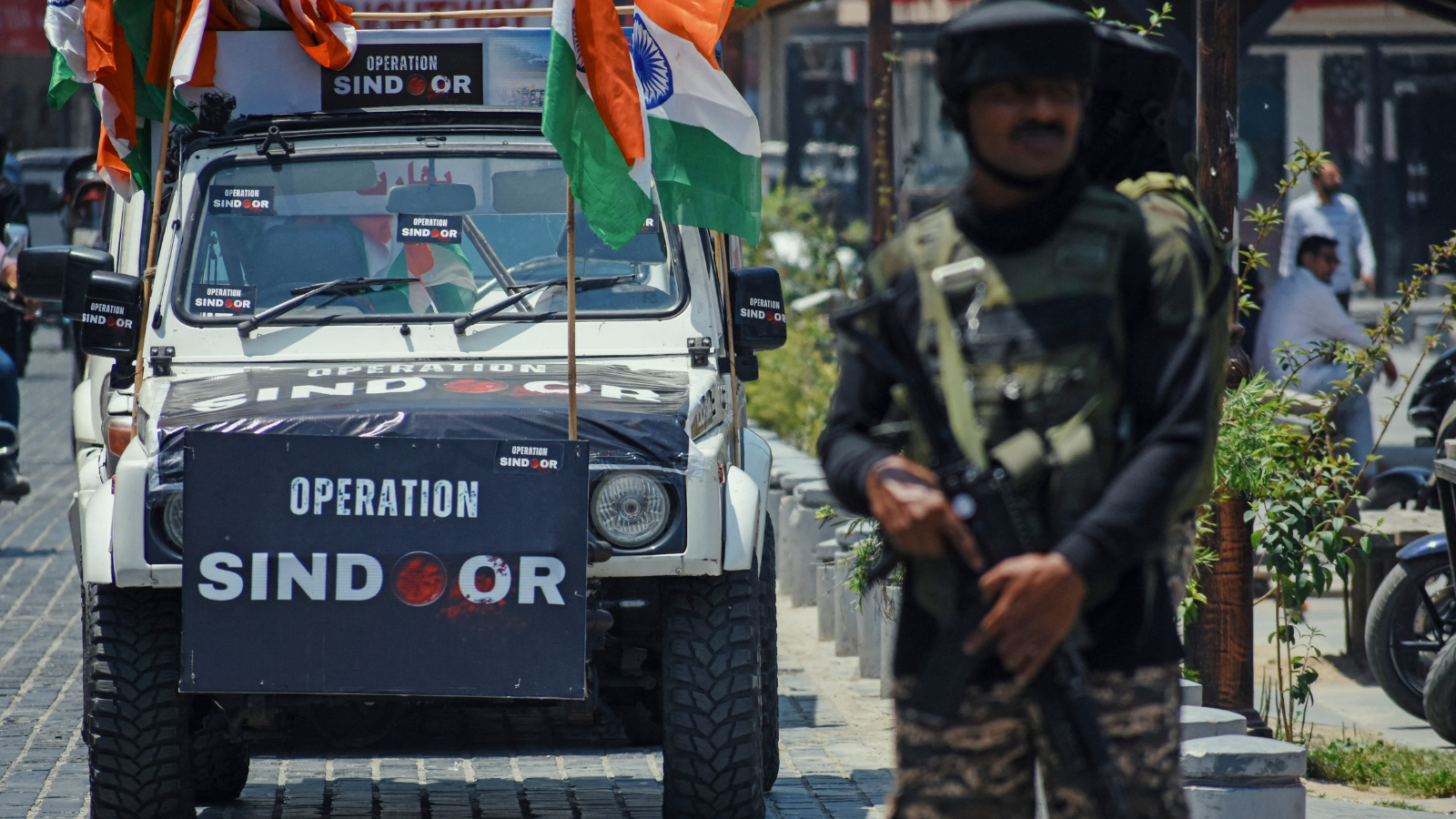
The India-Pakistan conflict that played out between May 6 and May 10, 2025, offers several military lessons. This article presents key takeaways from Operation Sindoor and breaks down how India’s preparations shaped the outcome and what more is needed to strengthen future readiness.