

Article
- +1
Toby Dalton, Mark Hibbs, Nicole Grajewski, …
{
  "authors": [
    "Mark Hibbs"
  ],
  "type": "legacyinthemedia",
  "centerAffiliationAll": "dc",
  "centers": [
    "Carnegie Endowment for International Peace"
  ],
  "collections": [
    "U.S. Nuclear Policy"
  ],
  "englishNewsletterAll": "ctw",
  "nonEnglishNewsletterAll": "",
  "primaryCenter": "Carnegie Endowment for International Peace",
  "programAffiliation": "NPP",
  "programs": [
    "Nuclear Policy"
  ],
  "projects": [],
  "regions": [
    "North America",
    "United States",
    "North Africa",
    "Western Europe",
    "France",
    "Mali"
  ],
  "topics": [
    "Nuclear Policy",
    "Nuclear Energy"
  ]
}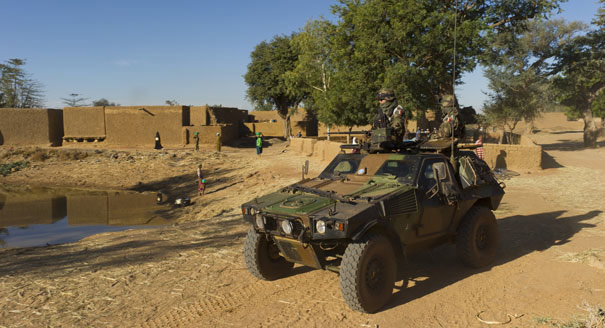
Source: Getty
In anticipation of a nuclear renaissance, investors tempted by speculative price increases during the last decade have been searching for uranium in places off the beaten track.
Source: Arms Control Wonk

What were investors thinking about risk when they stepped into remote parts of northern and eastern Mali beginning a few years ago? Maybe something like what you’ll find in the introductory pages of the current (2009) edition of the Lonely Planet guide to West Africa, which says about this country: “The Tuareg rebellion that began in 2006 seems to have almost run its course… on many fronts Mali is a model of West African democracy, one in which the overall health of the system has proven more enduring than the ambitions of individual leaders.” To be fair, the fine print deep inside the guidebook urges caution on travel in remote areas, and I can easily imagine a careful editor three years ago having inserted that qualifier almost in the sentence I cited above. But the windfall of arms from Libya, unfulfilled and intensifying Tuareg grievances, and the arrival of Al Qaida were clearly not anticipated.
An investor listed on the Toronto Stock Exchange, Rockgate Capital, is now in charge of a property French firm Areva (actually its predecessor Cogema) dabbled with many years ago, called Falea. The Red Book says that in 2012 Rockgate planned to continue exploring for silver, copper, and uranium at that site, which may contain identified and inferred uranium resources totalling about 10,000 tons. The Red Book suggests that political unrest may also have been a factor investors had to consider at this site, although it is located considerably to the south and west of France’s theater of operations against insurgents. Efforts to drill at the site have for several years encountered political opposition supported by Greens in the European Parliament.
There is no uranium production in Mali today. If you had plunked down hard cash in Mali uranium properties five years ago, you might currently regret that decision, but Mali’s uranium resource base would hardly justify the conspiracy theory floated in some quarters of cyberspace this month that France is going to war in Mali to protect Areva’s access to uranium there.
The political economy of natural resource extraction, including uranium, might well indeed factor into French decision making on how to respond to insurgency in West Africa at large. The takeover last week of a natural gas plant in Algeria spelled out that Al Qaeda’s reach in the region goes beyond Mali and that Islamists will target natural resource investments.
With national borders in the Sahara and Sahel existing largely on maps alone, a main focus of French concern has got to be Niger, the centerpiece of uranium production in northern Africa. As in Mali, Tuaregs in Niger have pressed the government for a greater share of the proceeds from mineral extraction, including from uranium production.
In 2011 Niger produced 4,400 tons of uranium, making Niger the fourth biggest producer in the world. Two mines there in which Areva is the main shareholder provide about a third of the uranium consumed by France’s nuclear power stations and a third of Areva’s total annual uranium output.
Reuters reported last year that Niger, aiming to push uranium output to over 5,000 tons/year, pressed Areva to open a new mine at Imouraren, a site where seven Areva employees were kidnapped by rebels in 2010. The site of the hostage-taking was a uranium-producing location located in the desert about 900 kilometers north east of the capital, Niamey. France and Niger fell out over the issue of lax security which permitted insurgents easy access their victims, as security was provided on the site by companies staffed by unarmed ex-Tuareg rebels; the rebels executed one French hostage and Al Qaeda claimed responsibility. Shortly after the kidnappings, the French military stepped up aerial presence in Niger.
In 2007–at the same time foreign investors were gearing up to prospect for uranium in Mali–the Niger government likewise jumped on the bandwagon prompted by uranium market speculation, and ended its exclusive partnership with French industry. Le Monde reported that, at the same time, Niger demanded more compensation from France related to uranium mining operations; sold through late 2012 scores of prospecting rights to non-French investors; and supported the demands of Tuaregs to share the wealth from Areva’s uranium production. According to more media reports, in the wake of the award of a uranium concession to Chinese industry, tension arose between Tuaregs and Chinese investors, leading to kidnapping of Chinese personnel.
Recent local accounts suggest that Tuaregs in Mali may have linked with Al Qaeda to tap money flowing into Mali, Niger, and Mauritania provided by Saudi-funded Wahbis, and that the rise in insurgency backed by Al Qaeda might be explained by Tuaregs once again demanding money from the government and other potential sources. In Niger, according to this study, Tuaregs made a deal with the Niger government in 1995 to cease fighting in exchange for between 10% and 15% of the proceeds from uranium mining operations. Two years later, a breakaway group resumed violence against the state. This was followed by a peace accord, and that in turn by renewed conflict over water shortages, working conditions, and, ecological degradation. Finally in 2007 a new Tuareg separation movement was formed which demanded greater compensation from uranium revenues and better environmental protection.
The peaceful resolution of Tuareg grievances would go far to mitigate uranium mining security threats in the region in the long term. Experience suggests that’s easier said than done. But what would happen if a state were to implode and its uranium mining assets taken over by terrorists? Were a country to lose control of remote assets, uranium might be misappropriated. For a clandestine nuclear weapons program, a little uranium would go a long way. So far, little attention has been given to this dilemma among established uranium producers, industry executives say, because until now the threat of such an event has been considered very improbable, and uranium ore is at the bottom of the nuclear fuel cycle.
In 2004, the IAEA was alerted that illegal uranium mining may have been taken place in the Republic of the Congo, following interest in uranium sales from North Korea and India. This was investigated by the IAEA. No transgressions were identified or reported in the Congo’s country files by IAEA personnel. Without an Additional Protocol in place, comprehensive safeguards agreements in countries mining uranium would not per se afford the IAEA access to mines. There are Additional Protocols in force in Mali, Mauritania, and Niger.

Nonresident Senior Fellow, Nuclear Policy Program
Hibbs is a Germany-based nonresident senior fellow in Carnegie’s Nuclear Policy Program. His areas of expertise are nuclear verification and safeguards, multilateral nuclear trade policy, international nuclear cooperation, and nonproliferation arrangements.
Recent Work


Toby Dalton, Mark Hibbs, Nicole Grajewski, …
Mark Hibbs
Carnegie India does not take institutional positions on public policy issues; the views represented herein are those of the author(s) and do not necessarily reflect the views of Carnegie, its staff, or its trustees.

How is AI reshaping space security, creating governance challenges, and where does international diplomacy stand today?


Tejas Bharadwaj, Almudena Azcárate Ortega

A partnership between India, a country of subcontinental size, and Africa, a continent of fifty-four countries, may seem asymmetric until one notes that both are home to nearly the same number of people—1.4 billion. This essay spells out the existing challenges to the partnership, its optimal potential, and the possible pathways to realize it over the next quarter-century.

Rajiv Bhatia

The U.S.–India semiconductor cooperation story is well-stocked with top-level strategic intent. What remains unresolved, however, are some underlying challenges that will determine whether the cooperation actually functions. Three such friction points stand out.

Shruti Mittal

India and the United States are close to concluding a Reciprocal Defense Procurement Agreement (RDPA) that will allow firms from the two countries to sell to each other’s defense establishments more easily. While this may not remedy the specific grievances both sides may have regarding larger bilateral issues, an RDPA could restore some momentum, following the trade deal announcement.

Konark Bhandari

On the last day of the India AI Impact Summit, India signed Pax Silica, a U.S.-led declaration seemingly focused on semiconductors. While India’s accession to the same was not entirely unforeseen, becoming a signatory nation this quickly was not on the cards either.
Konark Bhandari