• Research
  • About
  • Experts
Carnegie India logoCarnegie lettermark logo
{
  "authors": [
    "Shahram Chubin"
  ],
  "type": "other",
  "centerAffiliationAll": "",
  "centers": [
    "Carnegie Endowment for International Peace",
    "Carnegie Europe"
  ],
  "collections": [
    "Iranian Proliferation",
    "Transatlantic Cooperation",
    "Europe’s Southern Neighborhood"
  ],
  "englishNewsletterAll": "",
  "nonEnglishNewsletterAll": "",
  "primaryCenter": "Carnegie Endowment for International Peace",
  "programAffiliation": "",
  "programs": [],
  "projects": [],
  "regions": [
    "North America",
    "United States",
    "Middle East",
    "Iran",
    "Western Europe",
    "Europe"
  ],
  "topics": [
    "Security",
    "Nuclear Policy"
  ]
}
Source: Getty

Other

Command and Control in a Nuclear-Armed Iran

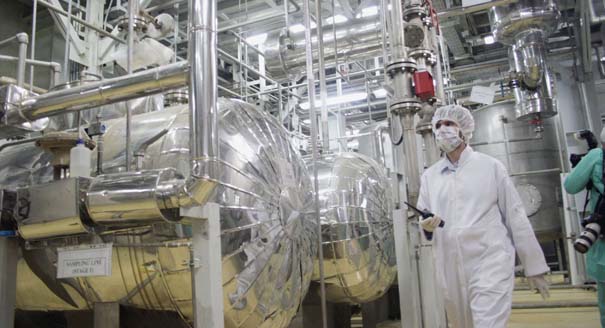
With the international spotlight focused on Iran and its nuclear agenda, Tehran has been loath to reliably assure the international community of its ultimate intentions.

Link Copied
By Shahram Chubin
Published on Feb 11, 2013

Source: Proliferation Papers No. 45

In the long standoff regarding its nuclear ambition, Iran has cultivated ambiguity and been loath to reliably assure the international community of its ultimate intentions, complicating Western efforts to understand, let alone constrain, Tehran’s endeavors. While many analyses have focused on how to prevent or contain a potential nuclear-armed Iran, the posture Iran would adopt once it has developed its nuclear weapons remains elusive. This paper highlights that while opting for command-and-control (C2) arrangements, Iran would have to reconcile two contrasting imperatives: first, to disperse assets and decentralize C2 to minimize the risks and potential damages of a disabling strike, which has been seen as a real – even imminent – threat in recent years. A contrasting concern emerged as the Iranian Revolutionay Guards’ Corps became a key formulator and executor of Tehran’s security policy: how to guard against the risk of unauthorized use of major weapons systems? Among the factors that could influence Iran’s choices in terms of C2 arrangements, this paper focuses on Tehran’s national security experience, the lessons it may have derived from it, as well as from the experience of other countries.

This piece originally appeared in IFRI's Proliferation Papers.

About the Author

Shahram Chubin

Former Nonresident Senior Fellow, Nuclear Policy Program

Chubin, who is based in Geneva, focuses his research on nonproliferation, terrorism, and Middle East security issues. He was director of studies at the Geneva Centre for Security Policy, Switzerland, from 1996 to 2009.

    Recent Work

  • In The Media
    Iran and the P5+1 in Moscow: Time is Running Out (Again)

      Shahram Chubin

  • In The Media
    The Revolution in Cairo is a Serious Warning for the Mullahs

      Shahram Chubin

Shahram Chubin
Former Nonresident Senior Fellow, Nuclear Policy Program
SecurityNuclear PolicyNorth AmericaUnited StatesMiddle EastIranWestern EuropeEurope

Carnegie India does not take institutional positions on public policy issues; the views represented herein are those of the author(s) and do not necessarily reflect the views of Carnegie, its staff, or its trustees.

More Work from Carnegie India

  • Commentary
    India Signs the Pax Silica—A Counter to Pax Sinica?

    On the last day of the India AI Impact Summit, India signed Pax Silica, a U.S.-led declaration seemingly focused on semiconductors. While India’s accession to the same was not entirely unforeseen, becoming a signatory nation this quickly was not on the cards either.

      Konark Bhandari

  • Commentary
    The Impact of U.S. Sanctions and Tariffs on India’s Russian Oil Imports

    This piece examines India’s response to U.S. sanctions and tariffs, specifically assessing the immediate market consequences, such as alterations in import costs, and the broader strategic implications for India’s energy security and foreign policy orientation.

      Vrinda Sahai

  • Article
    Military Lessons from Operation Sindoor

    The India-Pakistan conflict that played out between May 6 and May 10, 2025, offers several military lessons. This article presents key takeaways from Operation Sindoor and breaks down how India’s preparations shaped the outcome and what more is needed to strengthen future readiness.

      Dinakar Peri

  • Book
    India and the Sovereignty Principle: The Disaggregation Imperative

    This book offers a comprehensive analysis of India's evolving relationship with sovereignty in a complex global order. Moving beyond conventional narratives, it examines how the sovereignty principle shapes India's behavior across four critical domains—from traditional military power to contemporary data governance.

      Rudra Chaudhuri, Nabarun Roy

  • Commentary
    NISAR Soars While India-U.S. Tariff Tensions Simmer

    On July 30, 2025, the United States announced 25 percent tariffs on Indian goods. While diplomatic tensions simmered on the trade front, a cosmic calm prevailed at the Sriharikota launch range. Officials from NASA and ISRO were preparing to launch an engineering marvel into space—the NASA-ISRO Synthetic Aperture Radar (NISAR), marking a significant milestone in the India-U.S. bilateral partnership.

      Tejas Bharadwaj

Get more news and analysis from
Carnegie India
Carnegie India logo, white
Unit C-4, 5, 6, EdenparkShaheed Jeet Singh MargNew Delhi – 110016, IndiaPhone: 011-40078687
  • Research
  • About
  • Experts
  • Projects
  • Events
  • Contact
  • Careers
  • Privacy
  • For Media
Get more news and analysis from
Carnegie India
© 2026 Carnegie Endowment for International Peace. All rights reserved.