• Research
  • About
  • Experts
Carnegie India logoCarnegie lettermark logo
{
  "authors": [
    "Yan Xuetong"
  ],
  "type": "legacyinthemedia",
  "centerAffiliationAll": "",
  "centers": [
    "Carnegie Endowment for International Peace",
    "Carnegie China"
  ],
  "collections": [
    "China’s Foreign Relations"
  ],
  "englishNewsletterAll": "",
  "nonEnglishNewsletterAll": "",
  "primaryCenter": "Carnegie China",
  "programAffiliation": "",
  "programs": [],
  "projects": [],
  "regions": [
    "East Asia",
    "China"
  ],
  "topics": [
    "Security",
    "Military"
  ]
}

Source: Getty

In The Media
Carnegie China

China: Change and Challenge

China may need a bigger military budget to match its growing global presence.

Link Copied
By Yan Xuetong
Published on Mar 11, 2013

Source: NHK World

JAMES TENGAN, CORRESPONDENT, NHK WORLD: Professor Yan Xuetong of Tsinghua University is regarded as an academic who has influence over Chinese government officials. He's the Dean of the Institute of Modern International Relations. Our conversation about foreign policy started with the military, and his argument in favor of the increase in China's defense budget to about 120 billion dollars. 

YAN XUETONG: We need a stronger military ability to protect this country's security, people's security. And the security of the society. People should not be shocked by increasing the military budget and build a strong military power, because that's really what we need for the new security problems we're facing in the future.

JAMES TENGAN: Xi Jinping called for the so-called "restoration" of the Chinese people last November when he took charge of the Communist Party. Former leader Jiang Zemin used the expression after the 1989 Tiananmen Square incident.

YAN XUETONG: This is called the National Rejuvenation. It means that Chinese people are looking for the historical, international positions. Like in the Tang and the Hang dynasties. And we believe China, with the largest population of the world, they should be the strongest power in the world. And they should enjoy that equivalent respect from the rest of the world.

JAMES TENGAN: That approach is reflected, to some extent, in the territorial dispute that's divided Japan and China. Japan controls the Senkaku Islands in the East China Sea. China claims them, and calls them the Diaoyu Islands. Chinese protested across the country after the Japanese government nationalized the islands last September. The demonstrations have died down. But Chinese vessels remain active in an area just outside Japanese waters near the islands.

YAN XUETONG: The Abe administration denies there's a dispute over the islands, deny that there's conflict between the two countries. And that's really strange. I think to admit to the disputes is the precondition for improve China and Japan's relation. If the Abe administration adopts a positive approach and is looking for a way to settle down the disputes, over the Diaoyu Islands, I think that kind of initiative or action will definitely get a very positive response Xi Jinping government.

JAMES TENGAN: In your eyes, what are the biggest differences between the old leadership and the upcoming administration?

YAN XUETONG: China's international status has already changed. And no matter what their personal orientation they prefer, and they have to adopt China's foreign policy according to China's new international status. The conflicts between China and the US will become to deepen and widen, so from my understanding Chinese government's policy is to try to prevent all of these potential conflicts escalating into military clashes first. During the Cold War, there's no social contact between, no social and economic and cultural contact between the US and the Soviet Union. So, from my understanding, the Chinese government will carry out policy based on the people's contact to be continued, and also preventing military confrontation between China and the US.

This transcript was originally published on NHK World.

About the Author

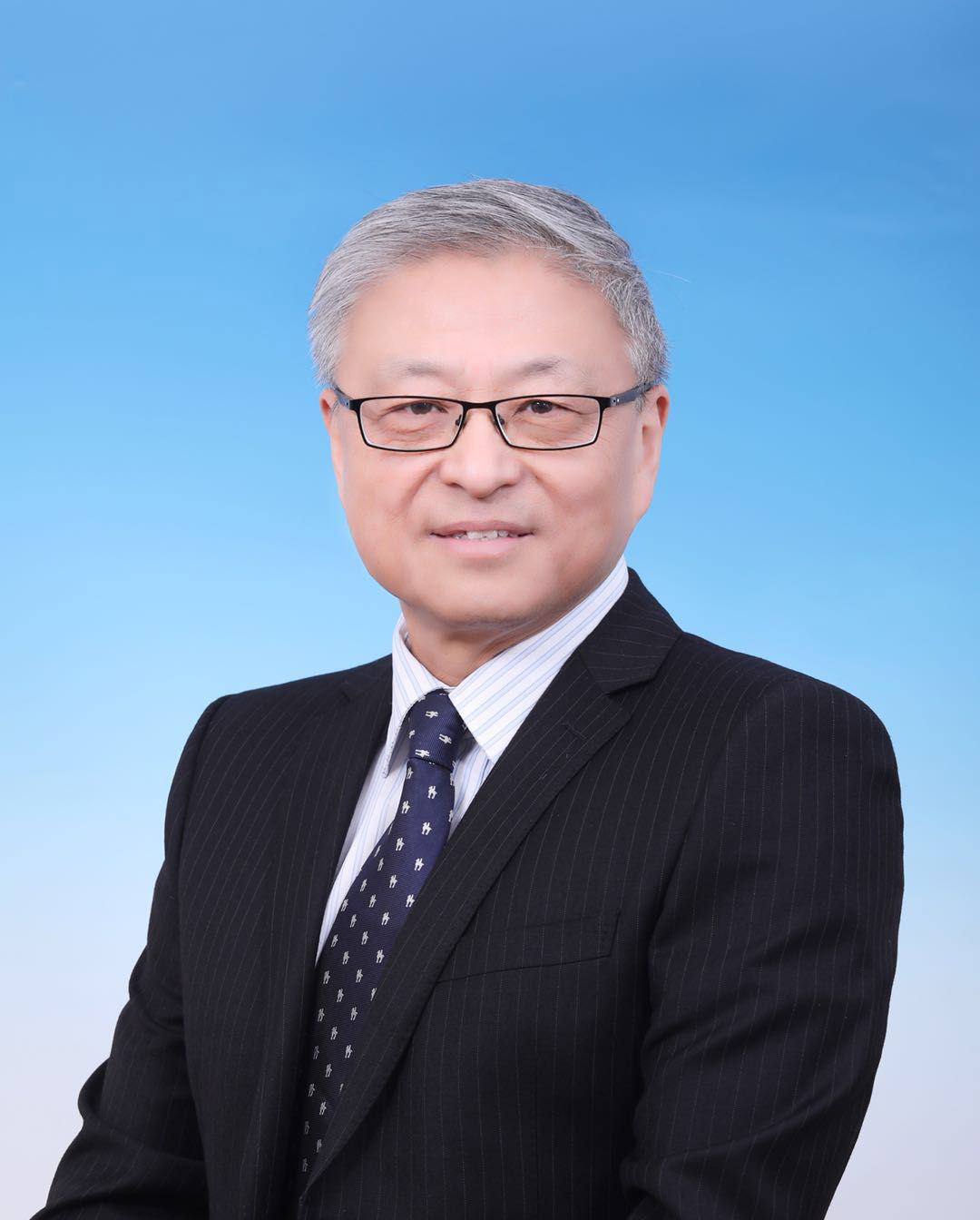
Yan Xuetong

Former President, Carnegie China Management Board, Carnegie-Tsinghua Center for Global Policy

Yan Xuetong was president of the Carnegie-Tsinghua Center Management Board until June 2020.

Yan Xuetong
Former President, Carnegie China Management Board, Carnegie-Tsinghua Center for Global Policy
Yan Xuetong
SecurityMilitaryEast AsiaChina

Carnegie India does not take institutional positions on public policy issues; the views represented herein are those of the author(s) and do not necessarily reflect the views of Carnegie, its staff, or its trustees.

More Work from Carnegie India

  • Commentary
    The Impact of U.S. Sanctions and Tariffs on India’s Russian Oil Imports

    This piece examines India’s response to U.S. sanctions and tariffs, specifically assessing the immediate market consequences, such as alterations in import costs, and the broader strategic implications for India’s energy security and foreign policy orientation.

      Vrinda Sahai

  • Article
    Military Lessons from Operation Sindoor

    The India-Pakistan conflict that played out between May 6 and May 10, 2025, offers several military lessons. This article presents key takeaways from Operation Sindoor and breaks down how India’s preparations shaped the outcome and what more is needed to strengthen future readiness.

      Dinakar Peri

  • Book
    India and the Sovereignty Principle: The Disaggregation Imperative

    This book offers a comprehensive analysis of India's evolving relationship with sovereignty in a complex global order. Moving beyond conventional narratives, it examines how the sovereignty principle shapes India's behavior across four critical domains—from traditional military power to contemporary data governance.

      Rudra Chaudhuri, Nabarun Roy

  • Paper
    India-China Economic Ties: Determinants and Possibilities

    This paper examines the evolution of India-China economic ties from 2005 to 2025. It explores the impact of global events, bilateral political ties, and domestic policies on distinct spheres of the economic relationship.

      Santosh Pai

  • Article
    Hidden Tides: IUU Fishing and Regional Security Dynamics for India

    This article examines the scale and impact of Chinese IUU fishing operations globally and identifies the nature of the challenge posed by IUU fishing in the Indian Ocean Region (IOR). It also investigates why existing maritime law and international frameworks have struggled to address this growing threat.

      Ajay Kumar, Charukeshi Bhatt

Get more news and analysis from
Carnegie India
Carnegie India logo, white
Unit C-4, 5, 6, EdenparkShaheed Jeet Singh MargNew Delhi – 110016, IndiaPhone: 011-40078687
  • Research
  • About
  • Experts
  • Projects
  • Events
  • Contact
  • Careers
  • Privacy
  • For Media
Get more news and analysis from
Carnegie India
© 2026 Carnegie Endowment for International Peace. All rights reserved.