

Commentary
Dmitri Trenin
{
  "authors": [
    "Dmitri Trenin"
  ],
  "type": "legacyinthemedia",
  "centerAffiliationAll": "",
  "centers": [
    "Carnegie Endowment for International Peace",
    "Carnegie Russia Eurasia Center"
  ],
  "collections": [],
  "englishNewsletterAll": "",
  "nonEnglishNewsletterAll": "",
  "primaryCenter": "Carnegie Russia Eurasia Center",
  "programAffiliation": "",
  "programs": [],
  "projects": [],
  "regions": [
    "Russia",
    "Western Europe"
  ],
  "topics": [
    "Political Reform",
    "Civil Society",
    "Foreign Policy"
  ]
}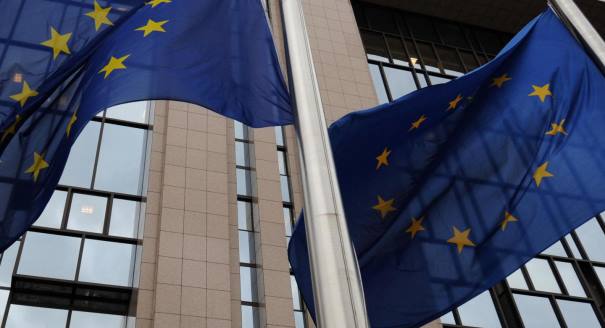
Source: Getty
In order for the EU to have a successful policy toward its biggest neighbor, Europeans must understand the recent changes that have taken place in Russia and their implications for the country’s future.
Source: BEPA Monthly Brief
The EU’s Russia policy requires a rethink. It should take account of the changes in Russia under way since late 2011. These changes include: a fledging multi-directional societal awakening after two decades of post-communist/post-imperial readjustment; a shift toward social conservatism in the government’s policies; and an emphasis on Eurasian integration as the main thrust of Russia’s foreign policy. Europeans need to understand these changes and their implications to ensure that the EU has a successful policy toward its biggest neighbor. Above all, Europeans need not be frustrated by the vicissitudes of Russian domestic developments and should take instead a long-term view.
The Russian awakening is the result of Russian society’s relative success in first surviving amid the debris of the Soviet system without slipping into a civil war, and then in achieving a measure of freedom and prosperity never enjoyed before in Russian history. Socio-political – rather than purely economic – development are likely to play the leading role in Russia’s future evolution. The stirring of society should not be mistaken for a ‘Russian Spring’, much less for the death knell of the existing regime. The awakening covers the entire waterfront: from liberals and libertarians to nationalists and fundamentalists. Much of it has no political or ideological affiliation; some of it is distinctly religious, whether Christian Orthodox or Islamic. Russia is stirring, but not yet moving.
The Russian government has responded to the society’s awakening with a combination of token concessions, targeted repression, and a clear conservative shift. So far, the Russian government has been able to repel the challenge from its opponents. However, the Kremlin has taken the threat to its rule seriously. In response to the potentially lethal charge of wholesale corruption in high places it has ordered investigations of high-level cases on the embezzlement of state funds. It is also in the process of disciplining echelons of the elite, restricting, for example, their freedom to keep their money abroad.The authorities have also come up with a version of Russian official nationalism grounded in Orthodox Christianity and the traditional values that it supports (e.g., the sanctity of traditional family and respect for authority). The Russian Orthodox Church has already become an overt partner of the Russian state. The state itself is represented by a strong centralized leadership which rules with the consent of the majority. It is legitimized through elections, where opposition is depicted as anti-national: either Communist or pro-United States. The unity of the bulk of the Russian people in this scheme of things is necessary for Russia to escape being subjugated by foreigners, particularly the United States.
The reality of the Russian awakening means, however, that interests are increasingly entering the public debate challenging the official scheme. The Kremlin has vast resources and much resilience in the face of the continuing change, but the next few years are likely to be anything but dull. Barring unforeseen developments, elections will drive the political process. By the time Russians are due to elect their new Duma (2016) and take part in another presidential vote (2018), in which Putin intends to present himself again, society will have evolved. Russia will be more interesting, but is unlikely to become overly chaotic: for most people, too much is at stake.
As an international player, Russia sees itself as a great power. This means that Russia does not accept much control over others; rather it seeks freedom from anyone else’s control. Russia’s new official nationalism has a distinct anti-American flavor. Moscow’s relations with Washington are at a low ebb, even in the absence of a significant clash of interests. The global recession and the eurozone crisis have pushed Moscow toward more emphasis on Eurasian regionalism. Since 2009, Moscow has been prioritizing integration with Belarus and Kazakhstan within a customs union and then a single economic space, leading to a full-fledged economic union by 2015. From a geopolitical perspective, Russia seeks to strengthen its position vis-à-vis its main neighbors: the EU and China. While choosing to see the relative decline of the West as a welcome sign of global power rebalancing, Russia is trying to adjust to the rise of Asia and especially that of its neighbor, China. Moscow has been trying – so far, not with much success – to find a formula to launch the economic revival of its Siberian and Far Eastern regions.
For the outside world, dealing with Russia in the next few years will mean dealing directly with President Putin. Many will find this situation unpleasant and call for actively opposing the Kremlin’s authoritarianism. Following the US Congressional example, some Europeans are calling for adopting Europe’s own versions of the Magnitsky Act, thus applying real pressure on the people who rule Russia and their allies.
Yet, opposing Russia, or simply ignoring it, will carry a price. Russia is, and will continue to be, for the Russians themselves to fix. Russia is not part of the EU Brussels-leaning neighborhood, where conditionality can be effectively employed. Outsiders can influence Russian developments only on the margins, and not always positively. Western values need to inform Western interests, not to replace them. Europeans need to approach the Russians on their own terms, but they should not expect the Russians always to conform. Unlike the EU approach practiced toward Turkey and Ukraine, the issue for the EU should not be what the Europeans want Russia to be or to become, but what they want or need from Russia. The basic needs include:
That said, more European engagement with Russians at all levels and in all fields (economy and business, culture and the arts, tourism and exchange programmes) will materially contribute to Russian society’s onward transformation, including in the realm of values. Isolationist trends in the Kremlin’s policies can be effectively countered by opening Europe even more widely to Russian citizens. Phasing out visa restrictions is the most effective way for the EU to use its soft power with respect to Russia.
Europe’s soft power will increase still further when the EU emerges from the present financial crisis and re-launches growth. As it strives for more internal coherence, the Union should avoid its Russia policy being the lowest common denominator of national attitudes. It should also avoid a situation where the EU appears in the Russian eyes to stand for restrictions, while the bilateral relationships with individual EU member states seem to offer opportunities.
Finally, Europe should not succumb to the new stereotype that Russia will become increasingly irrelevant in the 21st century world and simply lose interest. If Russia continues to decline, its problems may seriously affect Europe. If it eventually emerges as a more important player, Europe will have missed important opportunities. That said, Europeans need to pay close attention, and seek to use their soft power to build a special relationship with their neighbor. Putin’s vision of a “greater Europe” as a compact between the EU and the yet-to-emerge Eurasian Union should challenge the Europeans to come up with a vision of their own.
This article originally appeared in the Bureau of European Policy Advisers (BEPA) Monthly Brief.
Former Director, Carnegie Moscow Center
Trenin was director of the Carnegie Moscow Center from 2008 to early 2022.
Recent Work
Dmitri Trenin
Dmitri Trenin
Carnegie India does not take institutional positions on public policy issues; the views represented herein are those of the author(s) and do not necessarily reflect the views of Carnegie, its staff, or its trustees.

After the chill in ties between 2020 and 2024 that brought India–China relations to their lowest point in several decades, the two countries have engaged each other afresh. This paper argues that there are predominantly four imperatives guiding India’s approach to China, and they exist in an order of priority.

Saheb Singh Chadha

This piece argues that India’s central challenge is not managing a single flashpoint but resolving the underlying tension between expansion and institutional coherency of the BRICS grouping.

Vrinda Sahai

A partnership between India, a country of subcontinental size, and Africa, a continent of fifty-four countries, may seem asymmetric until one notes that both are home to nearly the same number of people—1.4 billion. This essay spells out the existing challenges to the partnership, its optimal potential, and the possible pathways to realize it over the next quarter-century.

Rajiv Bhatia

The India–EU Free Trade Agreement (FTA) is shaping up to be one of the most consequential trade negotiations, both economically and strategically. But, what’s in the agreement, what’s missing, and what will determine its success in the years ahead
Vrinda Sahai, Nicolas Köhler-Suzuki
Trump 2.0 has unsettled India’s external environment—but has not overturned its foreign policy strategy, which continues to rely on diversification, hedging, and calibrated partnerships across a fractured order.


Milan Vaishnav, ed., Sameer Lalwani, Tanvi Madan, …