

Q&A
- +1
Sheena Chestnut Greitens, Oriana Skylar Mastro, Yukon Huang, …
{
  "authors": [
    "Yukon Huang"
  ],
  "type": "legacyinthemedia",
  "centerAffiliationAll": "dc",
  "centers": [
    "Carnegie Endowment for International Peace"
  ],
  "collections": [],
  "englishNewsletterAll": "asia",
  "nonEnglishNewsletterAll": "",
  "primaryCenter": "Carnegie Endowment for International Peace",
  "programAffiliation": "AP",
  "programs": [
    "Asia"
  ],
  "projects": [],
  "regions": [
    "East Asia",
    "China"
  ],
  "topics": [
    "Political Reform",
    "Economy"
  ]
}
Source: Getty
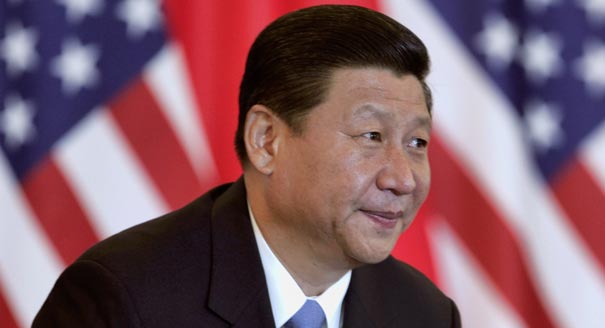
Some observers see Xi's varied contacts with the West and his experience being the son of one of the prominent figures of the revolutionary era as providing clues that he will be more forceful in steering the collective leadership.
Source: Global Times
China watchers are fixated on Xi Jinping's every action to get a sense of what he will be like as China's next president.
After becoming general secretary of the CPC Central Committee in November, his visit to Guangdong, including laying flowers at a statue of Deng Xiaoping, was widely interpreted as a sign that he would continue to open up the economy, since it echoed Deng's famous "southern tour."
Other media reports suggest that he is committed to undertaking reforms but in a cautious and gradual way. The limited statements about his views are not surprising.But will Xi turn out to be a transformative leader in the mode of Deng? And will he be willing to act decisively on political as well as economic liberalization?
Knowledgeable observers caution that focusing on an individual is misplaced given that decision-making has become more of a collective process.
But some see Xi's impending assumption of both the presidency and the chairmanship of the military commission, his varied contacts with the West and his being the son of one of the prominent figures of the revolutionary era, as providing clues that he will be more forceful in steering the collective leadership.
This would be good news. With rapid development, the challenges facing China have now become more complex with two issues dominating.
One is the need for a new growth model that would allow China to reach high income levels.
The other more immediate concern for most Chinese people is corruption and rising disparities, which Xi has acknowledged will jeopardize the legitimacy of the political system if left unchecked.
For the development process to be enduring, it cannot continue to foment the kind of social unrest that now requires more to be spent on internal security than on the military.
The solutions to these twin concerns are related. Their common theme is the need to reshape the role of the State in a modernizing China.
A decade ago, it was ideology that made redefining the State's role difficult.
Now, with so many State entities and Party officials having benefited from their privileged positions, it is the potential for personal gain that is holding needed reforms hostage.
In some areas, the State needs to pull back to spur the efficiency gains and innovation needed for sustained growth.
But in others, the State needs to take on more responsibilities such as ensuring that public services are reliable and regulatory systems are guarding against excessive risks.
The outlines of what needs to be done are known, including separating ownership and operating responsibilities for State enterprises and opening up State-dominated activities to private sector entry.
More generally, accountability and efficiency would be enhanced if the government relied less on State banks to channel resources for noncommercial purposes and strengthened the fiscal system to finance the social services needed to reduce disparities.
History tells us that reforms are more likely to come from initiatives that are tested locally and then adopted nationwide.
China is unique in using a decentralized administrative system to deal with both economic and political objectives. This approach promoted economic liberalization by encouraging reforms to meet development targets, but discouraged political liberalization when applied to political objectives that are geared largely to avoiding social unrest.
Can this new generation of leaders find a way to push ahead with political liberalization that is acceptable within the Party system?
China already has a law that provides for competitive village level elections that offer the potential for change to begin at local levels. But their lack of openness has been disappointing.
Truly representative elections would put in place officials who would be more responsive to their constituents, and create pressures for accountability that would begin to check corruption. This would reduce the need for protests and make it less necessary to appeal to Beijing for intervention.
If combined with actions at the top to reshape the role of the State in economic activities, this would reaffirm China's long-standing principle that the State is there to serve the people and together initiate a process of political and economic liberalization that would transform China.

Senior Fellow, Asia Program
Huang is a senior fellow in the Carnegie Asia Program where his research focuses on China’s economy and its regional and global impact.
Recent Work


Sheena Chestnut Greitens, Oriana Skylar Mastro, Yukon Huang, …


Yukon Huang, Isaac B. Kardon, Matt Sheehan
Carnegie India does not take institutional positions on public policy issues; the views represented herein are those of the author(s) and do not necessarily reflect the views of Carnegie, its staff, or its trustees.

After the chill in ties between 2020 and 2024 that brought India–China relations to their lowest point in several decades, the two countries have engaged each other afresh. This paper argues that there are predominantly four imperatives guiding India’s approach to China, and they exist in an order of priority.

Saheb Singh Chadha

This piece argues that India’s central challenge is not managing a single flashpoint but resolving the underlying tension between expansion and institutional coherency of the BRICS grouping.

Vrinda Sahai

On March 10, 2026, India’s Union Cabinet approved amendments to Press Note 3, a regulation that mandated government approval on all foreign direct investment (FDI) from countries sharing a land border with India. This amendment raises questions primarily about whether its stated benefits will materialize and if the risks have been adequately weighed. This piece will address the same.

Konark Bhandari

This piece examines India’s response to U.S. sanctions and tariffs, specifically assessing the immediate market consequences, such as alterations in import costs, and the broader strategic implications for India’s energy security and foreign policy orientation.
Vrinda Sahai
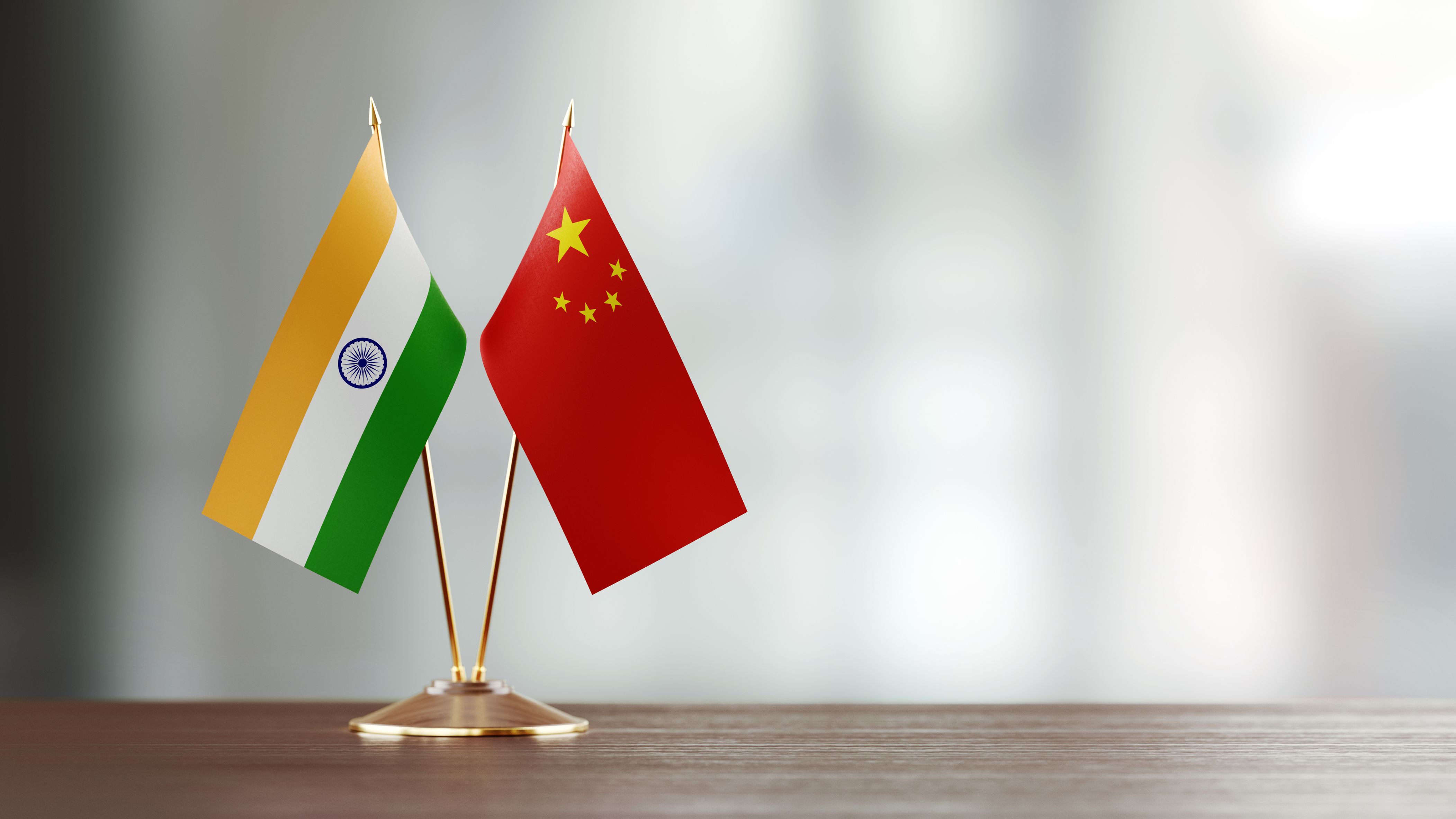
This paper examines the evolution of India-China economic ties from 2005 to 2025. It explores the impact of global events, bilateral political ties, and domestic policies on distinct spheres of the economic relationship.
Santosh Pai