

In The Media
John Judis
{
  "authors": [
    "John Judis"
  ],
  "type": "legacyinthemedia",
  "centerAffiliationAll": "",
  "centers": [
    "Carnegie Endowment for International Peace"
  ],
  "collections": [],
  "englishNewsletterAll": "",
  "nonEnglishNewsletterAll": "",
  "primaryCenter": "Carnegie Endowment for International Peace",
  "programAffiliation": "",
  "programs": [],
  "projects": [],
  "regions": [
    "North America",
    "United States"
  ],
  "topics": [
    "Security"
  ]
}
Source: Getty
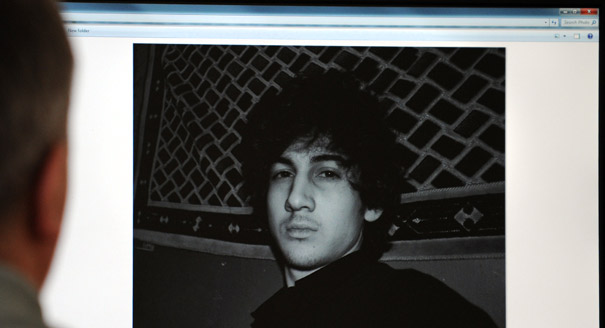
Two competing theories have emerged about the Tsarnaev brothers: they were Islamic terrorists or they were social misfits with psychological profiles similar to school shooters.
Source: New Republic
If, as authorities believe, Tamerlan and Dzhokhar Tsarnaev carried out the Boston bombings, the remaining and pressing question is why they did so. Two competing theories have emerged: that they were Islamic terrorists, and that they were social misfits with psychological profiles more similar to school shooters.
The first theory rests largely on the fact that Dzhokhar reportedly told the FBI that he and his brother were angry about Americans killing Muslims in Iraq and Afghanistan. This has led some to call the bombing “blowback” for American intervention in the Middle East and South Asia. Michael Lind argues that the Tsarnaevs might best be understood as “sincere Islamist revolutionaries, like the thousands of others who have rallied to militant jihadism in the past several decades.”But others, such as former counterterrorism official Philip Mudd, believe that the Tsarnaevs were “angry kids with a veneer of ideology that’s about skin deep.” In an interview with The New Republic, French terrorism expert Olivier Roy compared the brothers to “the guys who did the Columbine sort of attacks against a school.” Harvard psychiatrist Ronald Schouten traces the older brother’s Islamism to his failure at boxing and college. “People who failed sometimes latch onto a cause that makes their anger legitimate,” Schouten told The New York Times.
We may never fully understand the brothers’ mentality, but I think it is a fair guess that both views of their motives are right. They were Islamist revolutionaries and disturbed kids, and it’s important in each instance to understand the implications. They were political revolutionaries in an obvious way: Unlike the Columbine or Newtown or Virginia killers, the brothers did see themselves as committing a terrorist act on behalf of a particular political ideology. The Tsarnaevs’ alleged actions were not simply an expression of personal anger.
That the Tsarnaevs were not disciplined members of an organized group—the way, for instance, that the September 11 terrorists were—does not distinguish them from other recent jihadists. Roy has argued this, and so, as Boston Globe columnist Farah Stockman pointed out, has former CIA case officer Marc Sageman. Five years ago, Sageman published a prescient book, Leaderless Jihad: Terror Networks in the Twenty-First Century, that described the emergence of a new post-Iraq invasion generation of jihadis that have no concrete connection to Al Qaeda, but who nonetheless look to its Islamist principles for guidance. “The new generation of terrorists consists of homegrown wannabes—self-recruited, without leadership and globally connected through the Internet,” he wrote.
Sageman’s examples were drawn from Europe—the Dutch born Mohammed Bouyeri who assassinated filmmaker Theo Van Gogh, the perpetrators of the Madrid bombing, and some second-generation Canadians who were arrested before they could stage attacks in Toronto and Ottawa. But a year later, he could have added Major Nidal Malik Hasan, charged with killing thirteen fellow soldiers at Fort Hood in November 2009.
None of these terrorists were recruited or trained by al Qaeda, but they learned Islamist ideology and tactics over the Internet, just as the Tsarnaev brothers allegedly did. Can that constitute being part of a movement? If two people can conduct a love affair over social media without ever meeting in person, why can’t a would-be terrorist, watching videos, exchanging emails, or perhaps even participating in chat rooms, also conceive of himself as a member of a global political movement even though he never attended a face-to-face meeting with any leader of Al Qaeda or its affiliates? In this new world of media, the Tsarnaevs were part of a global movement that has targeted the United States as an enemy of Islam.
Like their European counterparts, the Tsarnaevs—and particularly Tamerlan—were also unhappy, and disturbed, kids. They were immigrants or the children of immigrants who had difficulty assimilating. Their uncle described them as “losers” who felt “hatred to those who were able to settle themselves.” They had no direct experience of American intervention in Iraq or Afghanistan. They—and, again, Tamerlan is the prime example—seemed to go from personal and career disappointment to Islam to Islamism to terrorism. A psychologist would describe this as “displacement” and see their actions as a personal expression of rage one step removed from the kind of political calculation that characterizes revolutionary action.
Indeed, there does seem to have been an irrational dimension to the Tsarnaevs' alleged actions that invites comparisons to the Columbine or Sandy Hook killers. If the brothers acted in order to protest American actions toward Muslims in Iraq and Afghanistan, they didn’t do a very good job of tying their actions to their convictions. Bouyeri, for instance, left a note warning the enemies of Islam on the body of his victim. Hasan is said to have shouted “Allahu Akbar” (“God is Great”) during the killings. But the Tsarnaevs left no note and acted afterwards as if they hoped to get away with what they had done.
Still, it’s not hard to see why the brothers ended up as Islamist revolutionaries rather than as petty criminals or simply devout Muslims. Writing in 2008, Sageman believed that “homegrown terrorism” was far less likely among American than European Muslims because American Muslims were less likely to suffer the kind of alienation and segregation that their European counterparts did. Sageman cited a poll showing that 71 percent of American Muslims, compared to 64 percent of Americans as a whole, believed in “the American dream.” But Sageman’s analysis cuts both ways. It suggests that if Muslim immigrants like the Tsarnaevs become deeply alienated and abandon hope of assimilation, they are unlikely to find in the optimistic American brand of Islam the kind of emotional support and existential justification they are looking for. Instead, they may be more likely to turn to the virtual community of radical Islam.
Whether the Boston bombings were a freak, once-in-a-decade occurrence or part of a growing threat depends partly on the continuing appeal to alienated immigrants of Islamist anti-Americanism. In 2008, Sageman expected the appeal of Islamist anti-Americanism to decline as America’s “footprint” in the region “fades.” That may eventually happen as American troops withdraw from Iraq and Afghanistan, but as the Tsarnaevs' example shows, it has not happened yet, and may well endure, along with the threat of homegrown terrorism.

Former Visiting Scholar
As a visiting scholar at Carnegie, Judis wrote The Folly of Empire: What George W. Bush Could Learn from Theodore Roosevelt and Woodrow Wilson.
Recent Work
John Judis
John Judis
Carnegie India does not take institutional positions on public policy issues; the views represented herein are those of the author(s) and do not necessarily reflect the views of Carnegie, its staff, or its trustees.

In any defense establishment, change is an ongoing process. However, despite the best of intentions, existing bureaucracies, bound by habit and years of socialization, have their limits in implementing transformative change.

Anit Mukherjee

How is AI reshaping space security, creating governance challenges, and where does international diplomacy stand today?


Tejas Bharadwaj, Almudena Azcárate Ortega

After the chill in ties between 2020 and 2024 that brought India–China relations to their lowest point in several decades, the two countries have engaged each other afresh. This paper argues that there are predominantly four imperatives guiding India’s approach to China, and they exist in an order of priority.

Saheb Singh Chadha

The U.S.–India semiconductor cooperation story is well-stocked with top-level strategic intent. What remains unresolved, however, are some underlying challenges that will determine whether the cooperation actually functions. Three such friction points stand out.

Shruti Mittal

This piece argues that the present Indian strategy, based on opportunistic diversification and utilization of limited strategic reserves, remains inadequate when confronting supply disruptions. It evaluates India’s options in the short, medium, and long terms.

Vrinda Sahai