

Commentary
Dmitri Trenin
{
  "authors": [
    "Dmitri Trenin"
  ],
  "type": "legacyinthemedia",
  "centerAffiliationAll": "",
  "centers": [
    "Carnegie Endowment for International Peace",
    "Carnegie Russia Eurasia Center"
  ],
  "collections": [],
  "englishNewsletterAll": "",
  "nonEnglishNewsletterAll": "",
  "primaryCenter": "Carnegie Russia Eurasia Center",
  "programAffiliation": "",
  "programs": [],
  "projects": [],
  "regions": [
    "North America",
    "United States",
    "Russia"
  ],
  "topics": [
    "Foreign Policy"
  ]
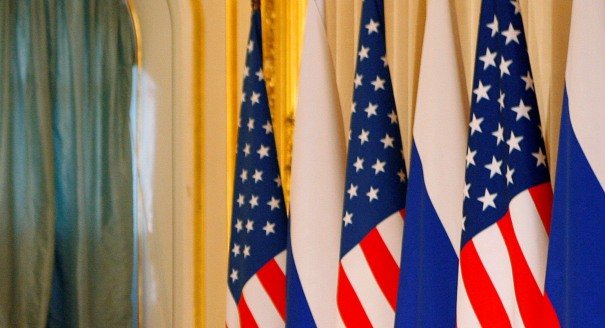
}
Source: Getty
Putin will make it clear again that Russian domestic politics is off limits to Washington. By the time Obama arrives for his scheduled visit to Moscow, Snowden will have left the airport, and be silent.
Source: Global Times
Edward Snowden had not planned to stay in Russia, or even cross its border. But by the time he arrived at Moscow's Sheremetyevo International Airport, he had already been trapped: The US government had revoked his passport, and successfully pressured Latin American countries not to send Snowden any travel documents.
Russian authorities certainly knew about Snowden's travel plans and were ready to assist him part of the way, but had no intention of hosting him in Russia.
Moscow is definitely pleased to see the US moral high ground being demolished by the ex-CIA contractor's revelations, but it does not want Russia to serve as a platform for these revelations.After the Russians realized that the operation of which they were evidently part - alongside China and Ecuador - did not run according to plan, they started looking for a way out.
This proved to be very hard. Extraditing Snowden to the US was unthinkable, keeping him was too costly, and handing him off to a third country was blocked by US actions.
Having made loud statements, Ecuador soon ducked. Venezuela was a possibility, as its president was visiting Moscow for a gas exporters' summit in early July. He could have granted Snowden asylum on the spot in Moscow and taken him to Caracas aboard his plane.
However, the Bolivian president, who was returning home from the same summit, saw his plane denied passage through French, Spanish and Portuguese airspace, and was eventually forced to land in Austria - all due to the rumor that he was carrying Snowden.
The US made it crystal clear that it would stop at nothing to get Snowden. The Venezuelan leader then flew back without an extra passenger. Snowden stayed put.
With the Latin American option on hold, Russia had to do something - and had to do it quickly, with the scheduled visit by US President Barack Obama to Moscow only a few weeks away. Russian President Vladimir Putin laid down his condition for granting Snowden political asylum in Russia: stopping any activity "which would be damaging to our US partners."
This condition ran exactly counter to Snowden's self-appointed mission of telling the world about the massive abuse by the US government of its surveillance power. Yet, he had no choice but to accept it. He applied for asylum in Russia and promised to the Russian lawyer dealing with him that he would stop talking.
This may not be the end of the Snowden saga. As far as US-Russian relations are concerned, the Snowden case has certainly strained them.
Not only the US president's domestic political opponents but possibly some members of his own administration are questioning the wisdom of traveling to Russia if the US government's "public enemy No.1" is still there. Moscow's refusal to extradite Snowden is seen as an insult adding to the injury of the fallout of Snowden's revelations.
Yet, Obama understands that if he calls off his visit now, the relationship with Russia will probably deteriorate in a way which will further damage US interests in areas such as nuclear disarmament - a legacy issue for Obama - and the Middle East, to name but a few.
He will also expose himself as being weak and susceptible to external pressure, something which could undermine his second presidential term.
On the other hand, if Obama goes through with the visit, he would have to give good reasons why the relationship with Russia is important for the US - something which his administration has never spelled out very clearly.
He would also have to defend dealing personally with Putin, whom much of the US political class and virtually the entire media put in the same company as Bashar al-Assad, Mahmoud Ahmadinejad and Kim Jong-un.
Above all, Obama will have to come up with a sense of a strategy which follows his Russia "reset" policy of four years ago. As of this writing, there is no trace of it yet.
Putin is looking forward to nailing down the terms of engagement between the two countries for the next three years.
Putin has an agenda which prioritizes economic cooperation issues. He has a list of Russian concerns in the military security sphere, from Ballistic Missile Defense to the Prompt Global Strike (a system that can deliver a precision conventional weapon strike anywhere in the world within one hour), which he is going to raise and look for possible compromise solutions to.
And he will make it clear again that Russian domestic politics is off limits to Washington. By the time Obama's Air Force One touches down in Moscow, Snowden will have left the airport, and be silent.
Former Director, Carnegie Moscow Center
Trenin was director of the Carnegie Moscow Center from 2008 to early 2022.
Recent Work
Dmitri Trenin
Dmitri Trenin
Carnegie India does not take institutional positions on public policy issues; the views represented herein are those of the author(s) and do not necessarily reflect the views of Carnegie, its staff, or its trustees.

How is AI reshaping space security, creating governance challenges, and where does international diplomacy stand today?


Tejas Bharadwaj, Almudena Azcárate Ortega

After the chill in ties between 2020 and 2024 that brought India–China relations to their lowest point in several decades, the two countries have engaged each other afresh. This paper argues that there are predominantly four imperatives guiding India’s approach to China, and they exist in an order of priority.

Saheb Singh Chadha

This piece argues that India’s central challenge is not managing a single flashpoint but resolving the underlying tension between expansion and institutional coherency of the BRICS grouping.

Vrinda Sahai

A partnership between India, a country of subcontinental size, and Africa, a continent of fifty-four countries, may seem asymmetric until one notes that both are home to nearly the same number of people—1.4 billion. This essay spells out the existing challenges to the partnership, its optimal potential, and the possible pathways to realize it over the next quarter-century.

Rajiv Bhatia

The U.S.–India semiconductor cooperation story is well-stocked with top-level strategic intent. What remains unresolved, however, are some underlying challenges that will determine whether the cooperation actually functions. Three such friction points stand out.

Shruti Mittal