

Commentary
Dmitri Trenin
{
  "authors": [
    "Dmitri Trenin"
  ],
  "type": "legacyinthemedia",
  "centerAffiliationAll": "",
  "centers": [
    "Carnegie Endowment for International Peace",
    "Carnegie Russia Eurasia Center"
  ],
  "collections": [],
  "englishNewsletterAll": "",
  "nonEnglishNewsletterAll": "",
  "primaryCenter": "Carnegie Russia Eurasia Center",
  "programAffiliation": "",
  "programs": [],
  "projects": [],
  "regions": [
    "North America",
    "United States",
    "Russia"
  ],
  "topics": [
    "Foreign Policy"
  ]
}
Source: Getty
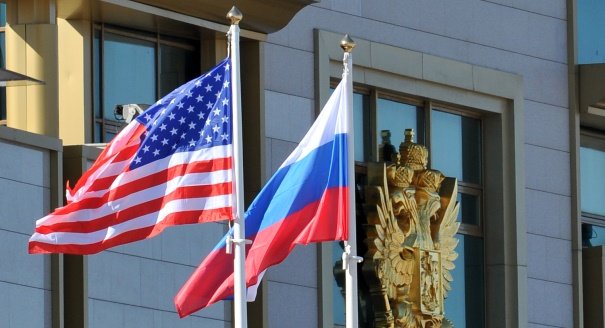
U.S. President Barack Obama’s cancellation of the summit with Vladimir Putin is a turning point in U.S.-Russia relations. Obama, who once told the Russians he would be more flexible after the elections, has proven to be the opposite.
Source: Global Times
US President Barack Obama's cancellation of the summit with Vladimir Putin is a turning point in the US-Russia relations. Obama, who once confidently told the Russians he would be more flexible after the elections, has proven to be the opposite.
Domestic US politics has reasserted its primacy. The achievements in US-Russian relations have proved limited to Obama's first term; in the second term, it will be treated as a country of only marginal importance. The "reset" is history.
For a large and growing number of Americans, this is how it should be. Russia is woefully behind the curve. Its economy is still based on oil and gas, likely to suffer greatly from the shale revolution in the US. Its regime, authoritarian and conservative, has just made a new enemy in the gay and lesbian community through its homophobic laws. US forces are preparing to leave Afghanistan, and the value of Russian support, for which Moscow was rarely recognized anyway, is going down fast.Obama making only a cursory appearance at the G20 summit in St. Petersburg and stopping in Stockholm instead of Moscow, to meet with not only Swedish, but Baltic leaders as well, places the relationship with Russia on hold.
The historical record suggests that unless Moscow and Washington find a way to collaborate, their relationship will drift toward more contention and conflict.
For groups of people in the two capitals, this is just as well as it meets with their domestic agendas, but the national interests of Russia and the US definitely suffer. After a while, something untoward usually happens, and the relationship jolts into prominence again, this time for the wrong reasons.
<>How will Putin react to the perceived humiliation of the cancellation of the visit, and the unpleasant personal comments Obama has made about him? So far, the Kremlin has professed disappointment, but displayed calm.
The two-plus-two meeting of US and Russian foreign and defense ministers in Washington on August 9 was not called off by Moscow. After the meeting, Foreign Minister Sergei Lavrov spoke about continued bilateral cooperation on a broad range of issues.
Americans need to realize that the importance of the US presidential visit for Putin's domestic prestige is often overrated. True, Putin used to be very keen on his image abroad; he used to cultivate foreign leaders; he sought to attract international mega-events to Russia. No longer.
Today, Putin's focus is very much domestic. He travels all the time, but almost exclusively within his own vast country. He had certainly been looking forward to hosting Obama in Moscow, and desperately wanted to hand off the fugitive ex-CIA contractor to a Latin American country. However, when Putin understood that the only way for Snowden out of Russia would be into a US jail, he dug in his heels.
Now Putin will probably decide that no sustained cooperation will be possible with the Obama administration on the issues most important to Moscow: economic links, arms control, and regional conflicts.
This conclusion is not only based on Obama's perceived domestic weakness. More important, as Yuri Ushakov, Russian presidential foreign policy advisor, has said, this is because Washington refuses to treat Moscow as an equal. It hits the core problem of bilateral relations: fashioning an equal relationship between the evidently unequal partners.
This promises a relationship which will grow both more distant and more hostile over time. Those with a particular grudge against Putin, or Russia, will find it easier to get support on Capitol Hill and even in the White House. On the other hand, Putin's opponents who seek moral support in the West may not only be portrayed, but also persecuted as US agents.
The Magnitsky List of Russians banned from the US will grow longer and include more important people. In response, the Kremlin's policies will become more restrictive.
The only solace is that the US-Russian relationship is no longer central to global security. Looking at the situation from a global geopolitical perspective, it is hard to escape the notion that in the US-China-Russia triangle, Beijing has managed to benefit the most from the Snowden affair.
Former Director, Carnegie Moscow Center
Trenin was director of the Carnegie Moscow Center from 2008 to early 2022.
Recent Work
Dmitri Trenin
Dmitri Trenin
Carnegie India does not take institutional positions on public policy issues; the views represented herein are those of the author(s) and do not necessarily reflect the views of Carnegie, its staff, or its trustees.

How is AI reshaping space security, creating governance challenges, and where does international diplomacy stand today?


Tejas Bharadwaj, Almudena Azcárate Ortega

After the chill in ties between 2020 and 2024 that brought India–China relations to their lowest point in several decades, the two countries have engaged each other afresh. This paper argues that there are predominantly four imperatives guiding India’s approach to China, and they exist in an order of priority.

Saheb Singh Chadha

This piece argues that India’s central challenge is not managing a single flashpoint but resolving the underlying tension between expansion and institutional coherency of the BRICS grouping.

Vrinda Sahai

A partnership between India, a country of subcontinental size, and Africa, a continent of fifty-four countries, may seem asymmetric until one notes that both are home to nearly the same number of people—1.4 billion. This essay spells out the existing challenges to the partnership, its optimal potential, and the possible pathways to realize it over the next quarter-century.

Rajiv Bhatia

The U.S.–India semiconductor cooperation story is well-stocked with top-level strategic intent. What remains unresolved, however, are some underlying challenges that will determine whether the cooperation actually functions. Three such friction points stand out.

Shruti Mittal