

Commentary
Dmitri Trenin
{
  "authors": [
    "Dmitri Trenin"
  ],
  "type": "commentary",
  "centerAffiliationAll": "",
  "centers": [
    "Carnegie Endowment for International Peace",
    "Carnegie Russia Eurasia Center"
  ],
  "collections": [],
  "englishNewsletterAll": "",
  "nonEnglishNewsletterAll": "",
  "primaryCenter": "Carnegie Russia Eurasia Center",
  "programAffiliation": "",
  "programs": [],
  "projects": [],
  "regions": [
    "Syria"
  ],
  "topics": []
}
Source: Getty
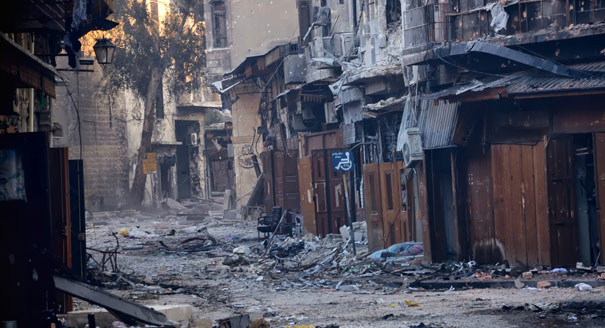
The situation in and around Syria is remarkably different from the Balkans in the 1990s. There will be multiple reactions to the U.S. actions in the region and beyond, and massive unintended consequences.
Barack Obama’s red line on Syria has failed to act as a deterrent. Cynics would argue that it was a condition to be fulfilled for the United States to become militarily involved in the Syrian conflict. John Kerry’s very forceful statement on Syria on Monday leaves little doubt that a U.S. military strike against Bashar al-Assad’s forces will now come soon. The Pentagon is taking over from State as the chief U.S. government agency on Syria.
Most analysts at this point expect cruise missile attacks which would be launched at the Syrian government’s command and control centers, communications, and critical infrastructure targets. Some, however, expect the strikes to be limited, avoiding deeper U.S. involvement and heavier financial burden. There is certain logic behind these expectations, yet it is unlikely that Washington will be so restrained.
President Obama has been criticized far too long within the country for waffling and waning on Syria. Even though most people do not want U.S. boots on the ground, Obama’s presumed passivity and lack of strategy have turned into a political liability for the administration. The U.S. president is a reluctant warrior, but he can be convinced of the need to use force, as in Libya or during the surge in Afghanistan. Obama will try hard to avoid being dragged into another ground war in the Middle East, but he will fire more than a warning shot. The United States is about to start a campaign which will aim at eventually toppling the Assad regime. Washington will lead a coalition of Syrian rebels, Middle Eastern and European countries which will seek to unseat Assad and rob Iran of its one major ally.
For some observers, Obama may be taking a leaf from Bill Clinton’s Kosovo playbook. The situation in and around Syria, however, is remarkably different from the Balkans in the 1990s. The Middle East is not former Yugoslavia, and Syria is no Serbia. There will be multiple reactions to the U.S. actions in the region and beyond, and massive unintended consequences. No one will emerge unscathed. For now, however, all this is unknowable. As usual, political rather than strategic logic is pushing President Obama into a war which, once started, will define his presidency as much as the two wars he has ended or is winding down.
Former Director, Carnegie Moscow Center
Trenin was director of the Carnegie Moscow Center from 2008 to early 2022.
Recent Work
Dmitri Trenin
Dmitri Trenin
Carnegie India does not take institutional positions on public policy issues; the views represented herein are those of the author(s) and do not necessarily reflect the views of Carnegie, its staff, or its trustees.
Beijing is dipping its diplomatic toes in the turbulent waters of the Middle East. But it is not clear if Delhi is ready to do the same.
C. Raja Mohan
As Obama seeks support for a bombing campaign against Syria, the Arab League has held the Assad regime responsible for the use of chemical weapons and called for international action.
C. Raja Mohan