

Commentary
Judy Dempsey
{
  "authors": [
    "Judy Dempsey"
  ],
  "type": "legacyinthemedia",
  "centerAffiliationAll": "",
  "centers": [
    "Carnegie Endowment for International Peace",
    "Carnegie Europe",
    "Malcolm H. Kerr Carnegie Middle East Center"
  ],
  "collections": [
    "Europe’s Southern Neighborhood",
    "Arab Awakening"
  ],
  "englishNewsletterAll": "",
  "nonEnglishNewsletterAll": "",
  "primaryCenter": "Carnegie Europe",
  "programAffiliation": "",
  "programs": [],
  "projects": [],
  "regions": [
    "Middle East",
    "Europe",
    "Egypt",
    "North Africa",
    "Western Europe"
  ],
  "topics": [
    "Foreign Policy",
    "Political Reform",
    "Democracy",
    "Civil Society"
  ]
}
Source: Getty
Violence before and after the coup in Egypt was a bitter blow to EU foreign policy leaders, but there may yet be a role for Europe's soft power in establishing political dialogue.
Source: New York Times
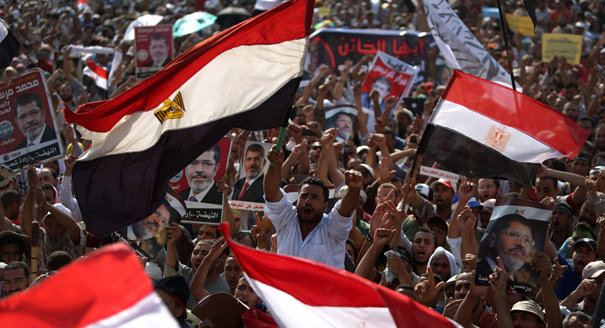
As the possibility of U.S. strikes against Syria dominates the headlines, the European Union is quietly keeping its attention on Egypt, where a month ago the military ousted Mohamed Morsi, the Islamist president and a leader of the Muslim Brotherhood.
The widespread violence before and after the removal of Mr. Morsi was a bitter blow to Catherine Ashton, the Union’s foreign policy chief. She and her special envoy to the region, Bernardino León, had invested many months building a relationship with the main political actors. With promises of financial assistance, investment and trade tied to the new Egyptian government’s respect for human rights, Ms. Ashton had hoped that the Union’s soft power strategy might have some impact in overcoming the deep and dangerous polarization of the past year.
But the violence, the removal of Mr. Morsi and now the suppression of the Muslim Brotherhood have raised questions about whether the Union’s soft power strategy has any role left to play in Egypt and the region.“During the entire two years, the E.U. was seen as an honest broker. Maybe Ashton could have used that leverage more than she did,” said Rem Korteweg, a foreign policy analyst at the Center for European Reform, a research organization in London.
Indeed, Ms. Ashton had gained such trust from the main political players that when Mr. Morsi was arrested, she was the only top Western diplomat allowed to visit him. This confirmed how much the Union’s approach had changed since the Egyptian revolution of February 2011. Until then, the Union and most of its member states were happy enough to deal with the authoritarian regimes in the region instead of supporting human rights and civil society.
“In early 2011, we began a dialogue with all the major political players and civil society,” Mr. León said by telephone. “When Morsi became president, we explained why it was important to build trust, to be inclusive, to engage all the political parties rather than polarize the society.”
“Mr. Morsi, however, failed to follow that advice,” Mr. León added. As a result, the political polarization became deeper and more dangerous.
Gen. Abdul-Fattah al-Sisi, Egypt’s de facto leader, who said the overthrow of Mr. Morsi was necessary to prevent the country from sliding into civil war, seems to be just as unwilling to be inclusive.
He is clamping down further on the Muslim Brotherhood, arresting its leaders. On Sunday, Egypt’s chief prosecutor ordered Mr. Morsi and other Muslim Brotherhood leaders to stand trial on charges including inciting murder.
“The big issue now is how to overcome the polarization,” Mr. León said.
But what can the Union do? Some analysts believe that Europe’s soft power tools are exhausted. But Ms. Ashton still has hope.
While the U.S. secretary of state, John Kerry, said General Sisi’s actions would “restore democracy,” Ms. Ashton has spoken out loudly against Mr. Morsi’s ouster and the use of force. She believes that the repression of the Muslim Brotherhood will at best bring short-term stability while damaging further the prospects of building democracy.
“Sisi’s order is not real order. It’s a short term stability,” Mr. León said. And while Saudi Arabia and other countries have given Egypt $12 billion to pay for salaries and subsidies, Mr. León said this would not suffice to put Egypt back on the right track. “The money will not stabilize the country in the long term. The biggest danger is the polarization,” he added.
That is why Ms. Ashton is not prepared to give up on using the Union’s soft power on Egypt. She told E.U. foreign ministers last month that she intended to try to build a political dialogue.
Professor Volker Perthes, director of the German Institute for International and Security Affairs in Berlin, thinks the Union’s soft power instruments could make a difference in Egypt but would need to be better calibrated.
He said that the Union’s package of money, markets and mobility (linked to human rights) for its southern and eastern neighborhoods could be better used. “Money is fine, but its uses are exaggerated, and markets can always be expanded,” Mr. Perthes said in an interview. The most important aspect, he argued, was mobility.
This means allowing people to travel, to live and study abroad in societies as open as those in Europe in order to see how they function and how political coalitions and compromises are made. “I don’t think that the E.U. has made sufficient use of this aspect of its soft power,” Mr. Perthes added.
Several European foundations are pursuing their own kind of soft power. The Anna Lindh Foundation, based in the Egyptian city of Alexandria, has a program that invites young people into a neutral environment.
“A challenge is to get NGOs, local authorities and political leaders together,” said Paul Walton, the foundation’s head of international affairs and communications. “This means creating safe, neutral spaces where groups can have a dialogue and debate without being labeled.”
Mr. Perthes sees the merits of these safe, open places for encouraging a political discourse. But he is pessimistic about how far they can be used under the current circumstances.
“Egypt is so polarized that neither the leaders nor the opposition want neutrality. These safe places could be in danger,” he added. Indeed, since February 2011, Egypt’s leaders have tried to close several European and U.S. foundations.
Yet neither Ms. Ashton nor the foundations are prepared to give up. They are convinced that Egypt’s only way forward is to learn political compromise. Helping Egypt and other divided countries in the region along that path could be one of the best ways for Europe to use its soft power.
This article was originally published in the New York Times.

Nonresident Senior Fellow, Carnegie Europe
Judy Dempsey is a nonresident senior fellow at Carnegie Europe
Recent Work
Judy Dempsey
Judy Dempsey
Carnegie India does not take institutional positions on public policy issues; the views represented herein are those of the author(s) and do not necessarily reflect the views of Carnegie, its staff, or its trustees.

After the chill in ties between 2020 and 2024 that brought India–China relations to their lowest point in several decades, the two countries have engaged each other afresh. This paper argues that there are predominantly four imperatives guiding India’s approach to China, and they exist in an order of priority.

Saheb Singh Chadha

This piece argues that India’s central challenge is not managing a single flashpoint but resolving the underlying tension between expansion and institutional coherency of the BRICS grouping.

Vrinda Sahai
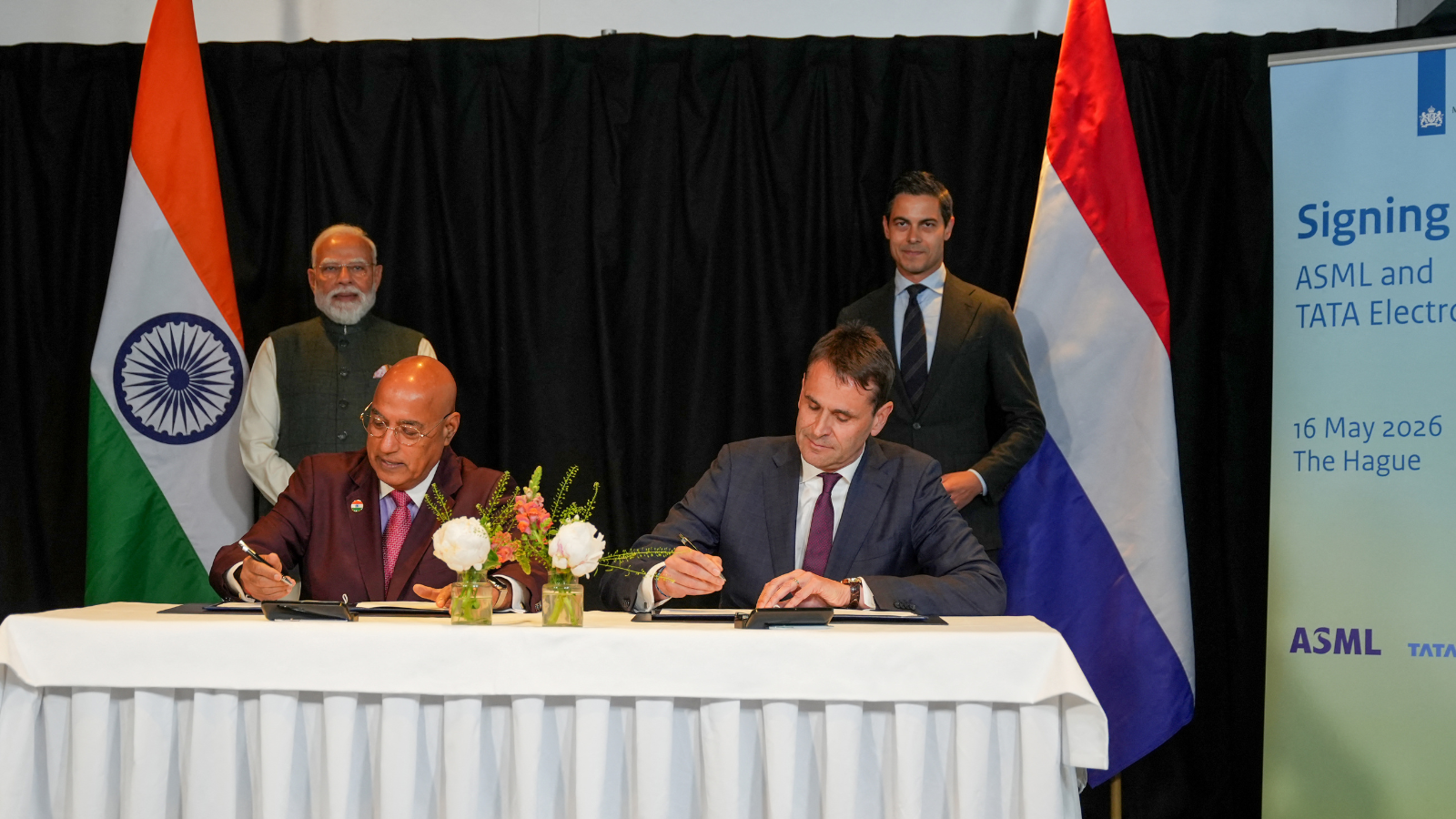
The ASML MoU with Tata Electronics is an indicator of how far the Indian semiconductor ecosystem has come. This ecosystem has been years in the making and represents real commercial logic.

Konark Bhandari

A partnership between India, a country of subcontinental size, and Africa, a continent of fifty-four countries, may seem asymmetric until one notes that both are home to nearly the same number of people—1.4 billion. This essay spells out the existing challenges to the partnership, its optimal potential, and the possible pathways to realize it over the next quarter-century.

Rajiv Bhatia

The India–EU Free Trade Agreement (FTA) is shaping up to be one of the most consequential trade negotiations, both economically and strategically. But, what’s in the agreement, what’s missing, and what will determine its success in the years ahead
Vrinda Sahai, Nicolas Köhler-Suzuki