

• Research
  • About
  • Experts
Carnegie India logoCarnegie lettermark logo
AI
{
  "authors": [
    "Alexey Arbatov"
  ],
  "type": "legacyinthemedia",
  "centerAffiliationAll": "",
  "centers": [
    "Carnegie Endowment for International Peace",
    "Carnegie Russia Eurasia Center"
  ],
  "collections": [],
  "englishNewsletterAll": "",
  "nonEnglishNewsletterAll": "",
  "primaryCenter": "Carnegie Russia Eurasia Center",
  "programAffiliation": "",
  "programs": [],
  "projects": [],
  "regions": [
    "North America",
    "United States",
    "Russia"
  ],
  "topics": [
    "Security",
    "Military",
    "Foreign Policy"
  ]
}

Source: Getty

In The Media
Carnegie Russia Eurasia Center

New Global Strike Systems Create Serious Problems for Russia

The current confidence-building and arms limitation measures are less effective for resolving the problems caused by the conventional prompt global strike systems being developed by the United States.

Link Copied
By Alexey Arbatov
Published on Oct 24, 2013

Source: YABLOKO

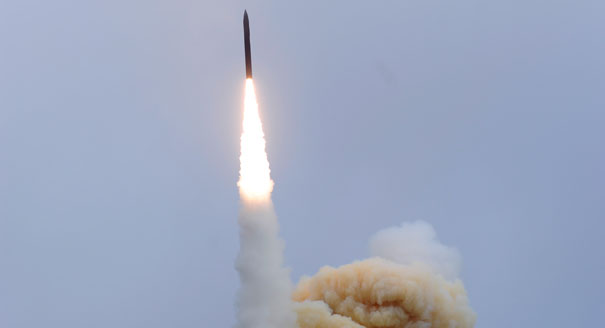
On Tuesday, October 22, senior associate at the Carnegie Endowment’s Nuclear Policy Program James M. Acton met with Russian journalists and military experts to discuss the conventional prompt global strike systems (CPGS), which the United States has been working on for more than a decade now. The participants discussed the potential risks that these new systems’ deployment could create. One of the participants in the discussion was chair of the Carnegie Moscow Center’s Nonproliferation Program Alexei Arbatov.

The new global strike systems create problems for Russia. What are the causes of Russia’s concerns?

The U.S. boost-glide systems are creating the threat of an essentially sudden strike. Satellites might detect the launch of a ballistic booster, but Russian radars would then detect the vehicle just before it strikes the target. In this context, it is not so important whether the warhead is nuclear or conventional. In any case, Russian specialists would act on the assumption that the vehicles are armed with nuclear warheads.

Today, as in the past, it is implied that a massive launch of ballistic missiles by one side would invoke the possibility of a launch-on-warning by the other side. It is not so important in the current context just how realistic this concept actually is. What matters is that it works as a deterrent. But if boost-glide vehicles are launched, radars would confirm satellite signals too late for a launch-on-warning. The other option would be to start a launch-on-warning based on the satellite signal, but this would create a tremendous risk of triggering nuclear war upon a false alarm. This represents the first danger if the new systems are deployed in large numbers (many hundreds of units).

The second problem is what response Russia should make in the event of a mass disarming strike against it with precision-guided conventional weapons. Delivery vehicle speed is not so important here, although delivery vehicles operating at subsonic speeds are easier to intercept by an air defense system. Would nuclear weapons be used for a retaliatory strike? This is the biggest strategic issue worrying Russian analysts at present. After all, it is logical to respond to a nuclear attack with a nuclear strike. This is the logic deterrence rests on. But in the new situation, a serious dilemma arises: does one decide to respond to a conventional strike, not having such a great collateral damage, with a nuclear retaliation, and then have the aggressor launch a devastating nuclear strike using with the remaining nuclear forces? Or is it more appropriate not to retaliate and to loose one’s nuclear forces that would be destroyed by the adversary’s conventional strike?

The current confidence-building and arms limitation measures are becoming no longer effective as a means to resolve these problems through a system of agreements. One needs to develop new ones. Rather than wringing hands and lamenting “We are being surrounded,” Russian and U.S. specialists who want to maintain strategic stability need to concentrate now on coming up with these new measures.

This article originally appeared in Russian on the YABLOKO site.

About the Author

Alexey Arbatov

Alexey Arbatov is the head of the Center for International Security at the Primakov National Research Institute of World Economy and International Relations.

Alexey Arbatov

Alexey Arbatov is the head of the Center for International Security at the Primakov National Research Institute of World Economy and International Relations.

Alexey Arbatov
SecurityMilitaryForeign PolicyNorth AmericaUnited StatesRussia

Carnegie India does not take institutional positions on public policy issues; the views represented herein are those of the author(s) and do not necessarily reflect the views of Carnegie, its staff, or its trustees.

More Work from Carnegie India

  • Article
    What Could a Reciprocal Defense Procurement Agreement Do for U.S.-India Ties?

    India and the United States are close to concluding a Reciprocal Defense Procurement Agreement (RDPA) that will allow firms from the two countries to sell to each other’s defense establishments more easily. While this may not remedy the specific grievances both sides may have regarding larger bilateral issues, an RDPA could restore some momentum, following the trade deal announcement.

      Konark Bhandari

  • Commentary
    India Signs the Pax Silica—A Counter to Pax Sinica?

    On the last day of the India AI Impact Summit, India signed Pax Silica, a U.S.-led declaration seemingly focused on semiconductors. While India’s accession to the same was not entirely unforeseen, becoming a signatory nation this quickly was not on the cards either.

      Konark Bhandari

  • Commentary
    The Impact of U.S. Sanctions and Tariffs on India’s Russian Oil Imports

    This piece examines India’s response to U.S. sanctions and tariffs, specifically assessing the immediate market consequences, such as alterations in import costs, and the broader strategic implications for India’s energy security and foreign policy orientation.

      Vrinda Sahai

  • Article
    Military Lessons from Operation Sindoor

    The India-Pakistan conflict that played out between May 6 and May 10, 2025, offers several military lessons. This article presents key takeaways from Operation Sindoor and breaks down how India’s preparations shaped the outcome and what more is needed to strengthen future readiness.

      Dinakar Peri

  • Book
    India and the Sovereignty Principle: The Disaggregation Imperative

    This book offers a comprehensive analysis of India's evolving relationship with sovereignty in a complex global order. Moving beyond conventional narratives, it examines how the sovereignty principle shapes India's behavior across four critical domains—from traditional military power to contemporary data governance.

      Rudra Chaudhuri, Nabarun Roy

Get more news and analysis from
Carnegie India
Carnegie India logo, white
Unit C-4, 5, 6, EdenparkShaheed Jeet Singh MargNew Delhi – 110016, IndiaPhone: 011-40078687
  • Research
  • About
  • Experts
  • Projects
  • Events
  • Contact
  • Careers
  • Privacy
  • For Media
Get more news and analysis from
Carnegie India
© 2026 Carnegie Endowment for International Peace. All rights reserved.






