

Q&A
Milan Vaishnav, Ila Patnaik
{
  "authors": [
    "Ila Patnaik"
  ],
  "type": "legacyinthemedia",
  "centerAffiliationAll": "dc",
  "centers": [
    "Carnegie Endowment for International Peace"
  ],
  "collections": [],
  "englishNewsletterAll": "ctw",
  "nonEnglishNewsletterAll": "",
  "primaryCenter": "Carnegie Endowment for International Peace",
  "programAffiliation": "SAP",
  "programs": [
    "South Asia"
  ],
  "projects": [],
  "regions": [
    "South Asia",
    "India"
  ],
  "topics": [
    "Economy"
  ]
}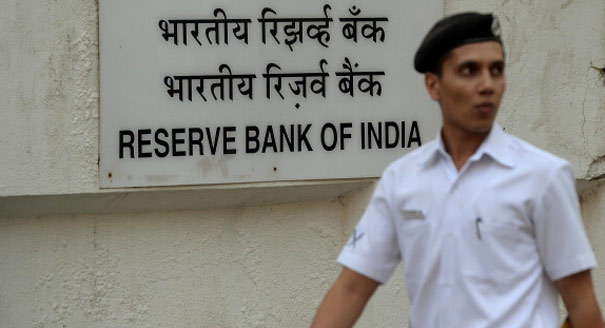
Source: Getty
The Indian inflation story can, at best, be summarized as one where the monetary policy stance has failed to anchor inflation expectations in the economy.
Source: Financial Express
After some months of a falling WPI-based inflation, the numbers have picked up again. Food inflation has risen, but the full pass-through of a depreciated exchange rate is yet to be seen and may push up non-food WPI inflation as well in the coming months. The Indian inflation story can, at best, be summarised as one where the monetary policy stance has failed to anchor inflation expectations in the economy. Among the main problems have been Reserve Bank of India's multiplicity of goals, instruments, lack of transparency in monetary policy strategy, and poor communication efforts. Looking forward, an effective strategy to combat inflation depends on a public announcement of the medium-term numerical inflation target, a clearly articulated commitment to price stability as the sole target of monetary policy, a well-espoused instrument of monetary policy, and an accountability (to the Indian public) mechanism.
One way to move ahead is to keep the framework informal, where RBI chooses to do the above depending on the willingness and the political clout of its Governor, which Raghuram Rajan is, no doubt, well-placed to do. The other is to enact it as law. Most inflation targeting countries include the objectives of monetary policy in the law. This helps to build credibility of the framework and create channels of accountability. Despite similar monetary and fiscal environments, evidence suggests that those who have clear inflation-targeting regimes are better able to achieve low and stable inflation than those who do not have an explicit inflation-targeting framework in place.February 2006 onwards, inflation breached the upper bound of 5%. It has never come back to the below-5% levels. If our informal goal was to get inflation between 4% and 5%, we have failed to do this as measured by average inflation from 1999 onwards.
Undoing the benign inflationary environment till December 2007, the global commodity prices environment drove prices upwards across all emerging market economies, including India. However, India has been singled out for the speed with which present inflation feeds into its inflation expectations. In other words, it is likely that economic activity will incorporate present inflation as one that will persist into the future, thereby delivering high inflation in the future as well.
The question of anchoring inflationary expectations depends on two critical factors: the magnitude and timeliness of response to prevailing inflationary conditions. Has RBI done enough to anchor inflation expectations? To explain this, Riccardo Christadoro and Giovanni Veronese of the Banca d'Italia compared the present short-term interest rate with what would be obtained by the Taylor Rule since January 2008. Except for the third and fourth quarter of FY09, where the interest rate set by RBI was much lower than prescribed by the Taylor Rule, on all occasions, interest rate changes by RBI were at least two percentage points lower than what one would expect to combat inflation. On the one hand, interest rates were not high enough in India during inflationary conditions and on the other, lower than required during the two quarters of extreme global conditions.
It is important to note that this analysis does not exclude growth concerns as the Taylor Rule responds to output gap as well. Some studies have also suggested that the output gap dominates inflation in determining movements in policy rates in India. It may now well be the occasion to rebalance this prevailing bias in the monetary policy rule of RBI.
What can be done? Whether inflation is initiated by higher food prices or otherwise, monetary policy has a role to play if general inflation fears get embedded in expectations. The world adopts several approaches to combat this problem. Several peer economies have adopted a clearly articulated monetary policy strategy to combat inflation. Brazil, for example, has had a long history with inflation and inflationary expectations. Brazil and more than half of the emerging market economies, at various points in time, have adopted similar strategies to combat this problem. Detailed studies generally suggest that when otherwise similar emerging market economies are compared over same time periods, key macroeconomic variables such as inflation and output performed better in countries that adopted this framework compared with those that did not. Taking a leaf out of its peer central banks across the world, RBI could pursue price-stability through a multi-pronged strategy:
This article was originally published in the Financial Express.

Former Nonresident Senior Associate, South Asia Program
Patnaik, an expert on India’s economy, was a nonresident senior associate in Carnegie’s South Asia Program.
Recent Work

Milan Vaishnav, Ila Patnaik
Ila Patnaik, Ajay Shah
Carnegie India does not take institutional positions on public policy issues; the views represented herein are those of the author(s) and do not necessarily reflect the views of Carnegie, its staff, or its trustees.

As AI grows more sophisticated, as the supply chains that power it become more contested, and as access to frontier models becomes geopolitically charged, India must begin to ask a different set of questions. Not what applications it can build on someone else’s infrastructure but what the world needs.

Konark Bhandari

The Indian Ocean Region hosts one of the densest concentrations of subsea cables in the world. Yet, despite accounting for a significant share of global internet traffic, India’s participation remains limited.

Charukeshi Bhatt

How is AI reshaping space security, creating governance challenges, and where does international diplomacy stand today?


Tejas Bharadwaj, Almudena Azcárate Ortega

After the chill in ties between 2020 and 2024 that brought India–China relations to their lowest point in several decades, the two countries have engaged each other afresh. This paper argues that there are predominantly four imperatives guiding India’s approach to China, and they exist in an order of priority.

Saheb Singh Chadha

This piece argues that India’s central challenge is not managing a single flashpoint but resolving the underlying tension between expansion and institutional coherency of the BRICS grouping.

Vrinda Sahai