

Research
- +5
Alper Coşkun, Fatih Ceylan, Tacan İldem, …
{
  "authors": [
    "Sinan Ülgen"
  ],
  "type": "legacyinthemedia",
  "centerAffiliationAll": "",
  "centers": [
    "Carnegie Endowment for International Peace",
    "Carnegie Europe",
    "Malcolm H. Kerr Carnegie Middle East Center"
  ],
  "collections": [
    "Turkey’s Transformation",
    "Europe’s Southern Neighborhood"
  ],
  "englishNewsletterAll": "",
  "nonEnglishNewsletterAll": "",
  "primaryCenter": "Carnegie Europe",
  "programAffiliation": "",
  "programs": [],
  "projects": [],
  "regions": [
    "Middle East",
    "Europe",
    "Türkiye",
    "Iran"
  ],
  "topics": [
    "Security"
  ]
}
Source: Getty
Tensions between Saudi Arabia and Iran will become more acute in the years ahead. It is in this context that Turkey’s role as a secular power will become more important than ever.
Source: Project Syndicate
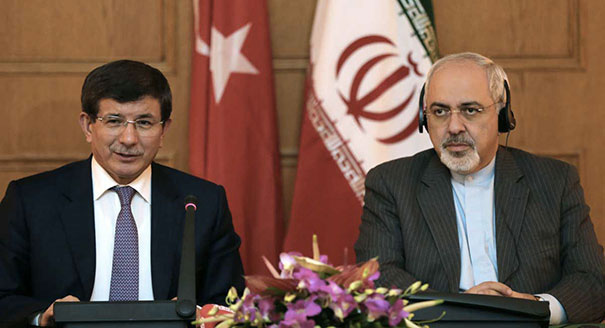
Following Iranian Foreign Minister Javad Zarif’s recent visit to the Gulf states, the Islamic Republic’s charm offensive is set to continue with President Hassan Rouhani’s trip to Turkey early next month. Unlike the majority of Iran’s Arab neighbors, Turkey unequivocally welcomed the interim nuclear deal concluded last month between Iran and the P5+1 (the United Nations Security Council’s five permanent members and Germany). But Turkish policymakers are keenly aware that the agreement may upend the Middle East’s fragile balance of power.
From Turkey’s perspective, the nuclear deal, if successfully implemented and made permanent after six months, is set to eliminate a major security concern. Prime Minister Recep Tayyip Erdoğan’s government does not want to be faced with a nuclear Iran, fearing the emergence of an asymmetric power relationship with the Islamic Republic after centuries of balanced ties.
But Turkey also did not want a military intervention in Iran, led by the United States. It was believed that a military strike would create even more problems in terms of regional stability and security. That is why Turkish policymakers have consistently championed a diplomatic solution to the Iranian conundrum, which is what they got with the latest deal.There are other reasons why Turkish officials have welcomed the interim agreement so warmly. First, they interpret the deal as vindication of their ill-fated effort in May 2010 (together with Brazil) to reach an agreement with Iran on the disposition of Iran’s nuclear fuel. Turkish authorities continue to highlight that earlier tripartite agreement with Iran. The foreign ministry, for example, released a statement noting that, “The agreement…constitutes the first concrete positive development concerning Iran’s nuclear program since the Tehran Declaration of 2010.”
Turkey is also satisfied that the deal does not weaken its position on sovereign rights under the Nuclear Non-Proliferation Treaty. Turkey has consistently defended the interpretation that states have the right to establish domestic uranium-enrichment programs under the NPT, provided that they comply with their treaty commitments.
Even at the peak of diplomatic tensions with Iran, Turkey refrained from adopting America’s more maximalist position, which challenged the validity of Iran’s right to enrich uranium. So the tacit and conditional acceptance of this right is a satisfactory outcome for Turkey. Though Turkey currently has no plans to develop a fuel cycle of its own, its ambitious agenda for developing nuclear power has made policymakers intent on safeguarding the rights recognized by the NPT, including the right to enrich uranium.
There are also significant economic considerations for Turkey, which relies on Iran for a substantial share of its energy imports. Equally important, as a neighboring country, Iran has been a traditional trading partner – a relationship worth more than $15 billion per year. As a result, Turkey’s export potential has been negatively affected by the rising stringency of the sanctions regime against Iran, with trade losses estimated at $6 billion for the first nine months of 2013. The gradual easing of the sanctions is expected to benefit Turkey’s export industries, which hope to satisfy pent-up Iranian demand for consumer and investment goods.
Finally, in contrast to Arab states like Saudi Arabia, Turkey is generally comfortable with the deal’s geopolitical ramifications. The improvement of Iran’s relationship with the West and the easing of diplomatic pressure on the Islamic Republic is not a major concern. But, for the Gulf states – and also possibly for Israel – this scenario is viewed as opening the door to stronger Iranian influence throughout the region. These countries believe that, following the interim agreement, the US will fail to demonstrate sufficiently strong resolve to deter Iran from seeking regional hegemony.
In that case, tensions between Saudi Arabia and Iran will become more acute in the years ahead, emerging as the main destabilizing factor in the region. It is in this context that Turkey’s role as a secular power, one capable of transcending the sectarian divide, will become more important than ever. Turkish policymakers would be well advised to seize this opportunity to consolidate the country’s effectiveness as a regional actor, one that is uniquely positioned to stem the danger of a widening – and potentially extremely dangerous – rift.
This article was originally published in the Project Syndicate.

Senior Fellow, Carnegie Europe
Sinan Ülgen is a senior fellow at Carnegie Europe in Brussels, where his research focuses on Turkish foreign policy, transatlantic relations, international trade, economic security, and digital policy.
Recent Work

Alper Coşkun, Fatih Ceylan, Tacan İldem, …
Carnegie India does not take institutional positions on public policy issues; the views represented herein are those of the author(s) and do not necessarily reflect the views of Carnegie, its staff, or its trustees.

In any defense establishment, change is an ongoing process. However, despite the best of intentions, existing bureaucracies, bound by habit and years of socialization, have their limits in implementing transformative change.

Anit Mukherjee

After the chill in ties between 2020 and 2024 that brought India–China relations to their lowest point in several decades, the two countries have engaged each other afresh. This paper argues that there are predominantly four imperatives guiding India’s approach to China, and they exist in an order of priority.

Saheb Singh Chadha

The ASML MoU with Tata Electronics is an indicator of how far the Indian semiconductor ecosystem has come. This ecosystem has been years in the making and represents real commercial logic.

Konark Bhandari

The India–EU Free Trade Agreement (FTA) is shaping up to be one of the most consequential trade negotiations, both economically and strategically. But, what’s in the agreement, what’s missing, and what will determine its success in the years ahead

Vrinda Sahai, Nicolas Köhler-Suzuki

This piece argues that the present Indian strategy, based on opportunistic diversification and utilization of limited strategic reserves, remains inadequate when confronting supply disruptions. It evaluates India’s options in the short, medium, and long terms.
Vrinda Sahai