

In The Media
Lilia Shevtsova
{
  "authors": [
    "Lilia Shevtsova"
  ],
  "type": "legacyinthemedia",
  "centerAffiliationAll": "",
  "centers": [
    "Carnegie Endowment for International Peace",
    "Carnegie Russia Eurasia Center"
  ],
  "collections": [],
  "englishNewsletterAll": "",
  "nonEnglishNewsletterAll": "",
  "primaryCenter": "Carnegie Russia Eurasia Center",
  "programAffiliation": "",
  "programs": [],
  "projects": [],
  "regions": [
    "Russia",
    "Eastern Europe",
    "Ukraine",
    "Western Europe"
  ],
  "topics": [
    "Political Reform",
    "Foreign Policy"
  ]
}
Source: Getty
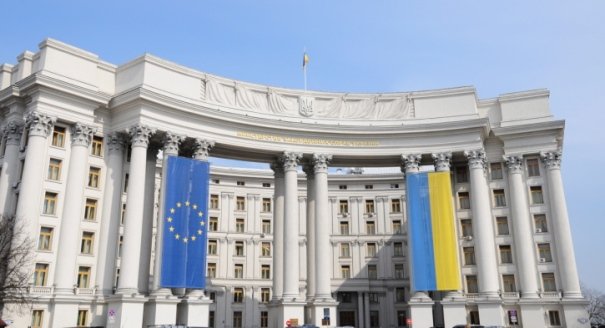
Ukraine’s future will offer answers not only to the question of whether or not Russia will continue to see itself as an empire, but also to the question of how committed Europe is to the values it espouses and how far the West is prepared to expand its influence.
Source: American Interest
Over the past year we have witnessed three global developments that have demonstrated the limits not only of the current world order but also of Western civilization and its ability to confront challenges to that order. All three developments—the Syrian civil war, the Iranian nuclear problem, and the new Ukrainian rebellion—have demonstrated that at best the West can offer only partial solutions to global problems, if indeed it chooses to face up to those problems in the first place.
One might be tempted at first to pick the first two of these three developments, Syria and Iran, as the ones with the greatest possible impact. But in fact, of all three it is Ukraine’s destiny, the destiny of a European nation of 48 million people that could hold the key to the future of Russia and other “Eurasian” states, which has tremendous civilizational importance. What I mean by this is that Ukraine and its near- to medium-term future will give us answers not only to the question of whether or not Russia will continue to see itself as an empire, but also to the questions of how committed Europe is to the values it espouses, and how far the West is prepared to expand its influence, if it is to expand at all.The recent Eastern Partnership saga, culminating with Ukraine’s decision to ditch the Association Agreement (AA) with Europe at the Vilnius EU summit on November 29, is a dramatic story with many plot twists: desperate clinging to power, bluffing, predatory instincts, attempts to survive by bullying, naiveté, a lack of strategic thinking, and the drive for dignity and freedom. The lessons of this saga must still be learned if its disastrous repercussions are to be avoided. Indeed we have already seen those repercussions begin to unfold in Kiev, where the riot police brutally dispersed a peaceful “EuroMaidan” rally on November 30, and where, the next day, protesters (some believe they were provocateurs) attacked the presidential administration and the Prime Minister’s office, and occupied city council. The question is this: Is President Yanukovych ready to turn into a Ukrainian Lukashenko, or a Ukrainian Putin? The answer could have geopolitical consequences for the whole region.
To understand the “Vilnius story”, one must first put aside the debates about “winners” and “losers” that currently dominates the discussion. The reasons behind this story and the trends it highlighted are far more important. One must be ready to rethink yesterday’s conventional truths; the popular explanation of why Ukraine made an apparent U-turn after it seemed ready to hit the European on-ramp is that Putin’s pressure tactics were successful. The truth is more complicated. ...
Read the full text of this article in the American Interest.

Former Senior Associate, Russian Domestic Politics and Political Institutions Program, Moscow Center
Shevtsova chaired the Russian Domestic Politics and Political Institutions Program at the Carnegie Moscow Center, dividing her time between Carnegie’s offices in Washington, DC, and Moscow. She had been with Carnegie since 1995.
Recent Work
Lilia Shevtsova
Lilia Shevtsova
Carnegie India does not take institutional positions on public policy issues; the views represented herein are those of the author(s) and do not necessarily reflect the views of Carnegie, its staff, or its trustees.

After the chill in ties between 2020 and 2024 that brought India–China relations to their lowest point in several decades, the two countries have engaged each other afresh. This paper argues that there are predominantly four imperatives guiding India’s approach to China, and they exist in an order of priority.

Saheb Singh Chadha

This piece argues that India’s central challenge is not managing a single flashpoint but resolving the underlying tension between expansion and institutional coherency of the BRICS grouping.

Vrinda Sahai

A partnership between India, a country of subcontinental size, and Africa, a continent of fifty-four countries, may seem asymmetric until one notes that both are home to nearly the same number of people—1.4 billion. This essay spells out the existing challenges to the partnership, its optimal potential, and the possible pathways to realize it over the next quarter-century.

Rajiv Bhatia

The India–EU Free Trade Agreement (FTA) is shaping up to be one of the most consequential trade negotiations, both economically and strategically. But, what’s in the agreement, what’s missing, and what will determine its success in the years ahead
Vrinda Sahai, Nicolas Köhler-Suzuki

Trump 2.0 has unsettled India’s external environment—but has not overturned its foreign policy strategy, which continues to rely on diversification, hedging, and calibrated partnerships across a fractured order.



Milan Vaishnav, ed., Sameer Lalwani, Tanvi Madan, …