

Commentary
Maria Lipman
{
  "authors": [
    "Maria Lipman"
  ],
  "type": "commentary",
  "centerAffiliationAll": "",
  "centers": [
    "Carnegie Endowment for International Peace",
    "Carnegie Russia Eurasia Center"
  ],
  "collections": [],
  "englishNewsletterAll": "",
  "nonEnglishNewsletterAll": "",
  "primaryCenter": "Carnegie Russia Eurasia Center",
  "programAffiliation": "",
  "programs": [],
  "projects": [],
  "regions": [
    "North America",
    "United States",
    "Russia",
    "Western Europe",
    "Germany"
  ],
  "topics": [
    "Global Governance",
    "Civil Society"
  ]
}
Source: Getty
Since the collapse of the Cold War order many countries around the world have engaged in wars and revolutions. The outcomes of these battles no longer fit in the good-or-evil framework. What’s more, in today’s disorderly and erratic world even major nations do not have the authority to make such judgments.
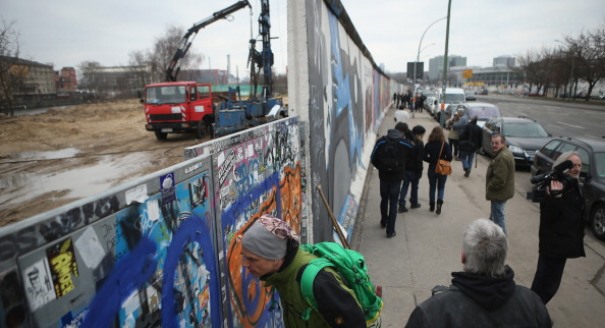
Forecasting the future developments is ultimately ungratifying. One does not know what lies ahead, so what’s the point of guessing? Some things, however, are sure to happen regardless of natural elements or human endeavors. Among such things are anniversaries. The year 2014 will mark, among others, the 25th anniversary of the Fall of the Wall. Almost a quarter century ago, in November 1989 the Berlin Wall that separated the city since 1961, was finally torn down. Just as the Wall was the most powerful symbol of the Cold War, its removal was an expressive symbol of the War’s end.
Twenty-five years later we still discuss the legacy of the Cold War; political and public figures, both Russian and American, are not infrequently criticized for their Cold War mentality. Commentators occasionally talk about a return of the Cold War style geopolitics. But while there may be elements of truth in such verbal associations and metaphors, the essence of the Cold War as a Big Divide is gone irrevocably.
The Cold War world was a simple, black and white arrangement. It was divided into Good and Evil, socialism vs. capitalism. Or democracy vs. communism if one looked from the western side. Socialism was good and capitalism was evil. It was the other way round if you looked from the other side. Or if you were a (secret) sympathizer of the “other side”—that is if you secretly listened to the “Voice of Truth” on western radio waves. The communist world engaged in existential struggle (and sometimes proxy wars) with the capitalist one, each side claiming that its political arrangement, values and ideology were impeccably Right, and those of its adversary were essentially Wrong.
Those in between were the third world—the battle ground where the above-mentioned proxy wars were fought—with the first and the second worlds seeking to win over to their side as many third-world countries as possible and keep them under their respective realms. For several decades the struggle between the two centers of power shaped the world politics. Since neither side had a definitive advantage in this struggle, this world order was broadly expected to last indefinitely.
Many people in the eastern part of Europe were strongly opposed to the “socialist path.” Bloody uprisings against the regimes imposed upon them by the Soviet Union further emphasized the sense that the Big Divide of the Cold War was about good and evil. This sense was even deeper in Berlin where the divide was so close and visible. The erection of the Wall added to it a daunting and sinister quality. Over two million Germans fled to the West before the Wall was built. Thousands more tried to escape afterwards at the risk of their lives. To some the risk proved fatal.
By the time the Wall was eventually demolished the socialist world ceased to exist. The countries of Eastern Europe rejoined with the democratic, that is Western Europe. The ideological and political divide was gone, and with it went the Manichean simplicity of the world order. Besides, in the absence of its existential adversary the West no longer looked like Good Incarnate—either to those, like the people of Eastern (now Central) Europe who had joined it, or to those who remained outside—the former listeners to the Voice of America or the BBC. The position of moral righteousness habitually assumed by the West, and especially the United States, was looking increasingly unconvincing.
Since the collapse of the Cold War order people of many countries around the world have engaged in wars and revolutions. The causes may be secessionist, political, sectarian, religious or otherwise, but the outcomes of these battles, from the Color Revolutions to the Arab Spring, no longer fit in the good-or-evil framework. What’s more, in today’s disorderly and erratic world even major nations do not have the authority to make such judgments.

Former Scholar in Residence, Society and Regions Program, Editor in Chief, Pro et Contra, Moscow Center
Lipman was the editor in chief of the Pro et Contra journal, published by the Carnegie Moscow Center. She was also the expert of the Carnegie Moscow Center’s Society and Regions Program.
Recent Work
Maria Lipman
Maria Lipman
Carnegie India does not take institutional positions on public policy issues; the views represented herein are those of the author(s) and do not necessarily reflect the views of Carnegie, its staff, or its trustees.
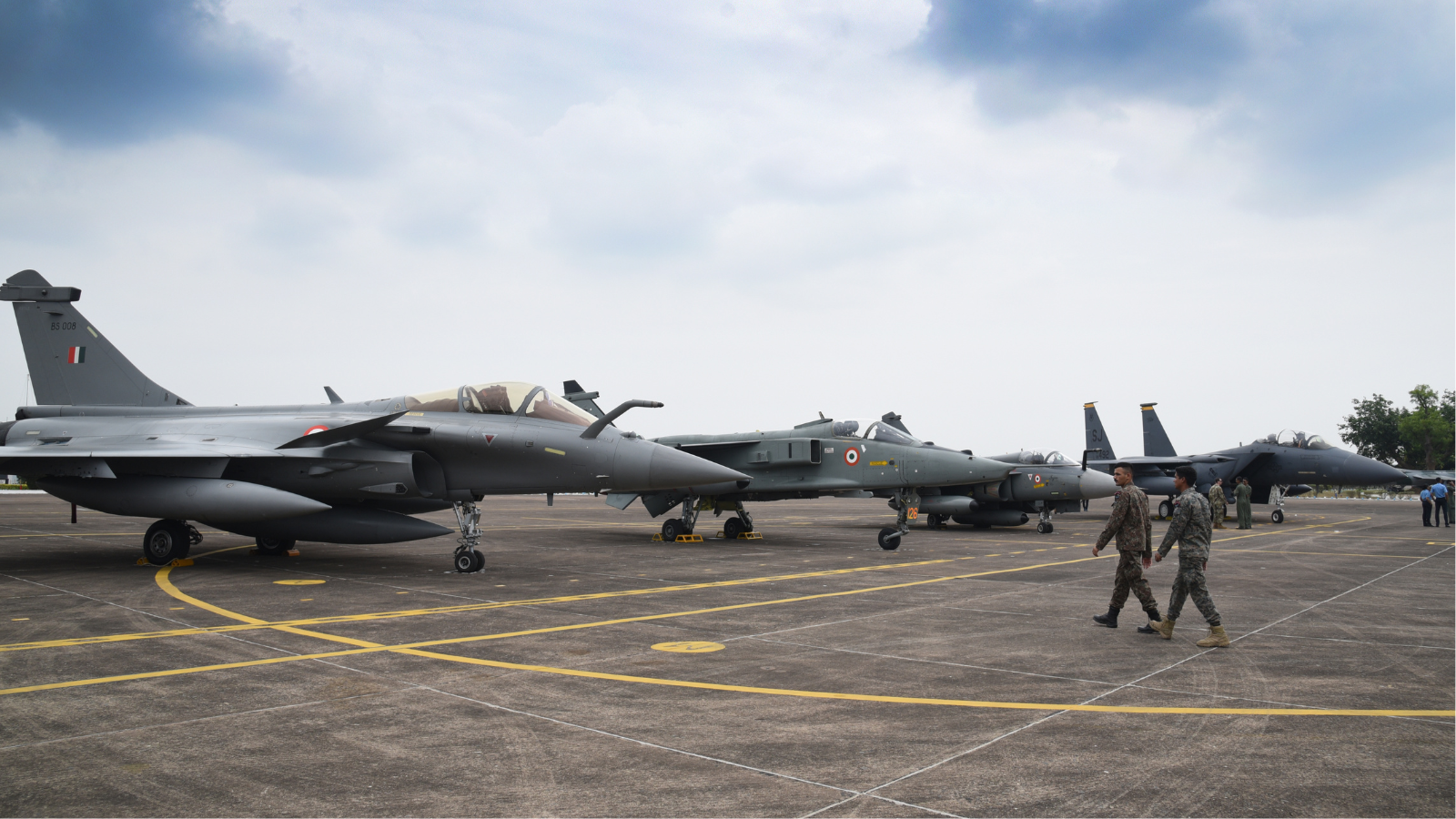
India and the United States are close to concluding a Reciprocal Defense Procurement Agreement (RDPA) that will allow firms from the two countries to sell to each other’s defense establishments more easily. While this may not remedy the specific grievances both sides may have regarding larger bilateral issues, an RDPA could restore some momentum, following the trade deal announcement.

Konark Bhandari

On the last day of the India AI Impact Summit, India signed Pax Silica, a U.S.-led declaration seemingly focused on semiconductors. While India’s accession to the same was not entirely unforeseen, becoming a signatory nation this quickly was not on the cards either.
Konark Bhandari

This piece examines India’s response to U.S. sanctions and tariffs, specifically assessing the immediate market consequences, such as alterations in import costs, and the broader strategic implications for India’s energy security and foreign policy orientation.

Vrinda Sahai
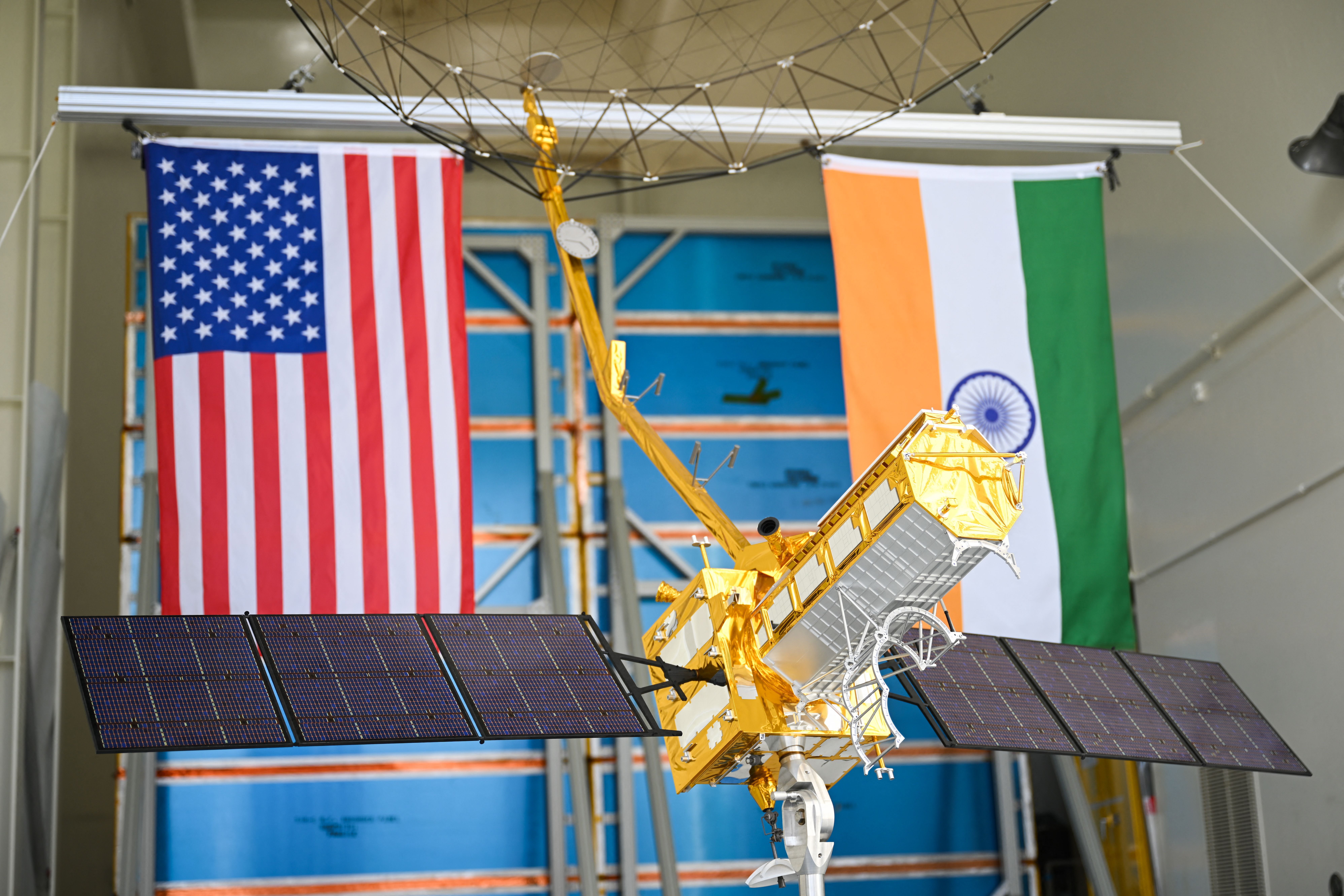
On July 30, 2025, the United States announced 25 percent tariffs on Indian goods. While diplomatic tensions simmered on the trade front, a cosmic calm prevailed at the Sriharikota launch range. Officials from NASA and ISRO were preparing to launch an engineering marvel into space—the NASA-ISRO Synthetic Aperture Radar (NISAR), marking a significant milestone in the India-U.S. bilateral partnership.

Tejas Bharadwaj
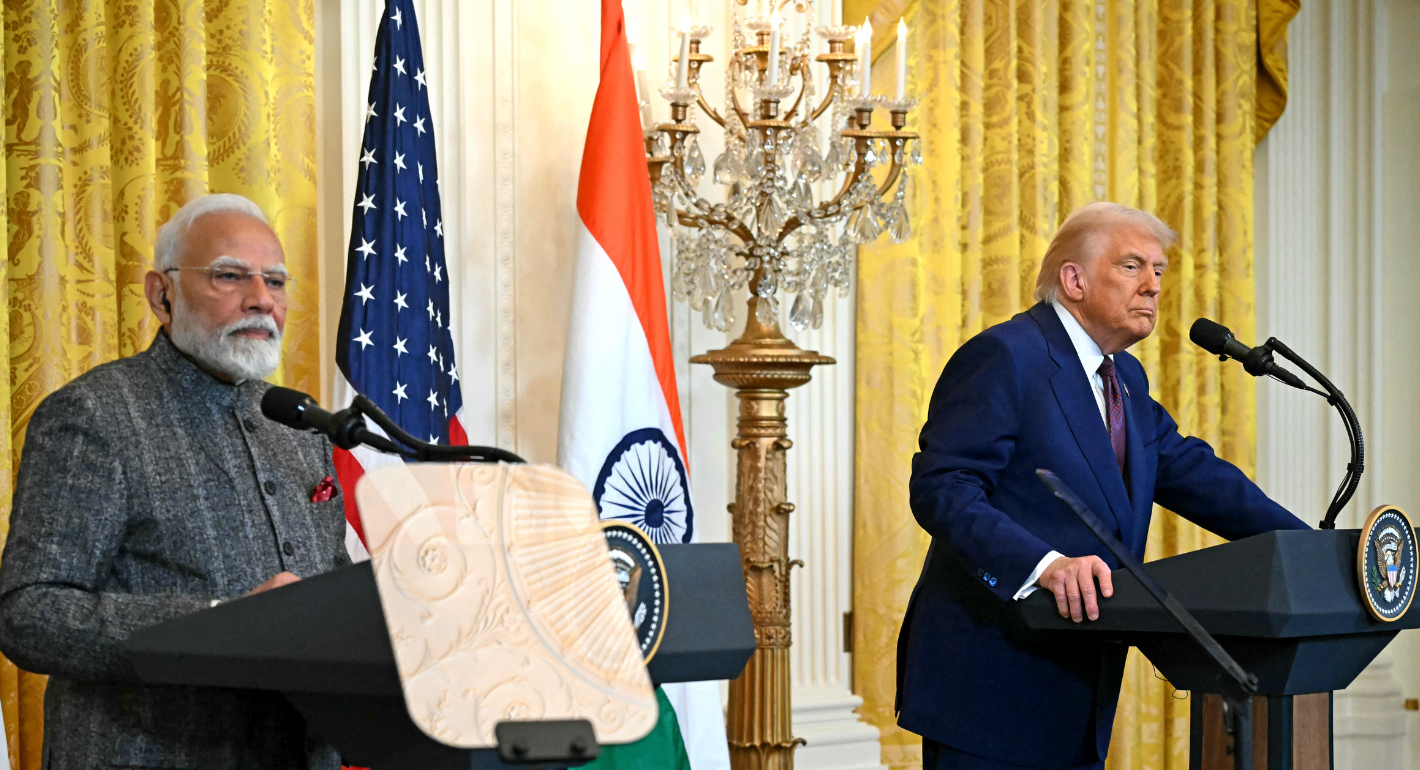
The India-U.S. relationship currently appears buffeted between three “Ts”—TRUST, Tariffs, and Trump.
Arun K. Singh