

Q&A
Milan Vaishnav, Ila Patnaik
{
  "authors": [
    "Ila Patnaik"
  ],
  "type": "legacyinthemedia",
  "centerAffiliationAll": "dc",
  "centers": [
    "Carnegie Endowment for International Peace"
  ],
  "collections": [],
  "englishNewsletterAll": "ctw",
  "nonEnglishNewsletterAll": "",
  "primaryCenter": "Carnegie Endowment for International Peace",
  "programAffiliation": "SAP",
  "programs": [
    "South Asia"
  ],
  "projects": [],
  "regions": [
    "South Asia",
    "India"
  ],
  "topics": [
    "Political Reform",
    "Economy"
  ]
}
Source: Getty
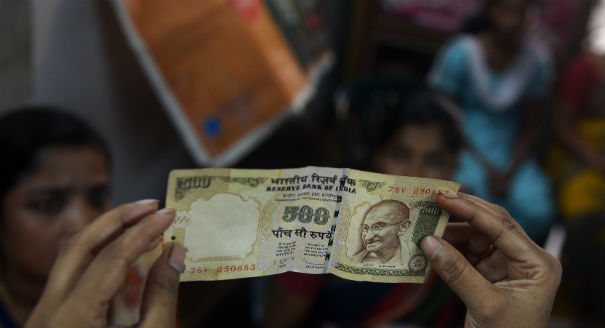
Inclusion is a political agenda and the job of the banking regulator is not that of a political authority, but of a regulator that protects consumers and focuses on the safety and soundness of the banking system.
Source: Financial Express
The UPA’s political agenda of inclusive growth through rights and entitlements is now being carried forward by the banking regulator, RBI, which has taken upon itself to give India growth with a human face. The central bank will now seek to become the central planner. The committee on comprehensive financial services for small businesses and low income households, headed by Nachiket Mor, has created a utopian vision of a world where rights and entitlements go even beyond what the National Advisory Committee came up with, to extend to a right to bank accounts and other financial services.
The panel’s report lays out a vision that is so precise and detailed that it reeks of central planning. The report has a vision statement around each type of financial service. Coverage targets are given along with dates and timelines extending to the next few years. For example, the panel says every Indian resident above the age of 18 should have a bank account by January 1, 2016. The credit-to-GDP ratio in every district of India is envisaged to grow to 10% by January 01, 2016, then growth at 10% per annum and reach 50% by January 02, 2020. The report says that by January 10, 2016, each district would have a total deposits-and-investments-to-GDP ratio of at least 15%. This ratio would increase every year by 12.5% with the goal that it reaches 65% by January 1, 2020.Not suprisingly, the panel recommends that RBI issue a circular indicating that no bank can refuse to open an account for a customer who has adequate KYC, which specifically includes Aadhaar. A bank would not have the choice to refuse opening accounts, even if its business model does not permit it to do so. The panel does not say what this inclusion will cost the system. Neither does it say who will pay this additional cost. Will it be the government whose political objectives it seeks to meet, or will it be other customers, the borrowers who will pay higher interest costs and the depositors who will receive less interest? Is it in the interest of bank customers to have these costs imposed on them, or, it is it cross-subsidisation without a political mandate?
The costs imposed are effectively taxes. The opening of accounts and other intrusive, distortionary recommendations flow directly from the utopian vision. In most markets, and especially in financial markets, central planning distorts the incentives in a manner that does more harm than good. It is not RBI’s job to pursue this political agenda. The panel has confused RBI’s role in the financial system. It seems to have assumed that RBI is not a regulator, but the owner and planner of the entire system. It also seems to have assumed that RBI has some God-given mandate to ensure redistribution from some consumers to some other consumers.
The forum for redistribution is Parliament, which is the place where competing welfare objectives are assessed. If the committee indeed believes that right to banking is such a fundamental right, it should have drafted a ‘Right to Banking Bill’ and submitted it to the government, with a recommendation to place it in Parliament. Parliament will approve expenditures to pay for the right to food. It needs to do the same with the right to banking. The report builds upon RBI’s approach to the financial sector so far. RBI has tried to achieve greater financial inclusion, but with little real success. Priority sector lending targets have existed for decades. In the recent years, RBI has come up with more mandates for banks to open bank accounts, which remain largely unused. RBI has done central planning and redistribution. This report doubles up on that approach.
The panel has made the classic central planner’s mistake of confusing ends with means. The kind of vision it has enunciated might lead to access in name only, but little functional consequences for the consumers. This is how the government has done things in India for a long time, and it has not worked. The government sets a simplistic goal, even in markets for complex services, and then goes on to centrally plan the process that will lead to the goal. The root of the problem in setting such goals, which inevitably lead to the logical next step: central planning. This is fundamentally different from saying that the government (in this case, the regulator) will fix the problems that might be preventing the market from achieving the desirable outcomes.
The same problematic vision is reflected in the report’s treatment of different stylised business models of banking. It outlines certain business models, and then goes on to identify what each can do for financial inclusion. There is nothing wrong in such analysis as long as it is an academic exercise. In the hands of a central planning regulator, this thinking can be a recipe for disaster. It is impossible to foresee what the different business models might achieve. Placing them in cubbyholes, which lead to further restrictions is a bad idea. It would have been much better had the committee recommended that RBI open its doors to different business models, and impose risk-based regulations on each.
There is a strong focus on attaining financial inclusion through extending the reach of banking networks. This ‘bank-led’ crusade of RBI clearly stems from a gross misunderstanding of the demand-side requirements of financial inclusion and access. India is a heterogeneous country with large variations in people’s preferences. Instead of evaluating the efficacy and failures of past financial inclusion efforts, which have also centered on banks, the panel assumes having more banks and more savings accounts will lead to better outcomes.
The panel is not satisfied with merely using banks for purposes of savings and resource mobilisation; it goes a step further and recommends creation of ‘payments banks’ within banks which enables bundling of ‘universal payment services’ with ‘universal bank accounts’. Global experience, be it from the United States or Kenya, suggests that banks based on legacy systems are both inefficient and unconcerned about delivering low-value payments services to their customers as it does not make much business sense for them. Our own experience with the still-birth and the lack of transactions on the bank account dependent Immediate Payments Service (IMPS) started by the National Payments Corporation of India (NPCI) seems counter-intuitive to the ‘payments bank’ suggestion made by the report.
In summary, inclusion is a political agenda and the job of the banking regulator is not that of a political authority, but of a regulator that protects consumers and focuses on the safety and soundness of the banking system.
This article was originally published in the Financial Express.
Former Nonresident Senior Associate, South Asia Program
Patnaik, an expert on India’s economy, was a nonresident senior associate in Carnegie’s South Asia Program.
Recent Work

Milan Vaishnav, Ila Patnaik
Ila Patnaik, Ajay Shah
Carnegie India does not take institutional positions on public policy issues; the views represented herein are those of the author(s) and do not necessarily reflect the views of Carnegie, its staff, or its trustees.

In any defense establishment, change is an ongoing process. However, despite the best of intentions, existing bureaucracies, bound by habit and years of socialization, have their limits in implementing transformative change.

Anit Mukherjee

As AI grows more sophisticated, as the supply chains that power it become more contested, and as access to frontier models becomes geopolitically charged, India must begin to ask a different set of questions. Not what applications it can build on someone else’s infrastructure but what the world needs.

Konark Bhandari

The Indian Ocean Region hosts one of the densest concentrations of subsea cables in the world. Yet, despite accounting for a significant share of global internet traffic, India’s participation remains limited.

Charukeshi Bhatt

How is AI reshaping space security, creating governance challenges, and where does international diplomacy stand today?


Tejas Bharadwaj, Almudena Azcárate Ortega

After the chill in ties between 2020 and 2024 that brought India–China relations to their lowest point in several decades, the two countries have engaged each other afresh. This paper argues that there are predominantly four imperatives guiding India’s approach to China, and they exist in an order of priority.

Saheb Singh Chadha