

In The Media
Vikram Nehru
{
  "authors": [
    "Vikram Nehru"
  ],
  "type": "legacyinthemedia",
  "centerAffiliationAll": "dc",
  "centers": [
    "Carnegie Endowment for International Peace",
    "Carnegie China"
  ],
  "collections": [],
  "englishNewsletterAll": "asia",
  "nonEnglishNewsletterAll": "",
  "primaryCenter": "Carnegie China",
  "programAffiliation": "AP",
  "programs": [
    "Asia"
  ],
  "projects": [],
  "regions": [
    "North America",
    "United States",
    "East Asia",
    "Southeast Asia"
  ],
  "topics": [
    "Economy",
    "Trade"
  ]
}
Source: Getty
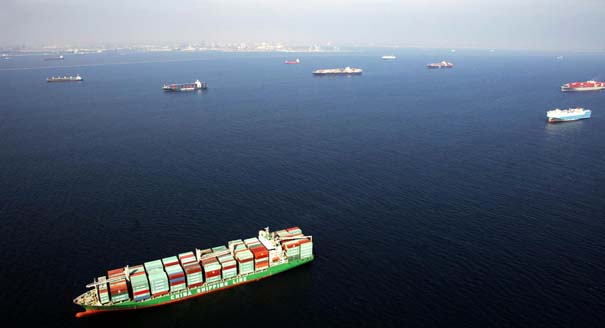
A U.S. withdrawal from the Trans-Pacific Partnership would not only sink the ambitious free trade agreement, it could sink America’s reputation in the Asia-Pacific.
Source: Nikkei Asian Review
The steep road toward a successful Trans-Pacific Partnership pact just got steeper.
The TPP is an ambitious free trade agreement that involves 12 Asia-Pacific countries, including its largest and most vocal champion -- the U.S. But growing opposition within its biggest backer now threatens to scuttle the accord just as it nears finalization. A TPP without America would be like Hamlet without the prince. A U.S. withdrawal would not only sink the TPP, it could sink America's reputation in the Asia-Pacific.
Only one country would benefit from such a debacle -- China. China is not a participant in the TPP. Instead, it champions the Regional Comprehensive Economic Partnership (RCEP), a planned free trade agreement between the Association of Southeast Asian Nations and its six neighboring countries.The RCEP, which excludes the U.S., has been overshadowed by the TPP. In Asia, where trade continues to expand rapidly, the demise of the TPP would make the RCEP the only trade game in town. And owing to its economic size, China's role in the pact is, and will continue to be, predominant.
Opponents in the U.S. do not seem to be considering these broader geostrategic implications. Most are driven by short-term political considerations. Their latest tactic is to delay or torpedo passage of Trade Promotion Authority (TPA) in Congress, which would "fast-track" congressional approval of the TPP.
Now Harry Reid, the Senate majority leader, says he opposes pressing ahead with TPA legislation. Without TPA, the 11 other negotiating partners would be loath to finalize the trade accord. And that is exactly what opponents of the TPP want.
They believe the TPP negotiations are secretive, corporatist, undemocratic and unconstitutional. They also believe such a pact would export American jobs, damage the environment and harm the long-term health of the economy. And politicians would prefer to vote on a contentious issue such as TPA after the upcoming midterm elections.
Even if a TPA bill were to make it through Congress, it may include a clause making fast-track approval contingent on the TPP forbidding currency manipulation. The administration of President Barack Obama opposes this for good reason.
First, the International Monetary Fund already has well-crafted rules forbidding currency manipulation. Second, there are serious methodological problems in identifying currency manipulation. And third, it would throw a wrench in the TPP and would almost certainly cause its untimely demise.
Saving the TPP against this growing and seemingly overwhelming opposition will require the Obama administration to make a well-led and well-argued public case to complete the negotiations and for fast-track approval by Congress. So far, there appears little sign of this happening.
The irony is that leaders in other TPP member countries -- notably Japan, Malaysia and Vietnam -- pressed ahead with negotiations in good faith at the urging of the U.S., often at considerable risk to their own political fortunes. One can only imagine their dismay if the U.S. were to delay, or worse, abandon approval of the TPP. America's reputation as a reliable partner would be badly tarnished.
It would also be a big blow to the U.S. rebalancing strategy toward Asia. The economic dimension of the strategy rests squarely on a successful TPP and would collapse if Congress denies approval.
The other two dimensions of the rebalancing strategy -- diplomacy and security -- are not faring too well, either. Obama's decision to cancel a trip to Asia last October due to budget battles at home hurt American diplomacy in the region. And the impact of across-the-board cuts on the U.S. defense budget, including the announced reduction by 2015 in the number of U.S. Navy vessels deployed at any time, does little to boost confidence in the reliability of the U.S. as a security partner in the Pacific.
China, in the meantime, is set to launch a charm offensive in Southeast Asia, complete with offers of investment aid and infrastructure development -- including the possible formation of a regional infrastructure bank. China is already Asean's largest trading partner, and a successful conclusion to the RCEP negotiations would further boost its trade with the region. China also helps finance the Chiang Mai Initiative, a regional currency swap arrangement for liquidity management in the event of a financial crisis. And as the 2014 chair of the Asia-Pacific Economic Cooperation forum, China will present itself as a "responsible" regional power through an agenda emphasizing connectivity, integration and innovation.
The economies of Southeast Asia clearly see concrete advantages in maintaining close ties with China, even if they are concerned about Beijing's aggressive posture in the South China Sea. On the other hand, from Southeast Asia's perspective, America's actions of late appear inconsistent with its rebalancing rhetoric.
The inability of the U.S. to conclude the TPP successfully would further undermine its credibility in the region. The stakes are high and the need for action is urgent. The Obama administration must pull out all the stops to get the TPA through Congress and prevent the opponents of trade from carrying the day. The TPP makes economic sense for the U.S., but at this juncture, it makes more sense geostrategically.
This article was originally posted in the Nikkei Asian Review.
Former Nonresident Senior Fellow, Asia Program
Nehru was a nonresident senior fellow in the Carnegie Asia Program. An expert on development economics, growth, poverty reduction, debt sustainability, governance, and the performance and prospects of East Asia, his research focuses on the economic, political, and strategic issues confronting Asia, particularly Southeast Asia.
Recent Work
Vikram Nehru
Vikram Nehru
Carnegie India does not take institutional positions on public policy issues; the views represented herein are those of the author(s) and do not necessarily reflect the views of Carnegie, its staff, or its trustees.

How is AI reshaping space security, creating governance challenges, and where does international diplomacy stand today?


Tejas Bharadwaj, Almudena Azcárate Ortega

The U.S.–India semiconductor cooperation story is well-stocked with top-level strategic intent. What remains unresolved, however, are some underlying challenges that will determine whether the cooperation actually functions. Three such friction points stand out.

Shruti Mittal

On March 10, 2026, India’s Union Cabinet approved amendments to Press Note 3, a regulation that mandated government approval on all foreign direct investment (FDI) from countries sharing a land border with India. This amendment raises questions primarily about whether its stated benefits will materialize and if the risks have been adequately weighed. This piece will address the same.

Konark Bhandari
India and the United States are close to concluding a Reciprocal Defense Procurement Agreement (RDPA) that will allow firms from the two countries to sell to each other’s defense establishments more easily. While this may not remedy the specific grievances both sides may have regarding larger bilateral issues, an RDPA could restore some momentum, following the trade deal announcement.
Konark Bhandari

On the last day of the India AI Impact Summit, India signed Pax Silica, a U.S.-led declaration seemingly focused on semiconductors. While India’s accession to the same was not entirely unforeseen, becoming a signatory nation this quickly was not on the cards either.
Konark Bhandari