Experts weigh in on whether the United States is too hostile toward China.
Stephen Wertheim, Evan S. Medeiros, Vijay Gokhale
{
"authors": [],
"type": "other",
"centerAffiliationAll": "dc",
"centers": [
"Carnegie Endowment for International Peace"
],
"collections": [
"Arab Awakening"
],
"englishNewsletterAll": "menaTransitions",
"nonEnglishNewsletterAll": "",
"primaryCenter": "Carnegie Endowment for International Peace",
"programAffiliation": "MEP",
"programs": [
"Middle East"
],
"projects": [],
"regions": [
"North Africa",
"Egypt"
],
"topics": [
"Political Reform",
"Democracy",
"Civil Society",
"Religion"
]
}Source: Getty
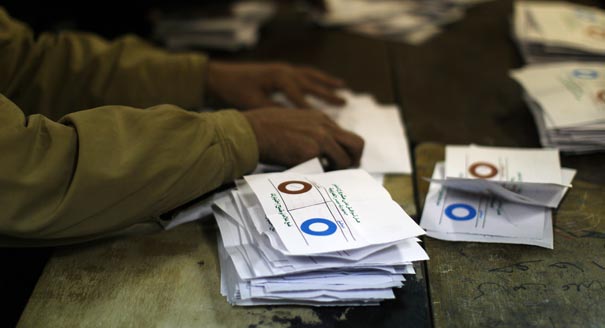
This page offers a selection of important laws and constitutional developments in Egypt following the January 25 Revolution.
Anti-Terrorism Law | English | Arabic
Parliamentary Elections Law | Arabic
Terrorist Entities Law | English | Arabic
Parliament Redistricting Law | Arabic
Presidential decree to deport foreign detainees | English | Arabic
Statement by Egyptian rights groups on proposed NGO law | English | Arabic
Parliamentary Elections Law | English | Arabic
Political Rights Law | Arabic
Articles on amendments to terrorism-related laws | English | Arabic
2014 Presidential Election Law | English | Arabic
2014 Constitution, January 2014, passed by popular referendum | English | Arabic
Comparing Egypt’s Constitutions | English
2013 Protest Law | English | Arabic
Constitutional Declaration, July 2013, issued by Interim President Adly Mansour | English | Arabic
Transitional Road Map, July 2013, issued by Supreme Council of the Armed Forces | English
Constitutional Declaration, December 2012, issued by President Mohamed Morsi | English | Arabic
Controversial Articles in the 2012 Egyptian Constitution | English
2012 Constitution, December 2012, passed by popular referendum | English | Arabic
Constitutional Declaration, November 2012, issued by President Mohamed Morsi | English | Arabic
Constitutional Declaration, August 2012, issued by President Mohamed Morsi | English | Arabic
Constitutional Declaration, June 2012, issued by the Supreme Council of the Armed Forces | English | Arabic
Constitutional Amendments, March 2011, passed by popular referendum | English | Arabic
Constitutional and Legal Framework Prior to the January 25 Revolution | English
Carnegie India does not take institutional positions on public policy issues; the views represented herein are those of the author(s) and do not necessarily reflect the views of Carnegie, its staff, or its trustees.
Experts weigh in on whether the United States is too hostile toward China.
Stephen Wertheim, Evan S. Medeiros, Vijay Gokhale
As India’s economy recovers from the coronavirus pandemic, Indian businesses need efficient financial structures to regain their ground. Key reforms to India’s Insolvency and Bankruptcy Code could fill these gaps.
Anirudh Burman
Access to cross-border data is an integral piece of the law enforcement puzzle. India is well placed to lead the discussions on international data agreements subject to undertaking necessary surveillance reforms.
Smriti Parsheera, Prateek Jha
After the coronavirus pandemic wanes, how will China’s reorientation of the Belt and Road Initiative to address global health concerns influence its relationships with South Asian countries?
Deep Pal, Rahul Bhatia
Early in the outbreak, government researchers forecast several high-risk scenarios that were downplayed or ignored in public messaging.
Gautam I. Menon