

Q&A
- +1
Sheena Chestnut Greitens, Oriana Skylar Mastro, Yukon Huang, …
{
  "authors": [
    "Yukon Huang"
  ],
  "type": "legacyinthemedia",
  "centerAffiliationAll": "dc",
  "centers": [
    "Carnegie Endowment for International Peace",
    "Carnegie China"
  ],
  "collections": [],
  "englishNewsletterAll": "asia",
  "nonEnglishNewsletterAll": "",
  "primaryCenter": "Carnegie China",
  "programAffiliation": "AP",
  "programs": [
    "Asia"
  ],
  "projects": [],
  "regions": [
    "East Asia",
    "China"
  ],
  "topics": [
    "Economy"
  ]
}
Source: Getty
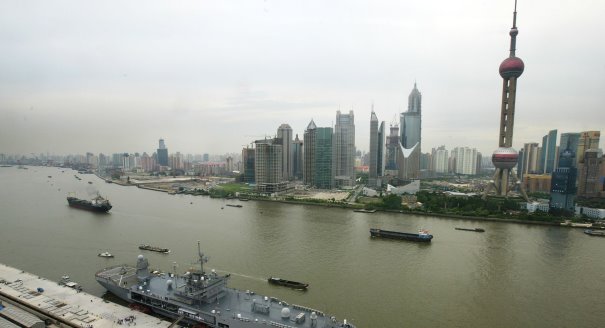
Instead of trying to disperse growth to the smaller cities, China’s planners should embrace the market forces that encourage its mega-cities to grow still larger.
Source: Financial Times
After prolonged debate, China’s long anticipated “New-Type Urbanisation Plan 2014-2020” was unveiled in mid-March. There is much to be applauded. It rightly focuses on improving the quality of urbanisation by reining in wasteful investments, meeting the social needs of migrant workers, addressing environmental concerns and developing new financing sources. The ultimate target is that by 2020 China will be 60 per cent urban compared with 54 per cent today.
But its flaw comes from a seemingly reasonable stipulation that the size of the largest cities should be “strictly controlled” and labour migration should be targeted at the smaller and medium-sized cities. This restriction not only violates a central theme of the leadership’s Third Plenum in Beijing last November — that the market and not the government should play the “decisive role” in allocating resources — but it also will make it more difficult for China to achieve much needed productivity gains.
The problem comes from having to forge a compromise among the divergent interests of the cities, provincial officials and central agencies. Larger cities have differing interests from smaller ones regarding growth and financing needs; while provincial and Beijing policy makers have varying views about promoting balanced regional development.The new plan draws on a number of major studies. Perhaps the most insightful is the joint “Urban China” report prepared by the State Council’s Development Research Center and the World Bank, the subject of a just completed conference. That report, unlike the officially endorsed new plan, took a much more “organic” approach in arguing that city sizes should not be controlled but allowed to respond to market forces.
After decades in which the leading coastal cities flourished, with expanding trade and foreign investment, Beijing has shifted its priority in the past decade to the promotion of a more balanced location of activities, particularly in the far western provinces, reminiscent of China’s central planning era. The government now intends to grant 100m migrant workers formal urban residency status by 2020. But more than 200m urban residents, especially in the largest cities, will still not have residency rights in the new plan, and thus will not have access to the social services available to established residents. This discriminatory behaviour is designed to discourage migration to the largest cities.
Yet this central policy conflicts with the requirements of the market, though not necessarily the views of city authorities. Many of the largest cities do not want more people; while the smaller ones, hoping to become more attractive urban centres, do want more. A consequence is that many local governments, especially in the central and western provinces, went on a construction spree in the hopes of enticing more people but the result was often the rise of “ghost” cities.
It is easy to understand why Beijing’s planners feel the largest cities are already too large. There are half a dozen “mega” cities with populations of more than 10m; and 25 “large” cities exceeding 4m. Many policy makers also wonder why the size of cities should influence productivity and growth.
The pressure for cities to increase in size comes from what economists call “agglomeration economies”: the benefits from concentration of companies and workers, which leads to specialisation and, over time, to demand for high-value services, especially in the largest cities. China’s cities, relative to those of other developing countries, are exceptionally productive. This is shown by the fact that urban per capita incomes are more than three times those of rural ones — the highest ratio in the world. Compare this with India, where the ratio is below two and the urbanisation ratio has not changed in a decade. Productivity is also significantly higher in China’s largest cities compared with the smaller ones. If workers are prevented from seeking the best jobs, regardless of location, commensurate with their qualifications and initiative then growth will be reduced and income inequalities will worsen.
Moreover, the larger cities offer the best hope of employing the surging numbers of graduates, whose numbers have expanded seven-fold in the past dozen years and who now have trouble finding jobs commensurate with their training. With unemployment rates four times that of the semi-skilled workforce and declining entry-level salaries, this politically sensitive segment of the population will find the restrictions on seeking jobs in the largest cities particularly daunting. In the US, about half of all graduates work in states other than the one in which they were born.
Instead of trying to disperse growth to the smaller cities, China’s planners should embrace the forces that encourage cities to grow in size and some activities to relocate. As cities expand, industries that do not need to be in dense population centres will naturally move out as land prices and wages escalate. But the largest cities are more likely to generate the kind of high-value activities that spur innovation and attract more skilled workers. Smart people like to mix with other smart people and globalisation has amplified what they can earn.
Mega-cities such as Beijing, Shanghai, Shenzhen and half a dozen others have continued to grow because of the rising presence of sophisticated services including research, finance, logistics and engineering, even as their manufacturing base has shrunk. What China now needs is a more efficient urbanisation process; one where cities are allowed to evolve in response to changing conditions and not because of centralised directives.
This will require financing systems and land management policies that encourage denser urban development and residency policies that facilitate rather than restrict labour mobility. If Beijing gets it right, large cities will grow even larger but so will the small and medium-sized cities. In the process China will realize the productivity gains needed to grow at a sustainable 7 per cent for the rest of this decade.

Senior Fellow, Asia Program
Huang is a senior fellow in the Carnegie Asia Program where his research focuses on China’s economy and its regional and global impact.
Recent Work


Sheena Chestnut Greitens, Oriana Skylar Mastro, Yukon Huang, …


Yukon Huang, Isaac B. Kardon, Matt Sheehan

After the chill in ties between 2020 and 2024 that brought India–China relations to their lowest point in several decades, the two countries have engaged each other afresh. This paper argues that there are predominantly four imperatives guiding India’s approach to China, and they exist in an order of priority.

Saheb Singh Chadha

This piece argues that India’s central challenge is not managing a single flashpoint but resolving the underlying tension between expansion and institutional coherency of the BRICS grouping.

Vrinda Sahai

On March 10, 2026, India’s Union Cabinet approved amendments to Press Note 3, a regulation that mandated government approval on all foreign direct investment (FDI) from countries sharing a land border with India. This amendment raises questions primarily about whether its stated benefits will materialize and if the risks have been adequately weighed. This piece will address the same.

Konark Bhandari

This piece examines India’s response to U.S. sanctions and tariffs, specifically assessing the immediate market consequences, such as alterations in import costs, and the broader strategic implications for India’s energy security and foreign policy orientation.
Vrinda Sahai

This paper examines the evolution of India-China economic ties from 2005 to 2025. It explores the impact of global events, bilateral political ties, and domestic policies on distinct spheres of the economic relationship.

Santosh Pai