

Q&A
- +1
Sheena Chestnut Greitens, Oriana Skylar Mastro, Yukon Huang, …
{
  "authors": [
    "Yukon Huang"
  ],
  "type": "legacyinthemedia",
  "centerAffiliationAll": "dc",
  "centers": [
    "Carnegie Endowment for International Peace",
    "Carnegie China"
  ],
  "collections": [
    "China’s Foreign Relations"
  ],
  "englishNewsletterAll": "asia",
  "nonEnglishNewsletterAll": "",
  "primaryCenter": "Carnegie Endowment for International Peace",
  "programAffiliation": "AP",
  "programs": [
    "Asia"
  ],
  "projects": [],
  "regions": [
    "East Asia",
    "China",
    "Southeast Asia"
  ],
  "topics": [
    "Economy",
    "Trade",
    "Foreign Policy"
  ]
}
Source: Getty
China cannot win the battle for regional sentiment so long as the debate is about security and sovereignty, on which Beijing’s hard position leaves little room for compromise.
Source: Diplomat
U.S. President Barack Obama’s Asian tour is intended to revitalize his moribund pivot to Asia. That this strategic initiative is still alive despite the inevitable pull of events in the Middle East and Europe is attributable to China’s claims over disputed islands, which have unnerved many in the region. This has opened the door for a stronger U.S. military presence in Asia while negotiations on the Trans-Pacific Partnership (TPP), which excludes China, provides some balancing weight on the economic front even if Congress has denied a fast-track approval process that would have facilitated an accord.
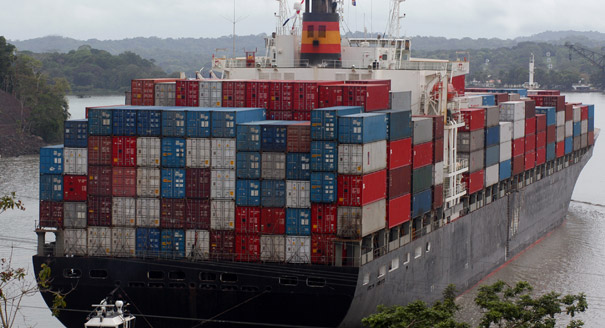
China cannot win the battle for regional sentiment so long as the debate is about security and sovereignty, on which Beijing’s hard position leaves little room for compromise. Many see negotiations on the Regional Comprehensive Economic Partnership (RCEP) with the ASEAN Plus Six grouping as China’s counterweight to the TPP in pushing the regional agenda towards more mutually beneficial concerns. Yet both of these endeavors potentially pale in comparison with President Xi Jinping’s fanciful idea of reviving the “maritime silk route” during his October visit to Malaysia and Indonesia. This notion builds on the East Asia region’s proven strengths in sharing production and deepening financial links while seeking to make greater use of the overseas Chinese communities in forging relationships to reduce tensions.
The movement of goods along the maritime silk route has a history of over two thousand years, reaching its pinnacle in the 15th century when the legendary explorer Zheng He led an armada of more than 300 ships and 27,000 sailors in voyages from China through Southeast and South Asia to the Persian Gulf. Today these same corridors play a vital role in supporting East Asia’s unique production sharing network which brings components produced throughout the region to China for assembly and then onwards to final destinations in Europe and North America. Building on these links could help build more harmonious interactions throughout the region.A sharp decline in transport costs along the contemporary maritime silk route allowed all countries in the region, regardless of their size and technological sophistication, to benefit from specialization and economies of scale by producing components rather than complete products. This is the major reason why East Asia has performed so well relative to the rest of the world. With rising labor costs in China, many ASEAN economies now stand to gain from future outsourcing of production. This combines with the trade deficits that China runs with most of its Asian neighbors — in contrast to its persistent surpluses with the West — to make it easier for China to be seen as an opportunity rather than a threat.
Because the membership base for the TPP is not the same as the regional production sharing network, the interests of the respective groupings are not necessarily aligned. Under U.S. leadership the TPP is pushing for the highest standards, with substantial attention being paid to issues that are often not seen as directly trade related, such as intellectual property rights and the rules governing state enterprises. Many participants are drawn to the potential for spurring structural reforms in being associated with such a group, but some are also motivated by the TPP as a counter weight to China’s economic rise.
While the negotiating process remains closed, enough intelligence has seeped out to suggest that there is a sharp separation between the U.S., which is driving the process, and the other TPP participants on many of the major issues. This is especially striking regarding positions on intellectual property rights, investment guidelines, environment and rules of origin. Relative to the RCEP, which would likely be more open to accommodating economic diversity and keen to protect the workings of the production sharing network, vast differences in development levels among TPP members mean that the less advanced may be harmed by actions that could impede technology transfers while the more integrated may see the competitive advantages derived from production sharing networks eroded by restrictive rules of origin. This will lower the benefits that some studies have estimated will accrue to East Asian participants in the TPP.
Shifts in the pattern of capital flows will also affect economic relationships as China moves from being largely an absorber of funds to also a major provider. Some predict that within a decade as much as a hundred billion dollars will be leaving China annually in the form of direct investment and portfolio flows, with much of it targeted to Asia. This will help to make the renminbi a global currency. Moreover, China’s structural trade deficits within East Asia make it logical to use the renminbi as a regional currency to settle trade balances before it begins playing a meaningful role in the rest of the world. History will be repeating itself as centuries ago Chinese copper coins were used as the medium of exchange throughout the maritime silk route, foreshadowing China’s current ambitions to internationalize its currency.
The most challenging and uncertain endeavor, however, is what Beijing has in mind is building on the role that overseas Chinese have played historically played—and continue to play today—in Southeast Asia. About 32 million of the 50 million overseas Chinese reside in Southeast Asia, including PRC nationals who live abroad and ethnic Chinese who have assimilated into their host countries. They account for a preponderance of the wealth in a number of ASEAN countries and play key roles in the regional production sharing network, aspects of which are coordinated out of Hong Kong, Singapore and in electronics, Taiwan, blurring concepts of what constitutes overseas ethnic Chinese communities and their political status.
During its opening up decades ago when its legal environment for protecting foreign investment was undeveloped, overseas Chinese accounted for as much as two thirds of FDI flows into China. They were able to leverage their identity, understanding of cultural norms and personal networks to mitigate some of the inherent risks that non-Chinese foreigners faced. Not surprisingly, Beijing now sees potential in having overseas Chinese play a reverse role in facilitating China’s outward investment in Southeast Asia, helping to develop major ports, out sourcing industrial production, deepening banking relationships and widening channels for distribution.
Overseas Chinese continue to exhibit an enduring cultural connection to China despite assimilating and naturalizing to host countries abroad. But they have gone through complex historical and political shifts that have complicated relations between China and these countries, and with other social communities within these countries. The role of the Chinese diaspora in influencing foreign policy is subject to diverse motivations but overall these relations have been largely passive. If they are to become more active in the future, the sensitivities involved need to be carefully managed and even then, whether such relationships can be turned into an advantage is questionable.
Beijing has attempted to exert strategic influence in the past on the overseas Chinese with mixed results. Wariness among many ASEAN countries toward China and ethnic sensitivities within countries where overseas Chinese occupy dominant roles in the local economy will likely limit the effectiveness of approaches with overt foreign policy objectives in mind. Most overseas Chinese do not share a bond with China beyond purely economic interests. Other local populations throughout Southeast Asia remain concerned about how greater engagement with China will benefit them directly and not just the diaspora. Such feelings are more extreme in countries like Vietnam and the Philippines but with varying gradations also a consideration in Malaysia, Indonesia and Thailand.
The challenge is reaching out to a broader range of communities and not relying only on the Chinese diaspora in Southeast Asia to facilitate China’s outward flow of capital. This inevitably means that any major initiative or formal contact needs to be done under the umbrella of government-to-government shared interests which would provide a reassuring framework to encouraging informal and largely private contacts with overseas Chinese at the firm or individual level.
More inclusive interactions going well beyond the diaspora communities can help moderate regional tensions that have arisen from the territorial disputes and historical sensitivities. Such approaches would be given a huge boost in credibility if China and the countries concerned could agree on joint development of the disputed maritime resources while setting aside sovereignty claims. This would make it more likely that the concept of a revitalized maritime silk route could help promote more positive foreign policy outcomes within Asia. If so, this would also serve the ultimate interests of the U.S. and other pacific parties in ensuring safe and open access to the major maritime corridors and moderating regional tensions.

Senior Fellow, Asia Program
Huang is a senior fellow in the Carnegie Asia Program where his research focuses on China’s economy and its regional and global impact.
Recent Work


Sheena Chestnut Greitens, Oriana Skylar Mastro, Yukon Huang, …


Yukon Huang, Isaac B. Kardon, Matt Sheehan
Carnegie India does not take institutional positions on public policy issues; the views represented herein are those of the author(s) and do not necessarily reflect the views of Carnegie, its staff, or its trustees.

After the chill in ties between 2020 and 2024 that brought India–China relations to their lowest point in several decades, the two countries have engaged each other afresh. This paper argues that there are predominantly four imperatives guiding India’s approach to China, and they exist in an order of priority.

Saheb Singh Chadha

This piece argues that India’s central challenge is not managing a single flashpoint but resolving the underlying tension between expansion and institutional coherency of the BRICS grouping.

Vrinda Sahai

A partnership between India, a country of subcontinental size, and Africa, a continent of fifty-four countries, may seem asymmetric until one notes that both are home to nearly the same number of people—1.4 billion. This essay spells out the existing challenges to the partnership, its optimal potential, and the possible pathways to realize it over the next quarter-century.

Rajiv Bhatia

The India–EU Free Trade Agreement (FTA) is shaping up to be one of the most consequential trade negotiations, both economically and strategically. But, what’s in the agreement, what’s missing, and what will determine its success in the years ahead
Vrinda Sahai, Nicolas Köhler-Suzuki

On March 10, 2026, India’s Union Cabinet approved amendments to Press Note 3, a regulation that mandated government approval on all foreign direct investment (FDI) from countries sharing a land border with India. This amendment raises questions primarily about whether its stated benefits will materialize and if the risks have been adequately weighed. This piece will address the same.

Konark Bhandari