

In The Media
Shahram Chubin
{
  "authors": [
    "Shahram Chubin"
  ],
  "type": "legacyinthemedia",
  "centerAffiliationAll": "dc",
  "centers": [
    "Carnegie Endowment for International Peace",
    "Malcolm H. Kerr Carnegie Middle East Center"
  ],
  "collections": [
    "Iranian Proliferation"
  ],
  "englishNewsletterAll": "ctw",
  "nonEnglishNewsletterAll": "",
  "primaryCenter": "Carnegie Endowment for International Peace",
  "programAffiliation": "NPP",
  "programs": [
    "Nuclear Policy",
    "Middle East"
  ],
  "projects": [],
  "regions": [
    "Middle East",
    "Iran"
  ],
  "topics": [
    "Security",
    "Nuclear Policy"
  ]
}
Source: Getty
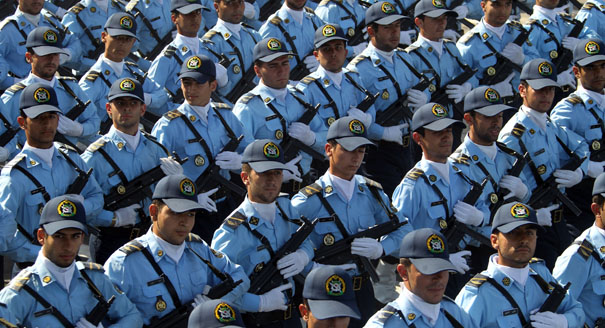
Tehran’s military capabilities do not match its ambitions for recognition and status. It is cautious, defensive, and prudent in resorting to force, due as much to experience as to realism about its own limits.
Source: Survival
Iran has been a source of international concern for decades. Its general hostility to the international system disturbs the regional order. Tehran’s initial aim of exporting the 1979 revolution, supplanted later by exporting its revolutionary model, has caused anxiety in smaller, traditional regimes. And the view that it is a belligerent state all too ready to resort to force feeds concern about its nuclear ambitions. This perspective, largely shared by Israel and some members of the Gulf Cooperation Council, is plausible but incomplete. I will argue that by orthodox standards Iran is militarily weak, and cautious, defensive and prudent in resorting to force. This is due as much to experience as to realism about its own limits. The country does not see itself as a military power or aspire to become one, even if some of its utterances and behaviour leave room for scepticism on this point.
Iran’s approach to military power and strategy should be seen in the context of its recent history and its goals. The country has little experience of war in modern times. In fact, Iranian history over the past century and a half had been free of war, until the 1980–88 conflict with Iraq, which Iranians call the ‘imposed war’. Iran has been the victim of invasions and occupations, but is itself rather passive. The CIA’s clandestine history called this Iran’s ‘modern tradition of defeat’.Iran established a national army only recently, under the Pahlavis. The country has no martial tradition, and does not share neighbouring Turkey’s high esteem for the profession of arms. Iran did much to provoke the war with Iraq, but did not start or expect it. Tehran has avoided direct military conflict ever since, and its military expenditure is slight compared to that of its smaller Gulf neighbours.
Unlike these smaller states, Iran’s imports are limited and basic rather than modern or high-tech. Although isolated, sanctioned, contained and depicted as a military threat by some, the country has rarely threatened to use force or seen its own security in military terms. Instead, it has steadily focused on the maintenance of domestic stability and security.
Tehran does not overestimate its military power. A recent statement by Minister of Foreign Affairs Javad Zarif reflects a widespread view within Iran: ‘do you think the US, which can destroy all our military systems with one bomb, is scared of our military system?’ This view holds that the country’s military power is deficient, and that diplomacy and commitment, or stubbornness, have allowed Tehran to run quite far on an empty tank....
Former Nonresident Senior Fellow, Nuclear Policy Program
Chubin, who is based in Geneva, focuses his research on nonproliferation, terrorism, and Middle East security issues. He was director of studies at the Geneva Centre for Security Policy, Switzerland, from 1996 to 2009.
Recent Work
Shahram Chubin
Shahram Chubin
Carnegie India does not take institutional positions on public policy issues; the views represented herein are those of the author(s) and do not necessarily reflect the views of Carnegie, its staff, or its trustees.

In any defense establishment, change is an ongoing process. However, despite the best of intentions, existing bureaucracies, bound by habit and years of socialization, have their limits in implementing transformative change.

Anit Mukherjee

After the chill in ties between 2020 and 2024 that brought India–China relations to their lowest point in several decades, the two countries have engaged each other afresh. This paper argues that there are predominantly four imperatives guiding India’s approach to China, and they exist in an order of priority.

Saheb Singh Chadha

This piece argues that the present Indian strategy, based on opportunistic diversification and utilization of limited strategic reserves, remains inadequate when confronting supply disruptions. It evaluates India’s options in the short, medium, and long terms.

Vrinda Sahai

This piece examines India’s response to U.S. sanctions and tariffs, specifically assessing the immediate market consequences, such as alterations in import costs, and the broader strategic implications for India’s energy security and foreign policy orientation.
Vrinda Sahai
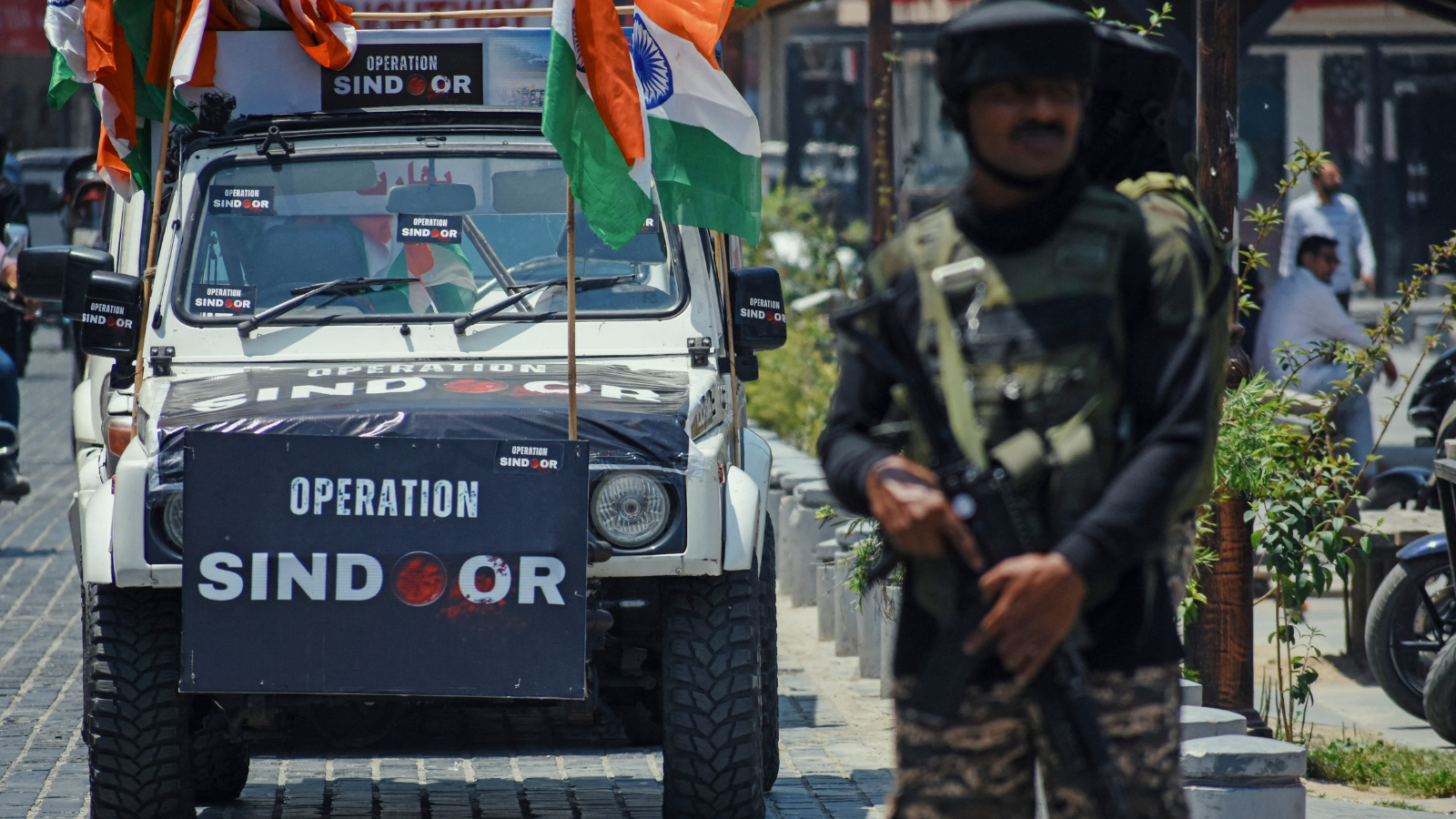
The India-Pakistan conflict that played out between May 6 and May 10, 2025, offers several military lessons. This article presents key takeaways from Operation Sindoor and breaks down how India’s preparations shaped the outcome and what more is needed to strengthen future readiness.

Dinakar Peri