

Q&A
Eugene Rumer
{
  "authors": [
    "Eugene Rumer"
  ],
  "type": "legacyinthemedia",
  "centerAffiliationAll": "dc",
  "centers": [
    "Carnegie Endowment for International Peace"
  ],
  "collections": [],
  "englishNewsletterAll": "ctw",
  "nonEnglishNewsletterAll": "",
  "primaryCenter": "Carnegie Endowment for International Peace",
  "programAffiliation": "russia",
  "programs": [
    "Russia and Eurasia"
  ],
  "projects": [],
  "regions": [
    "Russia",
    "Eastern Europe",
    "Ukraine"
  ],
  "topics": [
    "Political Reform",
    "Foreign Policy"
  ]
}
Source: Getty
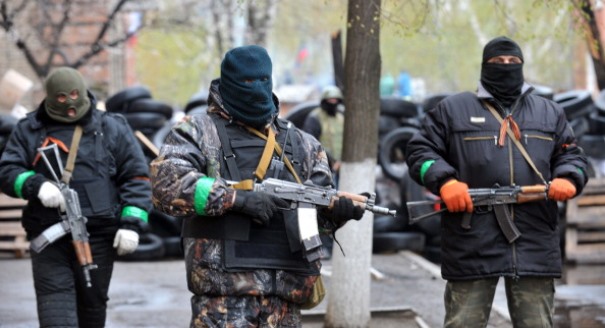
Previous efforts have done little to improve the situation in Ukraine. Perhaps it is time for a radical rethinking of relations between Kiev and the regions.
Source: Financial Times
President Vladimir Putin’s announcement on Wednesday of a pullback from the Ukrainian border has been greeted with a mixture of relief and scepticism in Europe and the US. In any case, it should not obscure the fact that while diplomacy is being reactivated, it has yet to produce any results. After the chaos in Odessa took dozens of lives, and amid continued fighting in eastern Ukraine, the country stands on the brink of civil war. There is no end in sight. It is time to confront an unpalatable truth: Ukraine may not emerge from the crisis as a unitary state.
So far, US policy has entailed shaming Russia and threatening sanctions. But the Kremlin fears neither reputational risk nor the economic pain that western sanctions can inflict. Furthermore, our hands are tied. The global economy needs Russian oil and gas to run.
Russia’s proximity to Ukraine gives it an important operational edge. It has a lot more at stake there than the US or Europe. And unlike western powers, Russia is prepared to use force.The April 17 Geneva accords have done little to improve things. Yet, so far, no better ideas have emerged. US President Barack Obama and Chancellor Angela Merkel of Germany have warned Russia that more sanctions will follow unless it ceases its destabilising activities in eastern Ukraine and refrains from disrupting the May 25 presidential elections. But these threats have had no impact on the violence there. In the long run, sanctions may bear fruit and the Kremlin may come to regret its actions but in the meantime Russia and the west are pursuing a course that could lead to a true catastrophe in Ukraine.
Could Ukraine be saved by a radical rethinking of relations between Kiev and the regions – perhaps even a national referendum or, in the extreme case, partitioning of the country? The latter would clearly be a radical step. It would be messy. But would it be worse than a civil war?
Such moves would not have to be accomplished overnight. A gradual process could begin with a referendum at the same time as presidential elections with international supervision. The subsequent reforms would be implemented by a body of representatives from all parts of Ukraine, in parallel with an effort at national reconciliation. This path need not necessarily end in divorce; separatists in the east may be mollified by some lesser-form of regional self-government, such as a federal government with a large degree of local autonomy.
A new parliamentary election could help to stabilise the situation. At present, no one is in charge in eastern Ukraine. The authorities in Kiev have admitted as much. Much of the separatists’ fervour is driven by the perception that the national government does not represent them, does not care for them and is dominated by nationalists from western Ukraine – in many ways culturally and religiously different from the east – who rose to prominence during the protests in the Maidan.
Giving the east a large bloc of votes in the national parliament would ensure that the region’s interests would be adequately represented in Kiev. Much attention has been focused on the May 25 presidential election. But electing a new parliament is an equally important step.
Nobody wants a civil war in Ukraine. Russia appears reluctant to send in its tanks, probably fearing the chaos that would be certain to follow. Neither Europe nor the US wants another Balkan-style conflict. The people of Ukraine have suffered enough.
It is time to stop digging and begin to look for a solution at any cost. Partitioning Ukraine may not be anyone’s first choice but all options – postponing the May 25 election, a constitutional referendum, a new parliamentary election – should be on the table if they have a chance of averting a civil war and saving lives.
This article was originally published in the Financial Times.
Director and Senior Fellow, Russia and Eurasia Program
Rumer, a former national intelligence officer for Russia and Eurasia at the U.S. National Intelligence Council, is a senior fellow and the director of Carnegie’s Russia and Eurasia Program.
Recent Work
Eugene Rumer
Eugene Rumer
Carnegie India does not take institutional positions on public policy issues; the views represented herein are those of the author(s) and do not necessarily reflect the views of Carnegie, its staff, or its trustees.

After the chill in ties between 2020 and 2024 that brought India–China relations to their lowest point in several decades, the two countries have engaged each other afresh. This paper argues that there are predominantly four imperatives guiding India’s approach to China, and they exist in an order of priority.

Saheb Singh Chadha

This piece argues that India’s central challenge is not managing a single flashpoint but resolving the underlying tension between expansion and institutional coherency of the BRICS grouping.

Vrinda Sahai

A partnership between India, a country of subcontinental size, and Africa, a continent of fifty-four countries, may seem asymmetric until one notes that both are home to nearly the same number of people—1.4 billion. This essay spells out the existing challenges to the partnership, its optimal potential, and the possible pathways to realize it over the next quarter-century.

Rajiv Bhatia

The India–EU Free Trade Agreement (FTA) is shaping up to be one of the most consequential trade negotiations, both economically and strategically. But, what’s in the agreement, what’s missing, and what will determine its success in the years ahead
Vrinda Sahai, Nicolas Köhler-Suzuki

Trump 2.0 has unsettled India’s external environment—but has not overturned its foreign policy strategy, which continues to rely on diversification, hedging, and calibrated partnerships across a fractured order.



Milan Vaishnav, ed., Sameer Lalwani, Tanvi Madan, …