

Article
Wang Tao
{
  "authors": [
    "Wang Tao"
  ],
  "type": "legacyinthemedia",
  "centerAffiliationAll": "",
  "centers": [
    "Carnegie Endowment for International Peace",
    "Carnegie China"
  ],
  "collections": [],
  "englishNewsletterAll": "",
  "nonEnglishNewsletterAll": "",
  "primaryCenter": "Carnegie China",
  "programAffiliation": "",
  "programs": [],
  "projects": [],
  "regions": [
    "South Asia",
    "India",
    "East Asia",
    "China"
  ],
  "topics": [
    "Climate Change"
  ]
}
Source: Getty
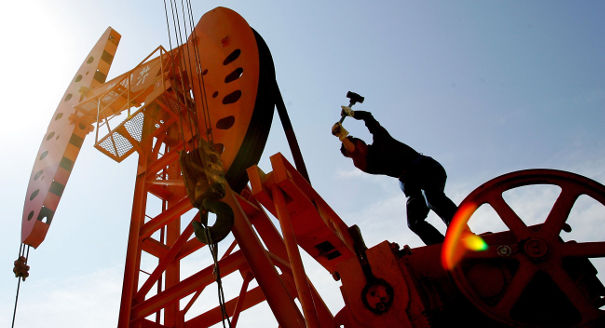
As different as their economic and political systems are, China and India have much more to learn from each other’s success, and much more to gain together, in securing their shared critical sea lanes and energy supply.
Source: Diplomat
China and India are set to account for more than 30 percent of global energy demand by 2030. Both countries are overwhelmingly reliant on imports to feed this need—China is likely to rely on imports for 66 percent of its oil consumption by 2020, and India will become the world’s largest importer of coal by 2017.
The Strait of Malacca is a key oil chokepoint in Asia, where some 15 million barrels of oil per day were being transmitted in 2011, including 82 percent of China’s total oil imports. The Strait is also the key transit route for China’s energy imports and trade more broadly. For its part, India is also eager to look east for new oil and gas from the Americas. The geographic proximity of the two major emerging economies combined with their shared heavy use of sea lanes between the South China Sea and Indian Ocean is increasingly leading some to question whether the two nations will engage in a head-on competition for energy and maritime security in the region.Last October, Chinese President Xi Jinping spoke of a “maritime silk road” in his first trip to Southeast Asia, aiming to promote economic cooperation between China and the ASEAN countries. That road could also be extended all the way west through the Indian Ocean towards Africa, just as China once did in the fifteenth century.
China’s growing presence in the Indian Ocean is obvious. It has been an active investor in the economies of littoral states, building deep sea ports in Pakistan, and naval bases in Sri Lanka, Bangladesh, and Myanmar. Meanwhile India’s commitment to pursue joint oil exploration with Vietnam in the South China Sea has been a source of significant irritation to China.
The two nations’ growing ambitions in energy supply need not be a source of tension. There are many reasons for New Delhi and Beijing to work together in their energy security strategies rather than separately, and some progress has already been made in this regard.
The third China-India Strategic Economic Dialogue was held in March, and Chinese Premier Li Keqiang stressed the similarity in development conditions between the two countries. He appealed for greater collaboration, especially in the area of energy. The two nations are not only two of the world’s biggest energy consumers, but also among the world’s largest carbon emitters. These commonalities should give them incentive to collaborate rather than to compete.
China and India are already partners in the Sino-Myanmar natural gas pipeline project. Also involving South Korea and Myanmar, this project provides a powerful example of international cooperation in building major energy infrastructure to the benefit of all parties involved. Beyond sharing responsibility for its construction, a joint venture with partners from all four countries will also operate the pipeline in a move that should minimize geopolitical tensions and risks. This is not an isolated case; Chinese and Indian state oil companies established a joint venture in the oil sector in Syria in 2005.
In May 2013, China and India both gained non-Arctic country observer status in the Arctic Council. Like other nations, and despite the difficulties extraction in the Arctic poses, it is undeniable that both governments are very interested in the potential natural and gas resources. Both Chinese and Indian national oil companies are currently in talks with Russia’s Gazprom and Rosneft for oil and gas investment in the near Arctic area. Given the risks associated, it would make sense for both countries to form a consortium in the negotiation as they did in the Myanmar-China natural gas pipeline project.
The fact that China and India are both abundant in dirty coal—and in pursuit of oil and gas in global markets—could also strengthen their close bond in international climate change negotiations. The two countries share the dilemma of promoting economic development for over a billion people while addressing strong requests from the international community to reduce carbon emissions from fossil fuels. Cooperation on the basis of economic development and climate change mitigation would allow the two nations to defend their legitimate positions together—and avoid making decisions that gain at the other’s cost.
The world energy paradigm is shifting from conventional resources and technologies to new ones. In this new reality, China and India have a shared goal in securing energy supplies from the growing sources, including shale gas in the United States, and new oil and gas fields in Africa and South America. As different as their economic and political systems are, the two largest emerging nations have much more to learn from each other’s success, and much more to gain together, in securing their shared critical sea lanes and energy supply.

Former Nonresident Scholar, Carnegie-Tsinghua Center for Global Policy
Wang Tao was a nonresident scholar in the Energy and Climate Program based at the Carnegie–Tsinghua Center for Global Policy.
Recent Work
Wang Tao
Wang Tao, Yang Yifang
Carnegie India does not take institutional positions on public policy issues; the views represented herein are those of the author(s) and do not necessarily reflect the views of Carnegie, its staff, or its trustees.

The ASML MoU with Tata Electronics is an indicator of how far the Indian semiconductor ecosystem has come. This ecosystem has been years in the making and represents real commercial logic.

Konark Bhandari
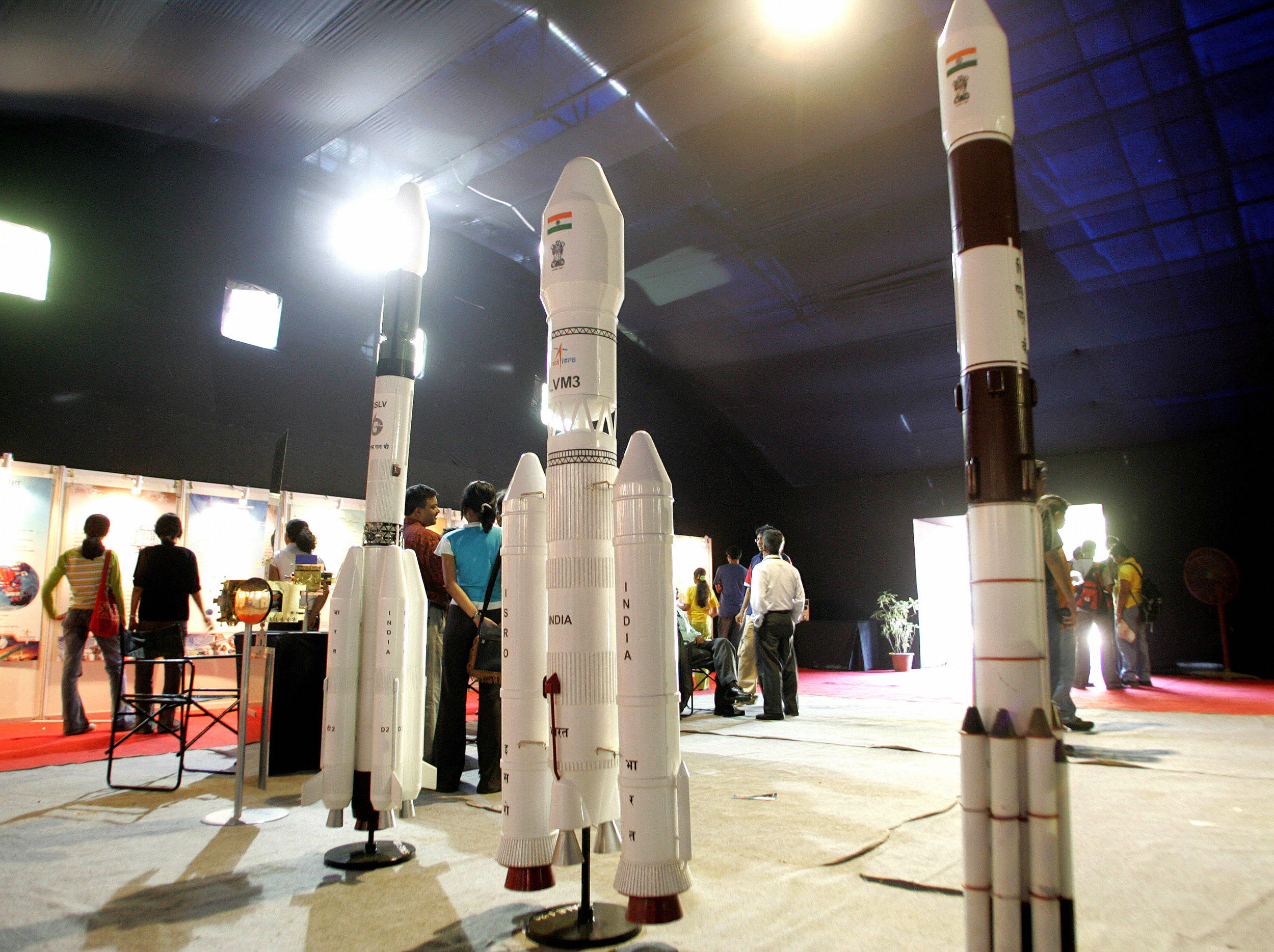
This paper examines the relationship between India’s evolving space policy and the corresponding growth in private space ventures. It analyzes both the enabling factors created by recent regulatory changes and the persistent challenges facing entrepreneurs in this capital-intensive, highly regulated industry.

Harshan Vazhakunnam

A partnership between India, a country of subcontinental size, and Africa, a continent of fifty-four countries, may seem asymmetric until one notes that both are home to nearly the same number of people—1.4 billion. This essay spells out the existing challenges to the partnership, its optimal potential, and the possible pathways to realize it over the next quarter-century.

Rajiv Bhatia

The U.S.–India semiconductor cooperation story is well-stocked with top-level strategic intent. What remains unresolved, however, are some underlying challenges that will determine whether the cooperation actually functions. Three such friction points stand out.

Shruti Mittal

The India–EU Free Trade Agreement (FTA) is shaping up to be one of the most consequential trade negotiations, both economically and strategically. But, what’s in the agreement, what’s missing, and what will determine its success in the years ahead

Vrinda Sahai, Nicolas Köhler-Suzuki