

Commentary
Dmitri Trenin
{
  "authors": [
    "Dmitri Trenin"
  ],
  "type": "commentary",
  "centerAffiliationAll": "",
  "centers": [
    "Carnegie Endowment for International Peace",
    "Carnegie Russia Eurasia Center"
  ],
  "collections": [],
  "englishNewsletterAll": "",
  "nonEnglishNewsletterAll": "",
  "primaryCenter": "Carnegie Russia Eurasia Center",
  "programAffiliation": "",
  "programs": [],
  "projects": [],
  "regions": [
    "North America",
    "United States",
    "Russia",
    "Eastern Europe",
    "Ukraine"
  ],
  "topics": [
    "Foreign Policy"
  ]
}
Source: Getty
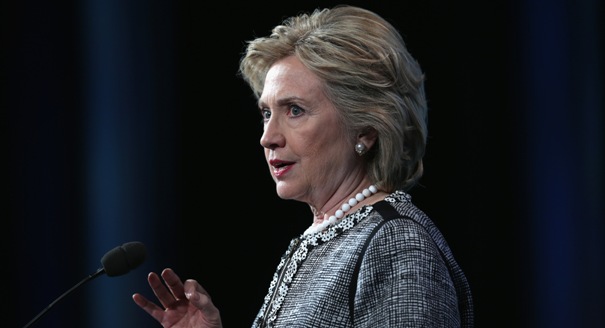
Hilary Clinton has just released her memoirs, “Hard Choices.” In it, she describes Russia as one of the hardest of those choices for the United States. But in the present circumstances of the difficult international landscape, the United States can only do so much.
Usually, political memoirs should help the author to settle score with history. Hillary Clinton’s just released “Hard Choices,” has a mission to help her make history by becoming the first female president of the United States. When she publicly announces her decision, Clinton’s four years as secretary of state during Barack Obama’s first term will be her greatest achievement in public life to date and her strongest argument for seeking the highest office in the land. The 600-plus pages-long book is certainly worth a read, with an eye to the future, not just the past.
Given the purpose of the book, it contains few stunning revelations. It projects a fairly conventional vision of U.S. foreign policy with its core element of continued global leadership and a stress on democracy and human rights, including—very appropriately—women’s rights. As for novelties, they are reserved for diplomacy, the main tool of foreign policy. Going digital is the thrust of Clinton’s transformational diplomacy. Russians would recall Michael McFaul, the tweeting former U.S. ambassador to Moscow, as a champion of such “transformation.”
Clinton, however, obviously needs to defend the “reset” in U.S.-Russian relations which she so famously inaugurated in the 2009 public encounter with Lavrov. Her justification is the need to engage with Moscow where U.S. interests demand this, as on managing nuclear arsenals or non-proliferation. She also implies that the reset was also made possible by the Kremlin putting a different public face to itself, and suggests that the policy exhausted itself in late 2011 when Putin decided to run for the presidency again.
As for future dealings with Russia, the would-be president refers to her own parting memorandum for Obama, in which she coached her recommendations in familiar Cold War-era terms. “Strength and resolve” are “the only language Putin would understand,” she writes. The United States needs to “prevent or limit” Russia’s “negative behavior.” To achieve that, Washington needs, above all, to strengthen NATO, “keeping it open” to former Soviet republics, and to reduce Europe’s energy dependence on Russia. Such toughness, however, should not preclude a degree of collaboration with Moscow where U.S. and Russian interests happen to coincide.
In her book, Hillary Clinton expresses little hope that the “Putin regime” will be overthrown by its subjects, putting Russia “back on track” in the process of democratization and Westernization. Rather, like Zbigniew Brzezinski, she puts her faith in geopolitics. The rising power of China in the east and the growing radicalization of the Muslim world in the south, in her view, could make President Putin realize that Russia’s position would be strengthened by means of restoring ties to the West and “charting a peaceful and profitable future as part of Europe rather than its antagonist.”
At this point, this appears wishful thinking. A quarter-century after the fall of the Berlin Wall, the Ukraine crisis has opened a wholly new chapter in Russian-Western relations, which is yet to be written. The outcome of the renewed U.S.-Russian competition, and its wider implications, are unknowable. Russia’s “reluctant revisionism,” in the words of an astute Moscow policy observer, is only part of the story. China’s “assertive behavior” is another, and the closer connection between the two constitutes an important phenomenon.
As evidenced in the developments in the vast region from North Africa to northern India, and in the Western Pacific, the international landscape is likely to be altered again by a series of geopolitical earthquakes and tsunamis. The United States, in these circumstances, can only do so much: see its options in Iraq and Syria today, or potentially Pakistan and Saudi Arabia in the future. Having practiced unchallenged leadership in the Western world since WWII, and having been the world’s hegemon for 25 years after the end of the Cold War, the United States now needs to learn the art of co-leadership with others in managing and resolving common problems. It is not so much diplomacy as foreign policy itself which would require fundamental transformation.
Former Director, Carnegie Moscow Center
Trenin was director of the Carnegie Moscow Center from 2008 to early 2022.
Recent Work
Dmitri Trenin
Dmitri Trenin
Carnegie India does not take institutional positions on public policy issues; the views represented herein are those of the author(s) and do not necessarily reflect the views of Carnegie, its staff, or its trustees.

How is AI reshaping space security, creating governance challenges, and where does international diplomacy stand today?


Tejas Bharadwaj, Almudena Azcárate Ortega
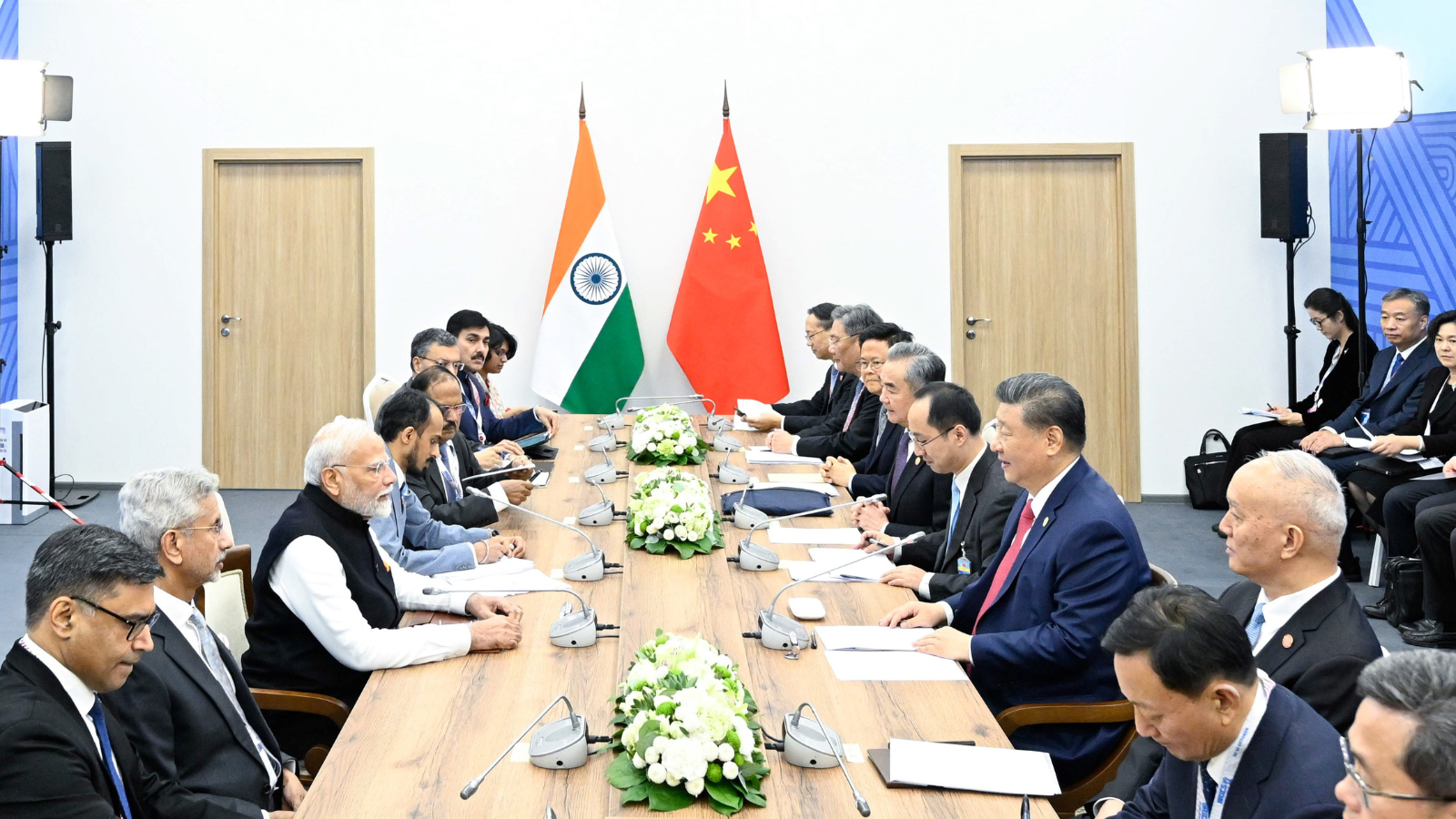
After the chill in ties between 2020 and 2024 that brought India–China relations to their lowest point in several decades, the two countries have engaged each other afresh. This paper argues that there are predominantly four imperatives guiding India’s approach to China, and they exist in an order of priority.
Saheb Singh Chadha

This piece argues that India’s central challenge is not managing a single flashpoint but resolving the underlying tension between expansion and institutional coherency of the BRICS grouping.

Vrinda Sahai

A partnership between India, a country of subcontinental size, and Africa, a continent of fifty-four countries, may seem asymmetric until one notes that both are home to nearly the same number of people—1.4 billion. This essay spells out the existing challenges to the partnership, its optimal potential, and the possible pathways to realize it over the next quarter-century.
Rajiv Bhatia
The U.S.–India semiconductor cooperation story is well-stocked with top-level strategic intent. What remains unresolved, however, are some underlying challenges that will determine whether the cooperation actually functions. Three such friction points stand out.
Shruti Mittal