

Commentary
Thomas de Waal
{
  "authors": [
    "Thomas de Waal"
  ],
  "type": "commentary",
  "centerAffiliationAll": "",
  "centers": [
    "Carnegie Endowment for International Peace",
    "Carnegie Europe",
    "Carnegie Russia Eurasia Center"
  ],
  "collections": [],
  "englishNewsletterAll": "",
  "nonEnglishNewsletterAll": "",
  "primaryCenter": "Carnegie Europe",
  "programAffiliation": "",
  "programs": [],
  "projects": [],
  "regions": [
    "Caucasus",
    "Georgia"
  ],
  "topics": [
    "Political Reform"
  ]
}
Source: Getty
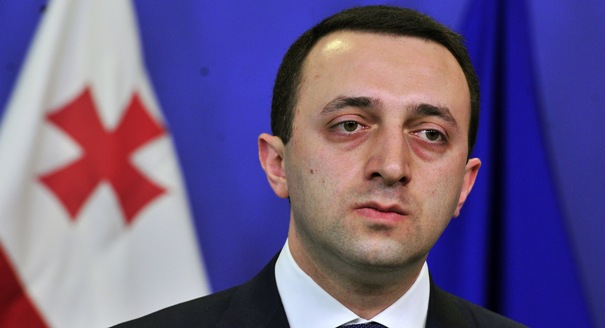
Local elections in Georgia demonstrated that less than two years after taking office the Georgian Dream has shed a large section of its support.
Georgia is digesting the results of local elections last Sunday.
Having predicted an outright victory in the first round of a string of mayoral elections, the governing Georgian Dream coalition is now facing run-off votes in eight out of 14 cities. That includes the capital Tbilisi where Georgian Dream's candidate Davit Narmania polled 46 percent of the vote.
Prime Minister Irakli Garibashvili made a brave face of calling the less than stellar results for his candidates a "unique opportunity to further consolidate Georgian democracy."
He is right in the sense that the elections were mainly judged to be free and fair, despite episodes of intimidation of opposition candidates, and a very dirty election in western Georgia. And he was also right in the broader sense that Georgia is now making steps towards local democracy. Under Mikheil Saakashvili, all local leaders were appointed, with the exception of Tbilisi, but 12 Georgian towns will now have elected heads.
Perhaps the most telling statistic from the election was the low turnout figure of 43 percent. That suggests a lot of floating voters who simply decided to stay at home. Or that there are citizens like the man I met on Sunday who went to the polls and struck out the names of all the candidates.
In Tbilisi people complain that the government is drifting. To many, the coalition gives the impression of being a team of disparate individuals, rather than a team working together—a picture reinforced by the dysfunctional relationship between the prime minister and the new president, Giorgi Margvelashvili.
Voters are still mainly worried about the economy. It is improving this year after a year of no progress in 2013. But unemployment, which Georgian Dream said was its Number One issue, remains stubbornly at the same high levels. In the most recent national poll commissioned by the National Democratic Institute, sixty one percent of respondents named "jobs" as their main concern.
Later this month Georgian Dream candidates are likely to prevail in most or all of the run-off votes. The government will get the additional symbolic boost of signing an Association Agreement with the European Union on June 27. That gives the government another chance to hoist the EU flag, seek new investment projects and re-launch an economic strategy. Otherwise levels of disappointment are only likely to rise in the second half of the year.

Senior Fellow, Carnegie Europe
Thomas de Waal is a senior fellow at Carnegie Europe, specializing in Eastern Europe and the Caucasus.
Recent Work
Thomas de Waal

Thomas de Waal, Areg Kochinyan, Zaur Shiriyev
Carnegie India does not take institutional positions on public policy issues; the views represented herein are those of the author(s) and do not necessarily reflect the views of Carnegie, its staff, or its trustees.
As India’s economy recovers from the coronavirus pandemic, Indian businesses need efficient financial structures to regain their ground. Key reforms to India’s Insolvency and Bankruptcy Code could fill these gaps.

Anirudh Burman
Access to cross-border data is an integral piece of the law enforcement puzzle. India is well placed to lead the discussions on international data agreements subject to undertaking necessary surveillance reforms.

Smriti Parsheera, Prateek Jha
After the coronavirus pandemic wanes, how will China’s reorientation of the Belt and Road Initiative to address global health concerns influence its relationships with South Asian countries?
Deep Pal, Rahul Bhatia
Early in the outbreak, government researchers forecast several high-risk scenarios that were downplayed or ignored in public messaging.
Gautam I. Menon
Governments around the world are turning to new forms of digital surveillance to monitor the spread of the coronavirus, though they are mostly using existing laws to do so.
Anirudh Burman