

Q&A
Eugene Rumer
{
  "authors": [
    "Eugene Rumer"
  ],
  "type": "commentary",
  "centerAffiliationAll": "",
  "centers": [
    "Carnegie Endowment for International Peace",
    "Carnegie Russia Eurasia Center"
  ],
  "collections": [],
  "englishNewsletterAll": "",
  "nonEnglishNewsletterAll": "",
  "primaryCenter": "Carnegie Endowment for International Peace",
  "programAffiliation": "",
  "programs": [],
  "projects": [],
  "regions": [
    "North America",
    "United States",
    "Russia",
    "Eastern Europe",
    "Ukraine",
    "Western Europe"
  ],
  "topics": [
    "Security",
    "Foreign Policy"
  ]
}
Source: Getty
Europe’s and the United States’ principal challenge for the coming years is to develop a new strategy for dealing with Russia. This strategy will have to be built on a realistic understanding of Russia as it is, rather than on what the West would like it to be and hopes it will one day become.
Until Anne Applebaum’s August 29 essay in the Washington Post, even the greatest of pessimists did not warn that there was a risk of a premeditated, head-on military collision between Russia and the West. Contributing to the risk of accidental war in the Ukraine crisis was the failure of the United States and Europe to anticipate Russia’s moves, which at every step exceeded Western expectations of what Russia was willing to do and the risks it was prepared to take to advance its interests. As during the 2008 Russia-Georgia war, the United States and Europe did not see it coming. Although the prospect of an all-out war involving Russia and the United States remains unthinkable, neither party to this conflict should ignore the danger of small incidents that could inadvertently set in motion a spiral that would in turn culminate in war that no one intended, wanted or thought possible, as was true in Europe in 1914.
However, what was done for Germany in the 1950s was not done for Russia in the 1990s after the West “won” the Cold War and the Soviet Union collapsed. Despite early misgivings about post-World War II Germany’s fate in a new European security order, the part of Germany occupied by the United States, France and Great Britain joined NATO in 1955 and was fully integrated in the West. Its place in Europe was never in question.
That was not the case with Russia after 1991. Its place in a post-Cold War Europe whole and free was tenuous even in the best of times. The possibility of NATO membership was never under serious consideration, and whenever this idea came up (be it from Yeltsin or Putin), it was always treated as a far-fetched, theoretical possibility. The necessity of devising a new security arrangement to replace both Cold War structures—the Warsaw Pact and NATO—was never considered. There never was any question about NATO’s future after the Cold War, it would continue, period.
Moreover, NATO would expand. NATO’s enlargement to the East, not explicitly intended to threaten Russia, nonetheless had a hedging element even if the primary purpose was to cement a post-Cold War role for the United States on the Continent. If Russia failed in its transformation and reverted to its old expansionist self, NATO enlargement would provide Central Europe with the security umbrella that would guard against Russian encroachment. In the words of some of the earliest and most active advocates of NATO enlargement, Russia was a “special case.” Its place in Europe was a matter of grave doubt:
“Russia nevertheless remains a special case due to its size, geostrategic position and long imperial tradition. Many Europeans believe that Russia is not a European country, is unlikely to become one and should not be allowed into core European institutions. Indeed, at the moment not a single Atlantic alliance member is in favor of allowing Russia into either the EC or NATO, although most avoid saying so openly.”
The possibility of the EU (then European Community) membership for Russia was not on the table either.
In other words, whereas Russia’s former satellites in Central Europe and the Baltics had a clear destination at the end of their post-Communist transition and a guaranteed place in Europe’s security and political structures, Russia did not. It would have to prove its European identity.
The cautious approach was understandable. Russia’s size, history, political culture, military traditions, as well as its geographic position on two continents, made integrating it a daunting, perhaps impossible task. Crucially, it saw itself as an integrator, not an integree. The result was Europe’s and the United States’ two-pronged approach to Russia: one element of it was to hedge against Russian resurgence as an adversary; the other element of Western strategy was to engage Russia, and encourage its transformation in the hope that it would see the benefits of market, democracy and joining the West (albeit on the West’s terms).
But in the words attributed to former New York mayor Rudy Giuliani and used by many others, “hope is not a strategy.” The United States and Europe had a strategy for Central Europe. They never really had one for Russia. Russia remained outside the key European institutions, it was not enmeshed in the trans-Atlantic political and security network as Germany was after World War II, while Russia’s economic ties to Europe and the United States have been turned into a potential vulnerability for both sides as a result of the Ukraine crisis.
The entire European political and security architecture was built on the foundation of two institutions—the European Union and NATO—which did not include Russia. To advance its fundamental vision of Europe whole, free and at peace with itself and its neighbors, Europe and the United States relied on the hope that Russia would eventually embrace them on its own accord. Well over two decades into the post-Cold War era, this approach to European security turned out to be a huge gamble. It paid off in Central Europe. But not in Russia.
The Ukraine crisis is undoubtedly a cataclysmic event for Europe. But Ukraine is not the cause of the crisis. It is rather a symptom of the even larger problem for Europe. Europe’s problem is with Russia, its rejection of the security architecture devised and promoted by the West since the end of the Cold War.
Europe’s and the United States’ principal political, security, and economic challenge for the coming years is to develop a new strategy for dealing with its giant neighbor. This strategy will have to be built on a realistic understanding of Russia as it is, rather than on what the West would like it to be and hopes it will one day become. This challenge will not, cannot be addressed at the upcoming NATO summit in Wales. But the best that NATO leaders can do when they convene in Wales in a few days is to recognize the magnitude of the real problem facing the alliance and task their governments to begin the difficult work of developing such a strategy. Unless they do so, the summit will be remembered only as a missed opportunity.
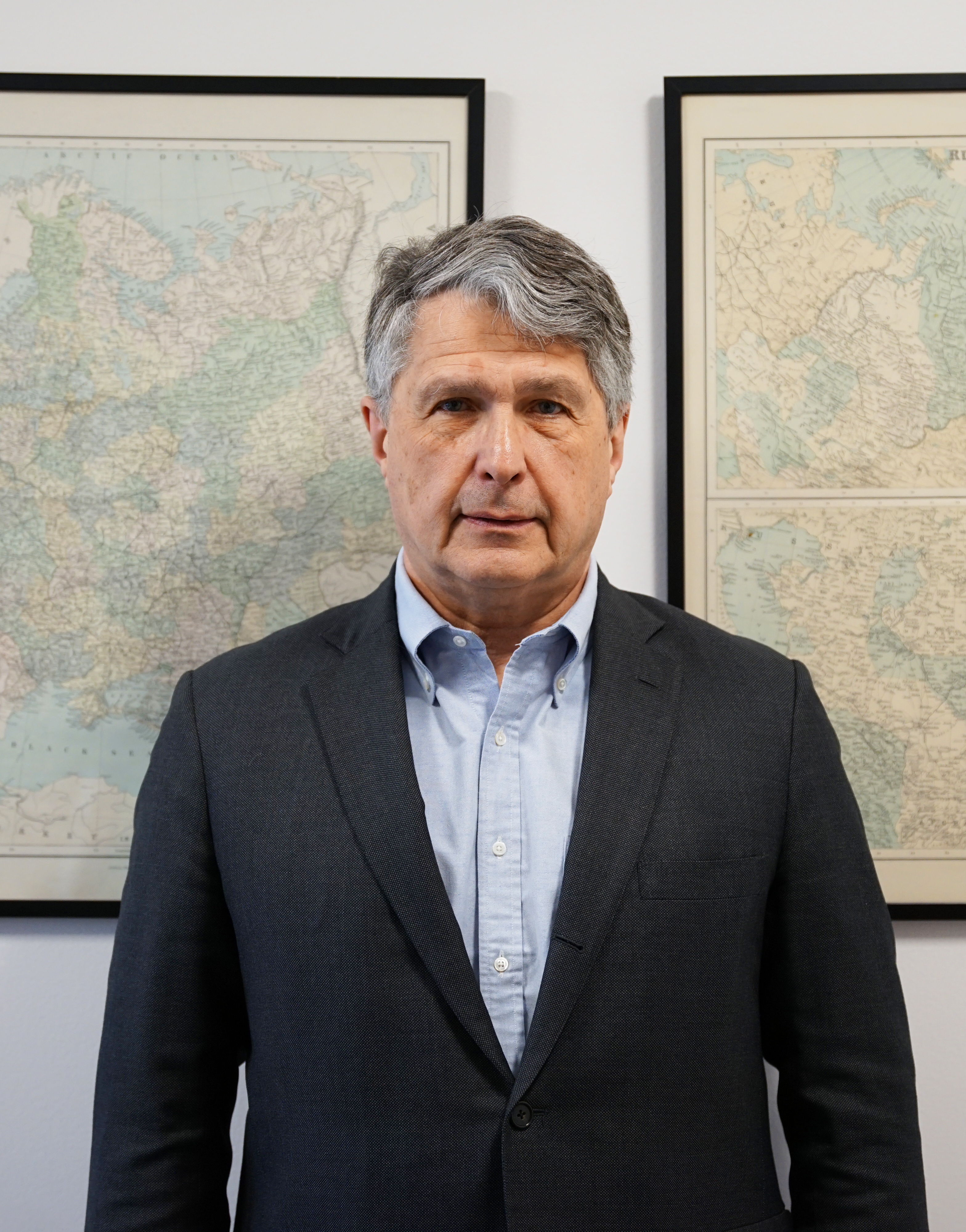
Director and Senior Fellow, Russia and Eurasia Program
Rumer, a former national intelligence officer for Russia and Eurasia at the U.S. National Intelligence Council, is a senior fellow and the director of Carnegie’s Russia and Eurasia Program.
Recent Work
Eugene Rumer
Eugene Rumer
Carnegie India does not take institutional positions on public policy issues; the views represented herein are those of the author(s) and do not necessarily reflect the views of Carnegie, its staff, or its trustees.

How is AI reshaping space security, creating governance challenges, and where does international diplomacy stand today?


Tejas Bharadwaj, Almudena Azcárate Ortega

After the chill in ties between 2020 and 2024 that brought India–China relations to their lowest point in several decades, the two countries have engaged each other afresh. This paper argues that there are predominantly four imperatives guiding India’s approach to China, and they exist in an order of priority.

Saheb Singh Chadha

This piece argues that India’s central challenge is not managing a single flashpoint but resolving the underlying tension between expansion and institutional coherency of the BRICS grouping.

Vrinda Sahai

A partnership between India, a country of subcontinental size, and Africa, a continent of fifty-four countries, may seem asymmetric until one notes that both are home to nearly the same number of people—1.4 billion. This essay spells out the existing challenges to the partnership, its optimal potential, and the possible pathways to realize it over the next quarter-century.

Rajiv Bhatia

The U.S.–India semiconductor cooperation story is well-stocked with top-level strategic intent. What remains unresolved, however, are some underlying challenges that will determine whether the cooperation actually functions. Three such friction points stand out.

Shruti Mittal