

Research
- +4
Milan Vaishnav, Rahul Verma, Rukmini S., …
{
  "authors": [
    "Christophe Jaffrelot"
  ],
  "type": "legacyinthemedia",
  "centerAffiliationAll": "dc",
  "centers": [
    "Carnegie Endowment for International Peace"
  ],
  "collections": [],
  "englishNewsletterAll": "ctw",
  "nonEnglishNewsletterAll": "",
  "primaryCenter": "Carnegie Endowment for International Peace",
  "programAffiliation": "SAP",
  "programs": [
    "South Asia"
  ],
  "projects": [],
  "regions": [
    "South Asia",
    "Pakistan"
  ],
  "topics": [
    "Political Reform"
  ]
}
Source: Getty
The recent crisis in Pakistan has shown that the army does not need to seize power to be recognized as the most powerful institution in the country.
Source: Indian Express
The Pakistan army finally decided to step into the country’s ongoing crisis last week, after a fortnight of agitation and seven rounds of fruitless negotiation between Nawaz Sharif and the Imran Khan-Tahirul Qadri combine, which wanted nothing short of the prime minister’s resignation. On August 31, the chief of army staff, Raheel Sharif, chaired a corps commanders’ conference, which concluded with a short but revealing communique: “While reaffirming support to democracy, the conference reviewed with serious concern the existing political crisis and the violent turn it has taken, resulting in large-scale injuries and loss of lives. Further use of force will only aggravate the problem. Army remains committed to playing its part in ensuring security of the state and will never fall short of meeting national aspirations.”
The army seemed to be projecting itself as referee and the only institution that cared about the national interest, rising above the disputes between power-hungry politicians. The irony is that the crisis had been made possible, if not provoked, by the army itself.
First, according to Federal Information Minister Pervaiz Rashid, Imran Khan was being advised by the influential former chief of the ISI, Ahmed Shuja Pasha. Second, in an August 20 meeting at Rawalpindi, the Pakistan Ex-Servicemen Association, headed by Vice Admiral (retd) Ahmed Tasnim, called for the dissolution of assemblies and fresh elections. Third, it would seem that the supporters of Imran Khan and Qadri were able to reach the heart of Islamabad, and even break into the high-security Red Zone, because the army let them. The army appeared to remain a passive observer, in spite of the government having asked it to guarantee the security of Islamabad. Five companies had been deployed to secure the main offices of the judiciary, the Parliament House, the Presidency, the Prime Minister’s House, as well as the foreign missions and offices. Yet protesters laid siege to the PM’s House and stormed the headquarters of PTV. The next day, they broke through the gates of the Secretariat, the head office of the administration. The police alone reacted, which resulted in three deaths.Finally, Imran Khan and Qadri were in communication with the army. On August 29, both met the COAS, and Imran Khan announced that Raheel Sharif had been appointed mediator by the PM. On September 1, PTI president Javed Hashmi revealed that Imran Khan had told the party’s core committee that the movement “can’t move forward without the army”. Of course, Imran Khan asked the disgruntled Hashmi to leave the PTI.
Why has the army found it convenient to use Khan and Qadri against Sharif? Because the prime minister resisted its “tutelary beliefs” — to use a phrase from Aqil Shah’s remarkable book, The Army and Democracy: Military Politics in Pakistan — even as it grew more assertive. After Nawaz Sharif’s 2013 victory, the army had tried to wield increasing influence in the power structure, to counter a man who had strongly opposed the military during his last term in the late-1990s. Former army chief Ashfaq Parvez Kayani asked for the creation of a national security council, which would institutionalise the role of the armed forces in civil decision-making. Nawaz Sharif had resisted this demand in his last term, but he bowed to Kayani in 2013.
Nawaz Sharif himself chose the successor of Kayani in November 2013. But the new COAS, Raheel Sharif, appeared to have a mind of his own, and developed a fractious relationship with the government after the PM alienated the military by claiming that his government wanted to negotiate with the Pakistani Taliban at a time when the COAS had decided to deploy troops in North Waziristan. More importantly, Nawaz Sharif coming to power meant the case against General Pervez Musharraf moved faster. In January, the Supreme Court disposed of Musharraf’s review petition against the July 2009 verdict, which denounced his proclamation of emergency in November 2007 — he was to be tried for treason. Musharraf immediately denounced this as a personal “vendetta” and said “the whole army is upset”. Even if Musharraf has not remained popular in the army ranks, a treason trial against a former COAS would create a precedent few officers are prepared to accept, apart from the loss of face for the military.
At the moment, it appears back-door channels of communication have been kept open with the interior minister, Chaudhry Nisar Ali Khan, who was part of the Zia-ul-Haq government and whose brother had been a senior general in the army. In early 2014, Nisar Khan had reportedly told Raheel Sharif that Musharraf could go abroad after he had been indicted for imposing an emergency in November 2007. But this promise seems to have been scuppered by other ministers, including Defence Minister Khawaja Asif, who had argued that letting Musharraf go abroad would damage the government’s credibility. Moreover, Nawaz Sharif himself wanted the Musharraf trial to take place.
When it appeared that the PM was adamant, the security establishment decided to make life difficult by using other politicians. This is not a new tactic. Then COAS Aslam Beg had used Muhammad Khan Junejo and Nawaz Sharif himself against Benazir Bhutto before the 1988 and 1990 elections, respectively. Musharraf had used the Islamic parties of the MMA in 2002 to weaken the ANP, the PPP and the PML(N). This time, the military gave the green signal to Qadri and Imran Khan. And in just a fortnight, the PM lost most of his prestige and authority. By asking the army to mediate in the political crisis, Nawaz has finally acknowledged that the military is the key institution of the country. As Babar Sattar pointed out in a Dawn article on August 4, 2014: “khakis now have Nawaz Sharif on a tight leash”.
The decision to retain Nawaz Sharif was made during the late August meeting of the corps commanders mentioned above. Five of the 11 participants of the meeting, including the ISI chief Zaheer-ul-Islam, wanted to dislodge the government. But according to a senior security source, “Raheel Sharif is not interested in direct intervention”. There was no need to replace the PM and deal with a difficult economic situation when Nawaz Sharif was already weakened and unable to resist the army
Whether Nawaz Sharif now spares Musharraf remains to be seen. But the recent crisis has shown that the army does not need to seize power to be recognised as the most powerful institution in Pakistan, just like in the mid-1990s, when it had forced Nawaz Sharif and then President Ishaq Khan to resign. It also shows that it is strengthened by the attitude of the civilians, who are not only bad at governance (the current Sharif government is a case in point) but also have no compunctions in dealing with the army to serve their own ambitions. Nawaz Sharif did it with Generals Zia and Beg, Benazir Bhutto negotiated with Musharraf in 2005-2007, and now Imran Khan does the same. While the military is usually authoritarian, the civilians are not necessarily democratic.
This article was originally published in the Indian Express.

Former Nonresident Scholar, South Asia Program
Jaffrelot’s core research focuses on theories of nationalism and democracy, mobilization of the lower castes and Dalits (ex-untouchables) in India, the Hindu nationalist movement, and ethnic conflicts in Pakistan.
Recent Work

Milan Vaishnav, Rahul Verma, Rukmini S., …
Christophe Jaffrelot
Carnegie India does not take institutional positions on public policy issues; the views represented herein are those of the author(s) and do not necessarily reflect the views of Carnegie, its staff, or its trustees.
Trump 2.0 has unsettled India’s external environment—but has not overturned its foreign policy strategy, which continues to rely on diversification, hedging, and calibrated partnerships across a fractured order.


Milan Vaishnav, ed., Sameer Lalwani, Tanvi Madan, …
This book examines the impact of cross-border violence on communities living along the Line of Control and the International Border in Jammu and Kashmir, India.



Deep Pal, Surya Valliappan Krishna, Saheb Singh Chadha
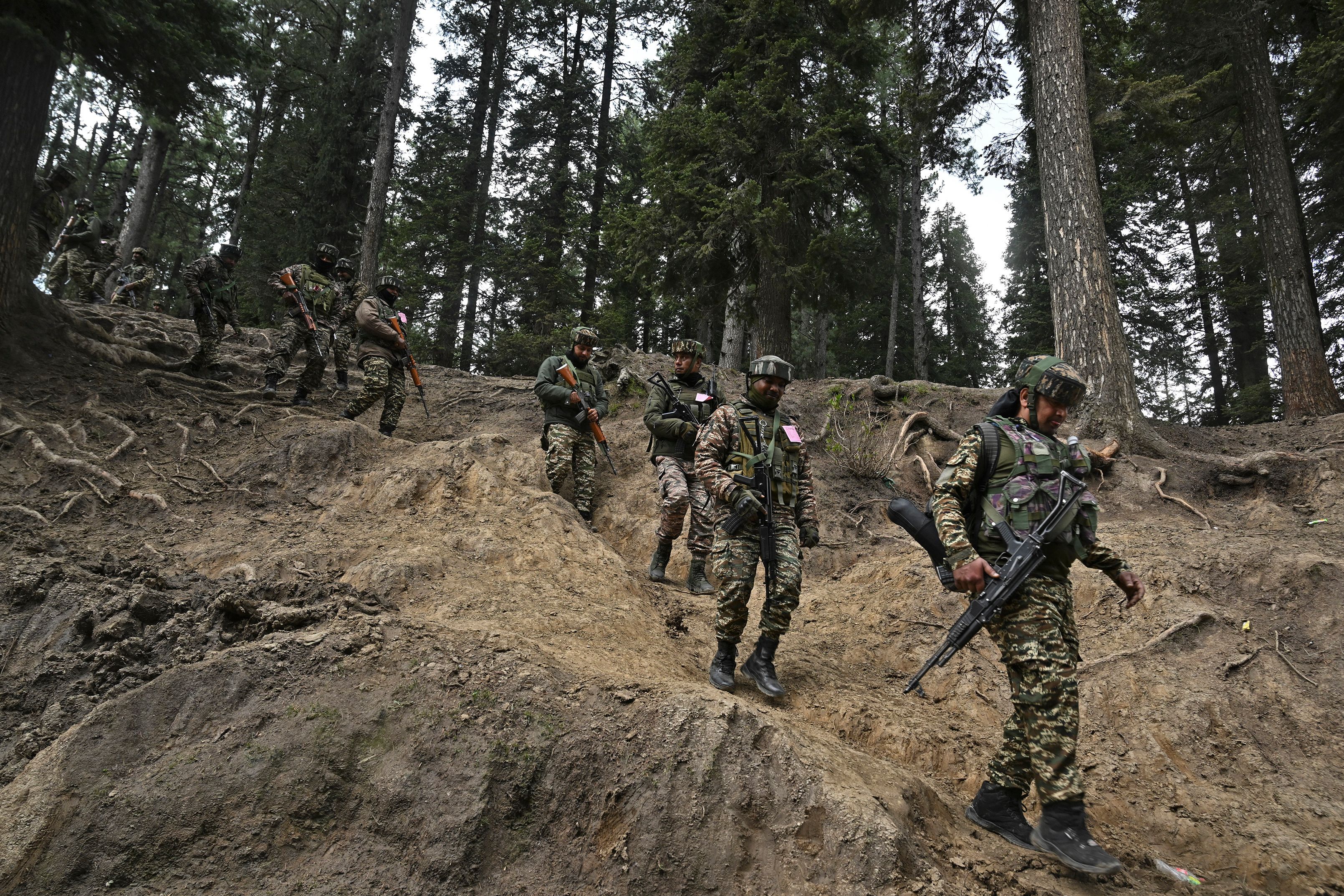
On May 7, 2025, between 1:05 and 1:30 a.m. (IST), airstrikes carried out by the Indian Air Force hit nine locations inside Pakistan and Pakistan occupied Kashmir (PoK). It was codenamed Operation Sindoor.

Rudra Chaudhuri
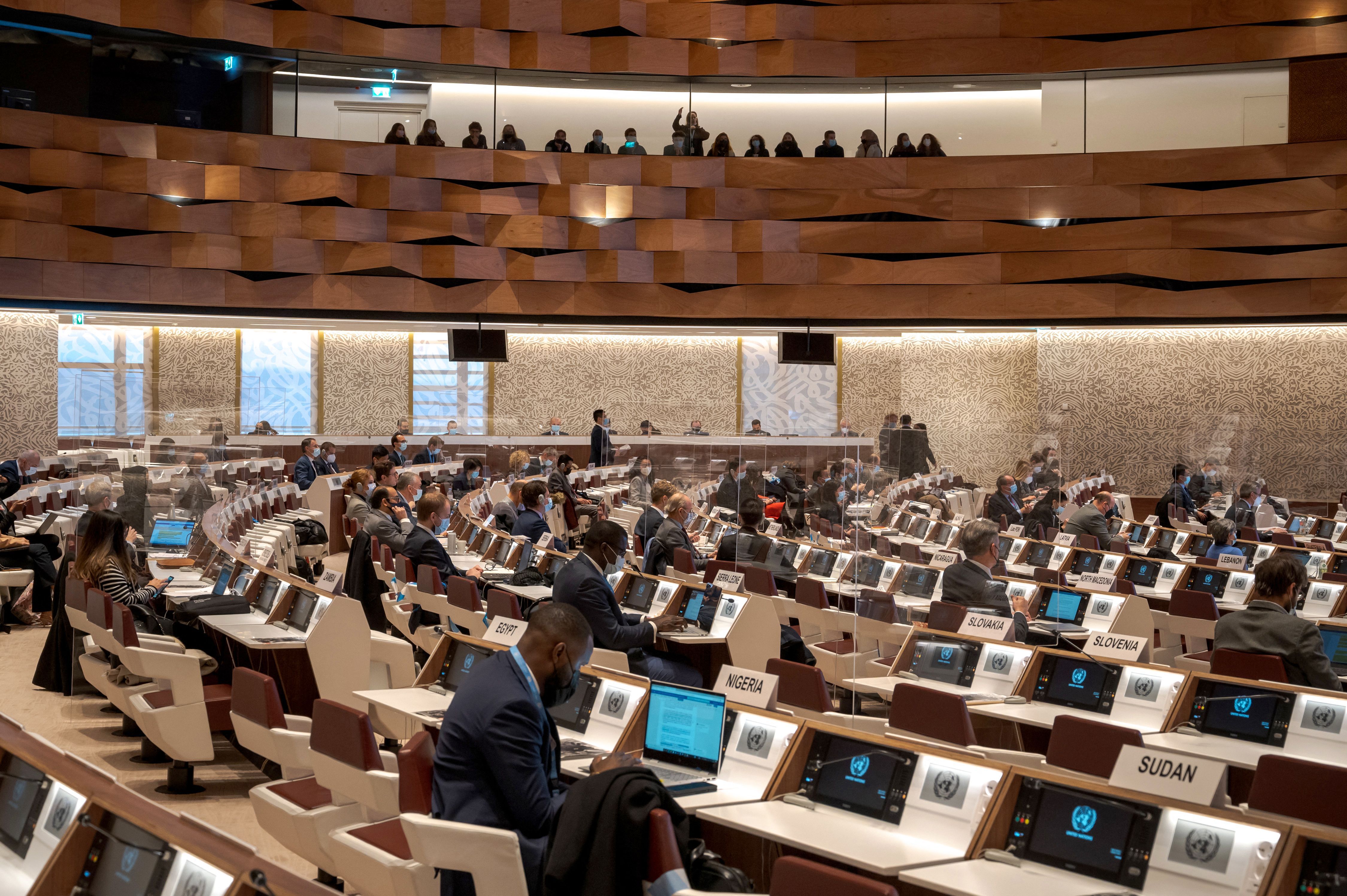
This article explores the global debate on lethal autonomous weapons systems (LAWS), highlighting the convergences, complexities, and differences within and beyond the UN Group of Governmental Experts (GGE) on LAWS. It further examines India’s key position at the GGE and the probable reasons behind them.


Charukeshi Bhatt, Tejas Bharadwaj

This essay is the first of a three-part series that will seek to understand the considerations for building compute capacity and the different pathways to accessing compute in India. This essay delves into the meaning of compute and unpacks the various layers of the compute stack.
Aadya Gupta, Adarsh Ranjan