

Commentary
Yezid Sayigh
{
  "authors": [
    "Yezid Sayigh"
  ],
  "type": "legacyinthemedia",
  "centerAffiliationAll": "dc",
  "centers": [
    "Carnegie Endowment for International Peace",
    "Malcolm H. Kerr Carnegie Middle East Center"
  ],
  "collections": [],
  "englishNewsletterAll": "menaTransitions",
  "nonEnglishNewsletterAll": "",
  "primaryCenter": "Malcolm H. Kerr Carnegie Middle East Center",
  "programAffiliation": "MEP",
  "programs": [
    "Middle East"
  ],
  "projects": [],
  "regions": [
    "Levant",
    "Israel",
    "Palestine",
    "Middle East"
  ],
  "topics": [
    "Political Reform",
    "Security"
  ]
}
Source: Getty
Europeans should support the bid for increased recognition for the State of Palestine—a low-cost means to infuse political energy back into the stalled peace process.
Source: Al-Hayat
Speaking at the international pledging conference for the reconstruction of Gaza on October 12, U.N. Secretary-General Ban Ki-moon emphasized the need to prevent the “cycle of building and destroying” from becoming a ritual, by addressing the root causes of the Palestinian-Israeli conflict. Last summer’s war was the deadliest of three significant outbreaks of violence endured by the 1.8 million inhabitants of Gaza since December 2008. U.S. Secretary of State John Kerry agreed, arguing that, without a long-term peace agreement, rebuilding homes and infrastructure in Gaza would be a mere “band-aid fix.”
This is entirely correct. But Palestinian leaders are also equally right in cautioning against resuming the existing peace process without correcting its deficiencies, as Palestinian Authority President Mahmoud Abbas urged in a speech to the U.N. General Assembly on September 26. Former Prime Minister Salam Fayyad echoed this view in a recent op-ed, arguing that simply to “hit the reset button on the stalled peace process” would merely repeat past failures. Instead, they proposed that any new negotiations be conducted between a State of Palestine, recognized by international bodies, and Israel to finalize their borders, and that talks should be conducted within a revised framework based on the Arab Peace Initiative of 2002, to end within an internationally mandated deadline.These proposals are hardly radical, since they remain focused on achieving mutual recognition and peaceful co-existence between two sovereign states within parameters endorsed by the international community since 1993. But clearly the Palestinians lack the leverage to bring about such a restructuring of the process, nor a reassignment of oversight from the U.S. to the U.N.. Already, U.S. officials have reiterated the standard mantra of the past 21 years: the U.S. will “help facilitate successful negotiations if the parties are willing to make the difficult decisions as necessary to get back to talks.” This is a sure recipe for instant deadlock, and a guarantee that, contrary to Ki-moon’s stated hope, the latest Gaza reconstruction conference will certainly not be the last.
For once, the Europeans could make a modest, but useful difference. They need not adopt the Palestinian approach wholesale, but supporting the bid for increased recognition for the State of Palestine offers them a low-cost means to infuse political energy back into the peace process without challenging the fundamental principles of reaching a two-state solution through direct negotiation between the parties. Not all E.U. member-states will endorse this approach, but the opportunity is there for a “coalition of the willing” among them to take a diplomatic lead.
The E.U. already has a precedent in the Berlin European Council statement of March 1999, which believed that a final peace treaty could be reached “within a target period of one year.” More pertinently, the E.U. deemed the Palestinian right to self-determination “including the option of a state” to be unqualified, neither “subject to any veto” nor contingent on reaching a negotiated solution. The statement ended with a declaration of European readiness to consider recognizing a Palestinian State at a future date in accordance with these basic principles—in effect unilaterally, as the sovereign right of E.U. member-states.
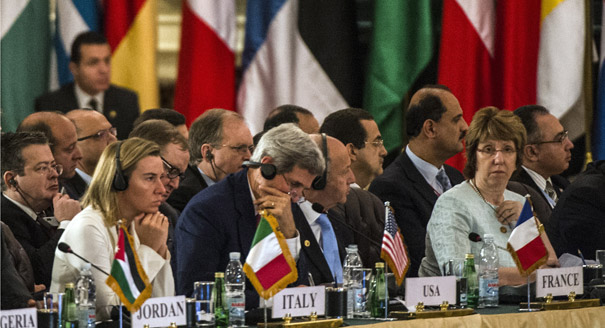
The Cairo conference for Gaza places the issue in sharp relief. Collectively, E.U. member-states have given more assistance to the Palestinian Authority than any other donor since 1994, and have now pledged an additional $568 million towards the reconstruction of Gaza. The E.U. has been here before, stepping up assistance to rebuild infrastructure originally paid for with European funds and damaged in Israel’s reoccupation of most of the West Bank in 2002, and pledging new aid for Gaza’s reconstruction after Israel’s “Operation Cast Lead” in December 2008-January 2009. This time E.U. representatives in Cairo were vocal in their reluctance to rebuild what will likely be torn down once more.
The E.U. is right to question the wisdom of going down the same path again. But this requires willingness to modify the rigid, U.S.-dominated framework within which the “peace process” —such as it is—has been trapped for over a decade. Indeed, the Europeans have been similarly trapped. In 2002, they formed the Quartet—along with the U.S., Russia, and the U.N.—to oversee the peace process, but in practice this became a means to cede diplomatic leadership entirely to the U.S.. The result was to hollow out the Quartet’s Roadmap for Peace even before it was published on April 30, 2003. The original version of the document committed the Quartet to establishing a monitoring mechanism to verify both Palestinian and Israeli implementation of their mutual obligations. But when the U.S. published the official text of the roadmap, it removed this provision in deference to Israeli pressure, without prior consultation with the E.U., let alone its other Quartet partners.
European acquiescence in U.S. unilateralism was mistaken, and cost the peace process dearly. E.U. member-states now have an opportunity to alter the starting point for new peace talks, by recognizing Palestine as a non-member state of the U.N., which a majority of the international community has already done. Clearly this means diverging from the U.S., but what is at stake is hardly revolutionary. Demonstrating a modest degree of European autonomy does not mean overturning the fundamental expectation that Israelis and Palestinians must negotiate; it simply cracks the current diplomatic deadlock, and eases the deadweight of U.S. policy on the peace process.
There is little prospect of a consensual E.U. position recognizing Palestine, given the German veto in particular. But key member-states could trigger a shift by taking a lead in extending bilateral recognition of Palestine, independently of the rest. In becoming the first E.U. country to recognize Palestine since the U.N. General Assembly vote of 2012, Sweden recently showed that individual European governments can easily endorse the Palestinian choice of a nonviolent strategy based on collective diplomacy through the U.N. framework while reaffirming the basic requirements for a just and durable peace.
The challenge is for other E.U. member-states to follow Sweden’s example. A special onus falls on the United Kingdom to play a lead, given both its historic role in creating the Palestine conflict and its claim to a global role and a special relationship with the U.S.. Speaking at the Cairo donor conference, its minister for international development Desmond Swayne said “this must be the last time that we see Gaza being rebuilt … It is critical that reconstruction efforts now form part of a process of meaningful political change.”
But this needs to be more than pious rhetoric. The United Kingdom, along with other, willing E.U. member-states, is particularly well placed to use the U.N. as a forum to modify the political starting point for renewed Palestinian-Israeli negotiations, without moving those negotiations to the U.N.. The nonbinding vote by the British parliament in favor of recognizing a Palestinian state on October 13 reflects the growing pressure on the government to modify direction and play a genuinely leading role.
Speaking privately in early 2010, a senior European official in Jerusalem described E.U. assistance to the Palestinians as a means to “maintain the fiction of a peace process,” so as to keep Palestinian hopes alive. Today, a new round of reconstruction in Gaza promises to expose the fiction and disperse it beyond recovery. If European governments genuinely wish to revive a viable peace process, then they must demonstrate some political autonomy, collectively when they can and individually when they must. Actively encouraging and assisting the Palestinians to work through the U.N. system is a constructive way of doing so. If Europe cannot do even this, then it should stop pretending, as little is more damaging to its credibility and to the prospects of a peaceful resolution of the Palestinian-Israeli conflict.
This article was originally published in Arabic by Al-Hayat.

Senior Fellow, Malcolm H. Kerr Carnegie Middle East Center
Yezid Sayigh is a senior fellow at the Malcolm H. Kerr Carnegie Middle East Center in Beirut, where he leads the program on Civil-Military Relations in Arab States (CMRAS). His work focuses on the comparative political and economic roles of Arab armed forces, the impact of war on states and societies, the politics of postconflict reconstruction and security sector transformation in Arab transitions, and authoritarian resurgence.
Recent Work
Yezid Sayigh
Yezid Sayigh
Carnegie India does not take institutional positions on public policy issues; the views represented herein are those of the author(s) and do not necessarily reflect the views of Carnegie, its staff, or its trustees.

This piece examines India’s response to U.S. sanctions and tariffs, specifically assessing the immediate market consequences, such as alterations in import costs, and the broader strategic implications for India’s energy security and foreign policy orientation.
Vrinda Sahai
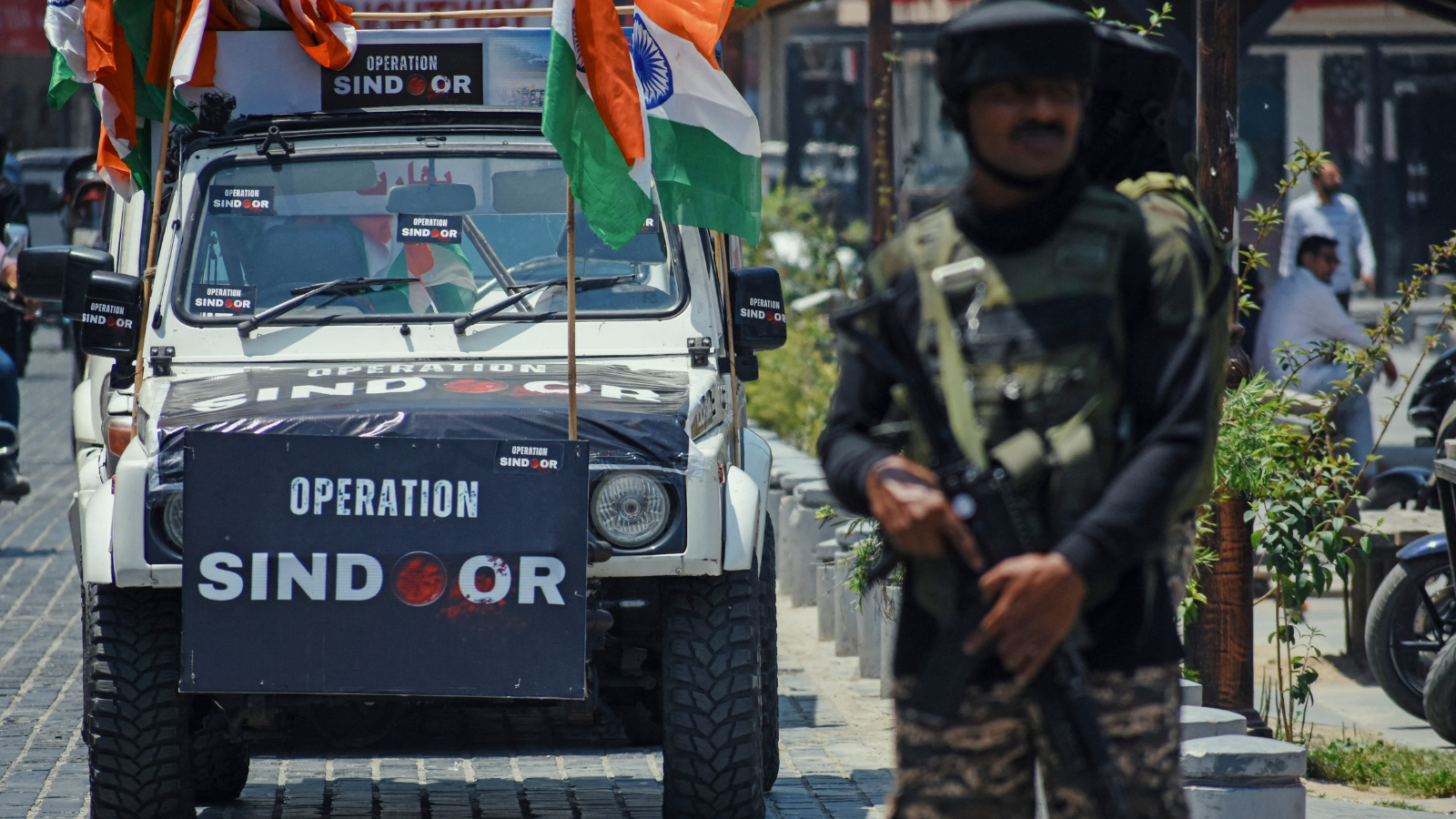
The India-Pakistan conflict that played out between May 6 and May 10, 2025, offers several military lessons. This article presents key takeaways from Operation Sindoor and breaks down how India’s preparations shaped the outcome and what more is needed to strengthen future readiness.

Dinakar Peri
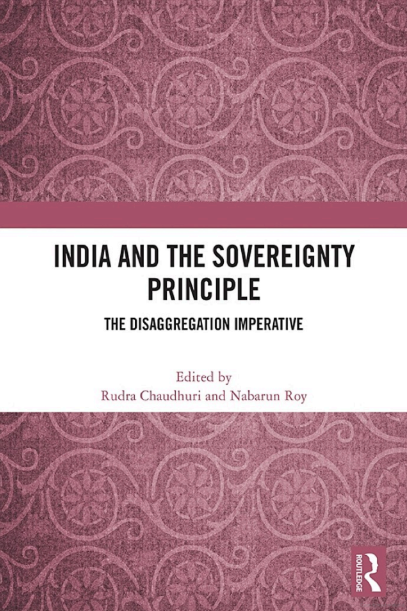
This book offers a comprehensive analysis of India's evolving relationship with sovereignty in a complex global order. Moving beyond conventional narratives, it examines how the sovereignty principle shapes India's behavior across four critical domains—from traditional military power to contemporary data governance.

Rudra Chaudhuri, Nabarun Roy
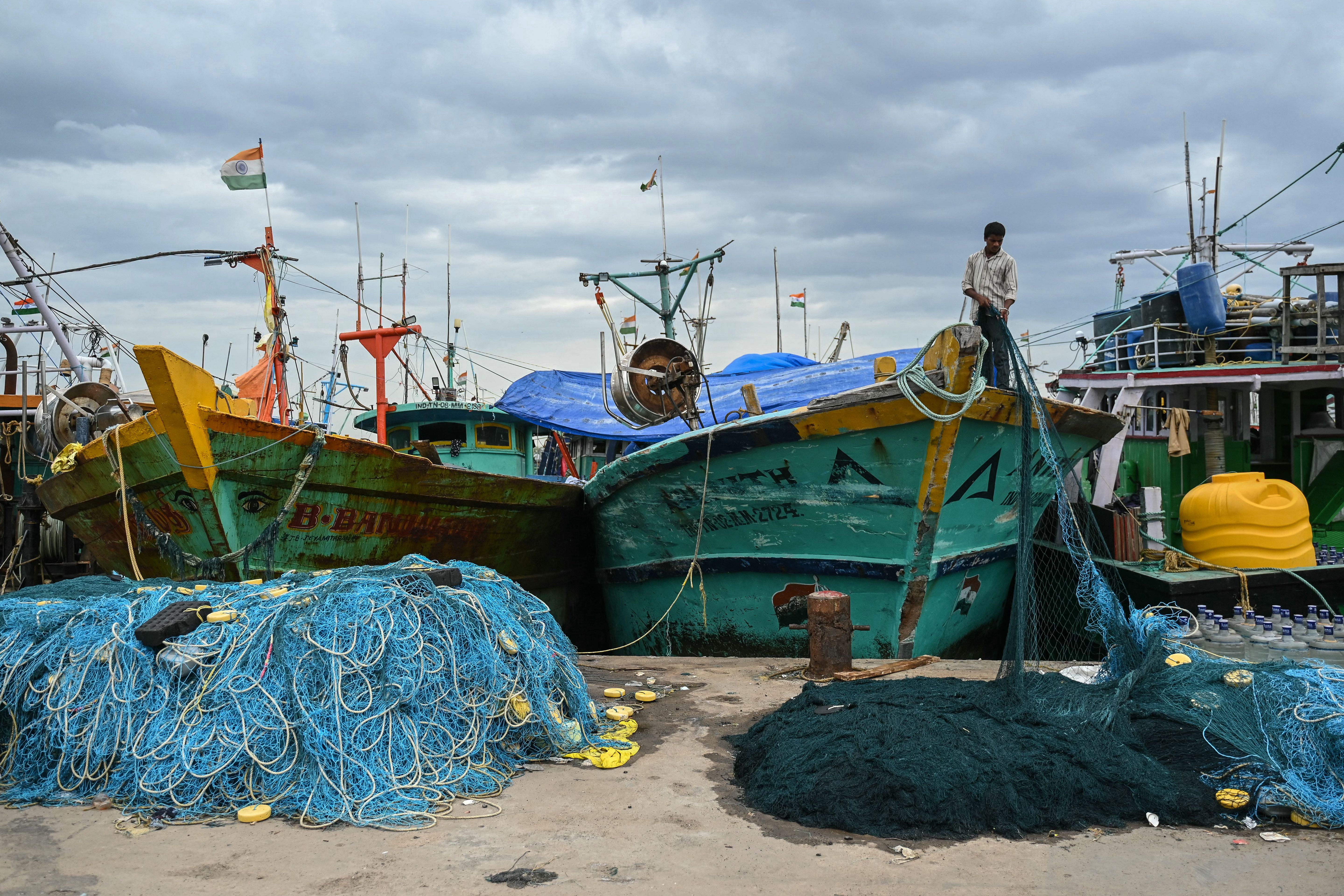
This article examines the scale and impact of Chinese IUU fishing operations globally and identifies the nature of the challenge posed by IUU fishing in the Indian Ocean Region (IOR). It also investigates why existing maritime law and international frameworks have struggled to address this growing threat.


Ajay Kumar, Charukeshi Bhatt
This book examines the impact of cross-border violence on communities living along the Line of Control and the International Border in Jammu and Kashmir, India.



Deep Pal, Surya Valliappan Krishna, Saheb Singh Chadha