

Commentary
Farea Al-Muslimi
{
  "authors": [
    "Farea Al-Muslimi"
  ],
  "type": "legacyinthemedia",
  "centerAffiliationAll": "",
  "centers": [
    "Carnegie Endowment for International Peace",
    "Malcolm H. Kerr Carnegie Middle East Center"
  ],
  "collections": [],
  "englishNewsletterAll": "",
  "nonEnglishNewsletterAll": "",
  "primaryCenter": "Malcolm H. Kerr Carnegie Middle East Center",
  "programAffiliation": "",
  "programs": [],
  "projects": [],
  "regions": [
    "Gulf",
    "Yemen",
    "Middle East"
  ],
  "topics": [
    "Political Reform",
    "Security"
  ]
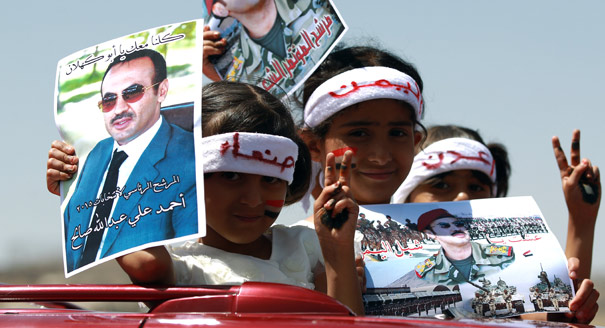
}
Source: Getty
In order for peace to exist in Yemen, the ingredients of the political transition—its tools and its godfathers—should first admit that the path they have forced Yemen into has led to nothing but catastrophe.
Source: National
I had only been back in Yemen for a few hours. Until then, I had been lucky enough to escape the recent round of violence, having been abroad for medical treatment.
But that January morning my alarm call was a bomb that targeted the Iranian embassy in the usually quiet part of town where I live. The whole building shook when the explosives detonated. Most of the windows in the neighboring buildings shattered. I felt as if someone had lifted me out of bed and thrown me to the ground.
Violence has slowly become the norm in Yemen. It has spread around the country, motivating militias to commit atrocities and paralysing any form of accountability. It has made Yemen one of the most dangerous places on the planet.Over the past two years, many Yemenis, myself included, have warned of the dangers of the political path the UN has brought to Yemen: a “transitional model” that has ultimately brought more violence than peace and killed any aspirations of democracy, social justice and cohesion.
In 2014, Barack Obama suggested Yemen as a model of peace that could be implemented in Iraq. Months later, Yemen fell into the hands of militias.
The UN’s policy in Yemen has done more harm than good. After putting Yemeni lives at the mercy of militias this year, all diplomats left Sanaa, heading to safe places while ordinary people are unsure if they’ll be able to safely return to their families each day.
Some embassies spent days shredding documents trying to leave nothing behind, but in doing so sent a terrifying signal of their lack of faith in the process of transition they had previously backed so wholeheartedly.
Before the embassies were evacuated, and around the same time as the bombing of the Iranian embassy, I had spent Friday paying condolences to four different families whose sons had been killed in a bomb blast outside a Sanaa police academy.
One, Wael, was an old school friend who had only gone to register at the academy on that fateful day. Wael is survived by a young wife and family. Another, Ameer, left behind a sick wife and two children to his brother’s family and his parents. I spent that whole day in a depressed state of mind.
In January, clashes broke out in the capital. As Houthi forces kidnapped a senior government official, fighting erupted around the presidential palace. The president resigned, as did Khaled Bahah, the prime minister, who was one of the few popular figures in Yemen. The country collapsed again.
After years of selling false hope to Yemenis and enforcing a political reality that created conflicts rather than peace, the UN began to seek a new senseless deal. Yemenis, meanwhile, were busy wondering where all of this left them.
And no matter how bad it seemed at that point, we had not yet reached rock bottom.
Last Friday, Sanaa witnessed the bloodiest terrorist attack yet on two mosques, killing more than 140 worshippers and injuring over 200. The same day, army jets flew from Sanaa under Houthi control with the intention of trying to kill Abdrabu Mansur Hadi in Aden.
Four years after the 2011 Karama Massacre, a tragic event in Yemeni history when more than 50 protesters lost their lives at the hands of the former president’s security forces, it is hard to believe that Yemen has slipped even further into the abyss.
Violence and a declining quality of life have come to represent Yemen. The number of Yemenis now subsumed by the country’s continuing humanitarian crisis numbers 16 million. Basic functioning services have all become as rare as birthdays—a once a year event.
At the moment, Yemen’s once quiet streets and civic spaces have turned into spaces for militias and unknown suicide bombers. In Sanaa, no one but death walks freely or safely.
In order for peace to exist in Yemen, the ingredients of the political transition—its tools and its godfathers—should first admit that the path they have forced Yemen into has led to nothing but catastrophe and has taken the country directly into hell.
The world has walked Yemenis into this process and should take responsibility for that. They have broken Yemen and it is time to pay for it.
A policy of running loose and meaningless dialogues while the state institutions are under occupation—as has been happening—is simply a waste of time and a path that is only killing more Yemenis.
Those who dreamt up the “Yemen model” should be made to fix the damage they have caused.

Research fellow at Chatham House’s Middle East and North Africa Programme
Farea Al-Muslimi is a research fellow at Chatham House’s Middle East and North Africa Programme.
Recent Work
Farea Al-Muslimi
Farea Al-Muslimi
Carnegie India does not take institutional positions on public policy issues; the views represented herein are those of the author(s) and do not necessarily reflect the views of Carnegie, its staff, or its trustees.

In any defense establishment, change is an ongoing process. However, despite the best of intentions, existing bureaucracies, bound by habit and years of socialization, have their limits in implementing transformative change.

Anit Mukherjee

After the chill in ties between 2020 and 2024 that brought India–China relations to their lowest point in several decades, the two countries have engaged each other afresh. This paper argues that there are predominantly four imperatives guiding India’s approach to China, and they exist in an order of priority.

Saheb Singh Chadha

This piece argues that the present Indian strategy, based on opportunistic diversification and utilization of limited strategic reserves, remains inadequate when confronting supply disruptions. It evaluates India’s options in the short, medium, and long terms.

Vrinda Sahai

This piece examines India’s response to U.S. sanctions and tariffs, specifically assessing the immediate market consequences, such as alterations in import costs, and the broader strategic implications for India’s energy security and foreign policy orientation.
Vrinda Sahai
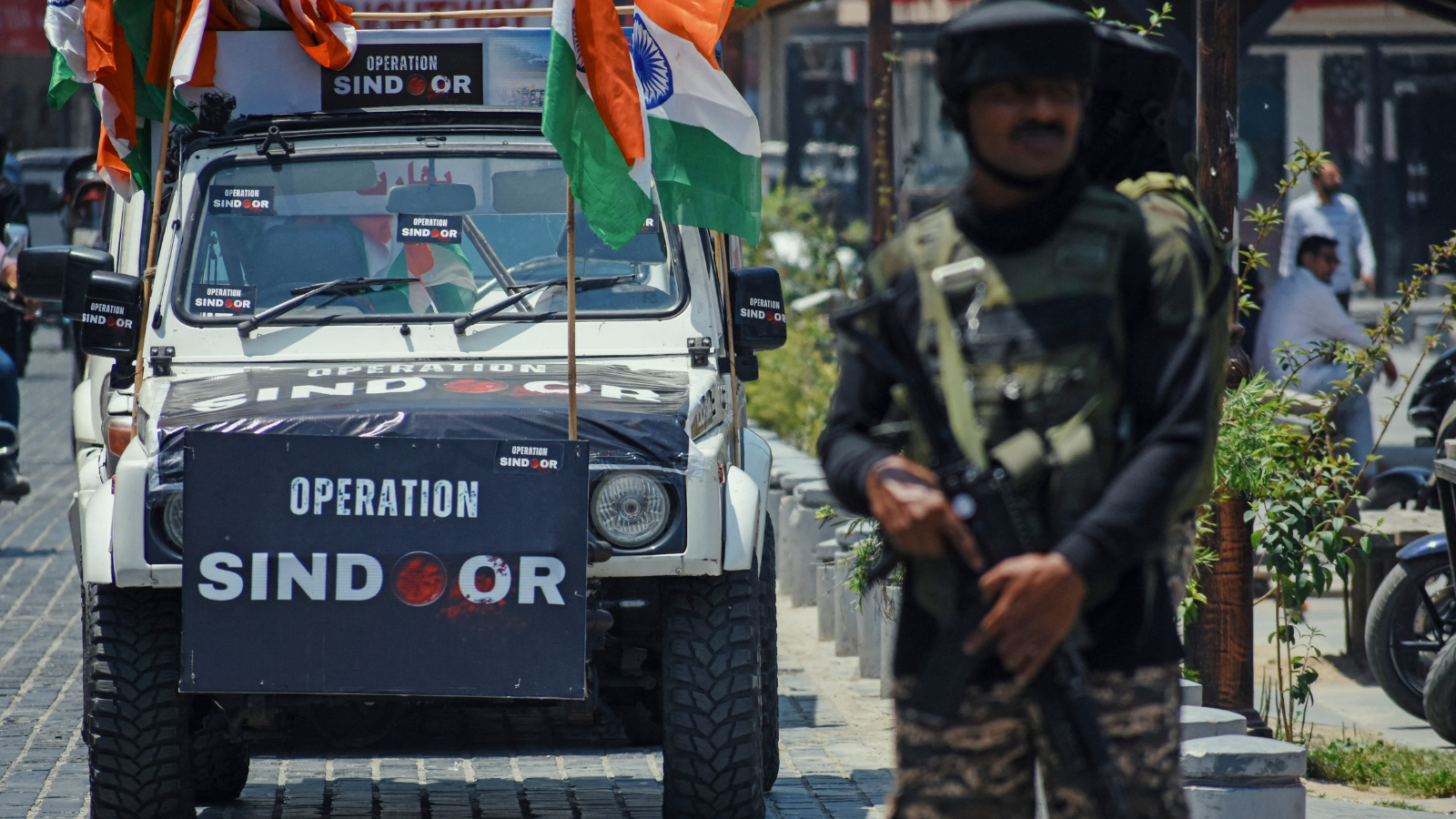
The India-Pakistan conflict that played out between May 6 and May 10, 2025, offers several military lessons. This article presents key takeaways from Operation Sindoor and breaks down how India’s preparations shaped the outcome and what more is needed to strengthen future readiness.

Dinakar Peri