

Q&A
Aaron David Miller, Karim Sadjadpour, Robin Wright
{
  "authors": [
    "Karim Sadjadpour"
  ],
  "type": "legacyinthemedia",
  "centerAffiliationAll": "dc",
  "centers": [
    "Carnegie Endowment for International Peace",
    "Malcolm H. Kerr Carnegie Middle East Center"
  ],
  "collections": [
    "Iranian Proliferation"
  ],
  "englishNewsletterAll": "menaTransitions",
  "nonEnglishNewsletterAll": "",
  "primaryCenter": "Carnegie Endowment for International Peace",
  "programAffiliation": "MEP",
  "programs": [
    "Middle East"
  ],
  "projects": [],
  "regions": [
    "North America",
    "United States",
    "Middle East",
    "Iran",
    "Israel",
    "Saudi Arabia",
    "Gulf"
  ],
  "topics": [
    "Political Reform",
    "Foreign Policy",
    "Nuclear Policy"
  ]
}
Source: Getty
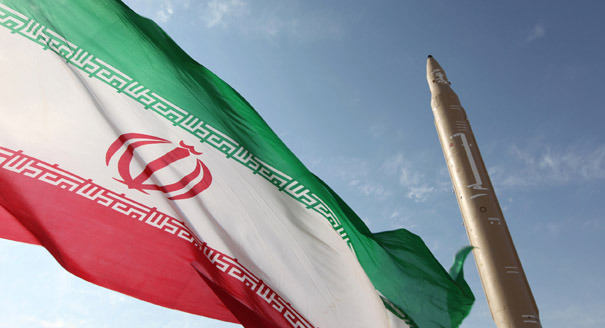
The Iran deal signed last week is significant. However, major obstacles and serious concerns among regional countries remain.
Source: KCRW’s To the Point
Speaking on KCRW’s To the Point, Carnegie’s Karim Sadjadpour explained that the Iranian deal announced last week has important implications. Assuming that a deal is signed following the June deadline, and that the deal continues to work for several years, there is still a valid concern that it would be hard to reconstitute sanctions against Iran should Iran return to harmful nuclear activities, he said. He added that there are also concerns that the Iranians may not be working on the same framework laid out by the U.S. Listening to the Iranian interpretation of the nuclear deal signed last week shows some discrepancies that would need to be worked out, he said.
U.S. allies in the Middle East, particularly Israel and the Arab states in the Persian Gulf, are concerned about the nuclear deal, Sadjadpour continued. It is expected that over the coming weeks and months, there will be a “tremendous U.S. outreach” towards those allies to talk about security pacts and calm their fears. The Obama administration is under pressure to prove that the nuclear deal is “not an acquiescence” in the face of Iran’s nuclear program and its troublesome regional activities, Sadjadpour added.
People may have unrealistic implications over what this deal means for Iran’s economy, Sadjadpour continued. Large Western multinational companies are unlikely to do business in Iran soon—instead they will probably take a wait-and-see approach. However, Chinese, Indian, and smaller European companies may “dip their toes in the water.” Iran is an attractive economy to the outside world as it has 75-80 million educated and Westernized consumers. This arguable makes Iran the largest market that is still isolated from globalization, he concluded.

Senior Fellow, Middle East Program
Karim Sadjadpour is a senior fellow at the Carnegie Endowment for International Peace, where he focuses on Iran and U.S. foreign policy toward the Middle East.
Recent Work


Aaron David Miller, Karim Sadjadpour, Robin Wright

Aaron David Miller, David Petraeus, Karim Sadjadpour
Carnegie India does not take institutional positions on public policy issues; the views represented herein are those of the author(s) and do not necessarily reflect the views of Carnegie, its staff, or its trustees.
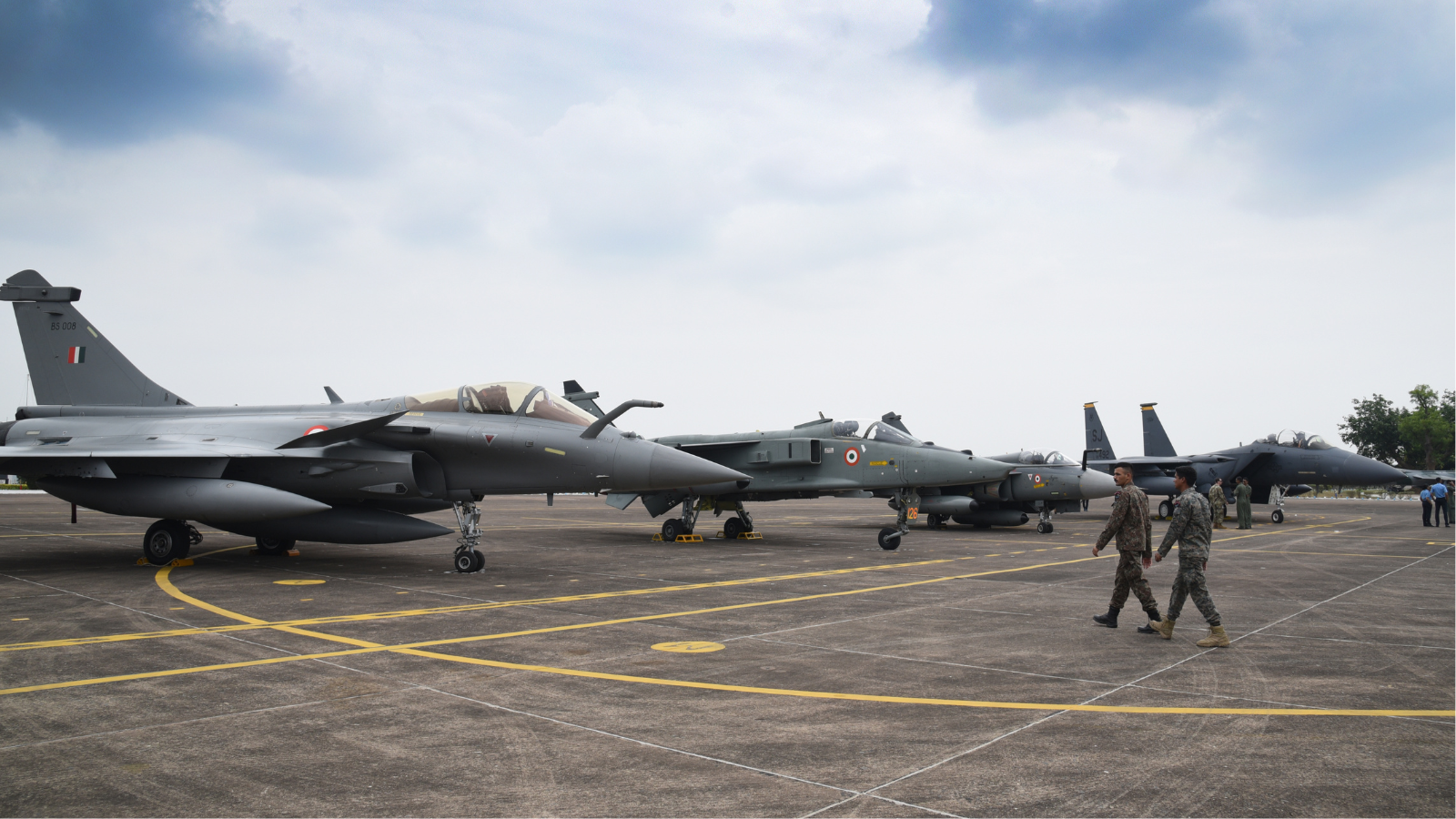
India and the United States are close to concluding a Reciprocal Defense Procurement Agreement (RDPA) that will allow firms from the two countries to sell to each other’s defense establishments more easily. While this may not remedy the specific grievances both sides may have regarding larger bilateral issues, an RDPA could restore some momentum, following the trade deal announcement.

Konark Bhandari

On the last day of the India AI Impact Summit, India signed Pax Silica, a U.S.-led declaration seemingly focused on semiconductors. While India’s accession to the same was not entirely unforeseen, becoming a signatory nation this quickly was not on the cards either.
Konark Bhandari

This piece examines India’s response to U.S. sanctions and tariffs, specifically assessing the immediate market consequences, such as alterations in import costs, and the broader strategic implications for India’s energy security and foreign policy orientation.

Vrinda Sahai
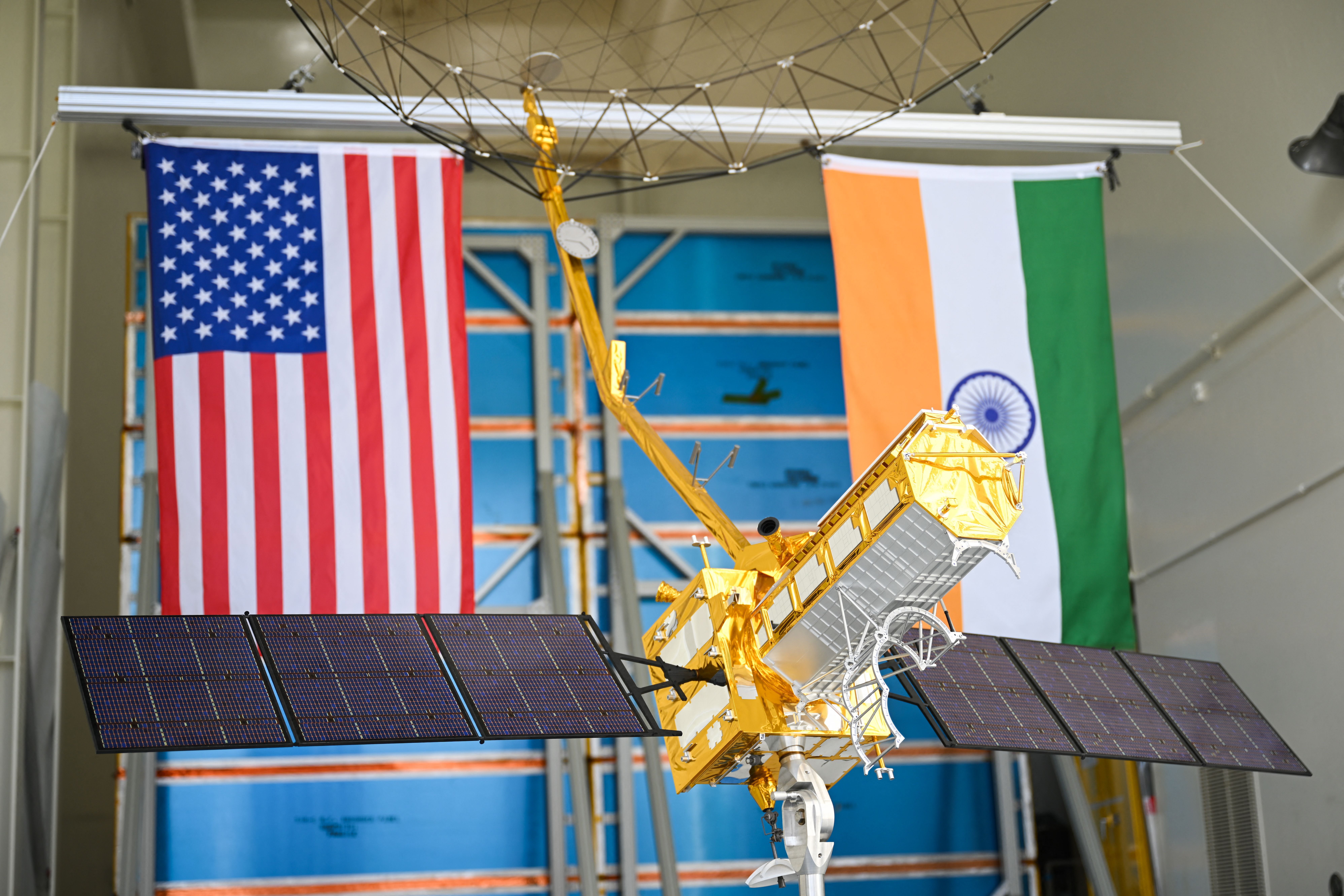
On July 30, 2025, the United States announced 25 percent tariffs on Indian goods. While diplomatic tensions simmered on the trade front, a cosmic calm prevailed at the Sriharikota launch range. Officials from NASA and ISRO were preparing to launch an engineering marvel into space—the NASA-ISRO Synthetic Aperture Radar (NISAR), marking a significant milestone in the India-U.S. bilateral partnership.

Tejas Bharadwaj
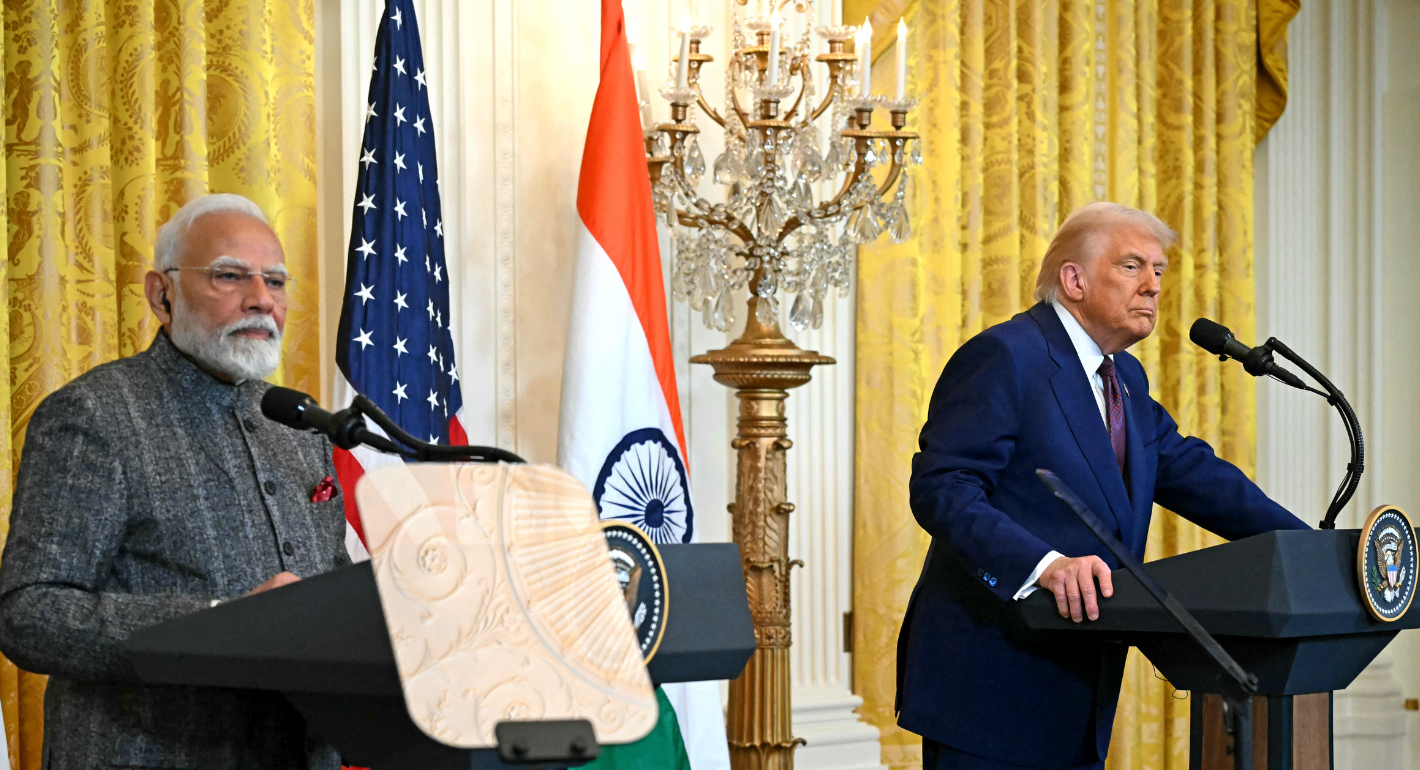
The India-U.S. relationship currently appears buffeted between three “Ts”—TRUST, Tariffs, and Trump.
Arun K. Singh