

Article
C. Raja Mohan, Darshana M. Baruah
{
  "authors": [
    "C. Raja Mohan"
  ],
  "type": "legacyinthemedia",
  "centerAffiliationAll": "dc",
  "centers": [
    "Carnegie Endowment for International Peace",
    "Carnegie India"
  ],
  "collections": [],
  "englishNewsletterAll": "ctw",
  "nonEnglishNewsletterAll": "",
  "primaryCenter": "Carnegie India",
  "programAffiliation": "SAP",
  "programs": [
    "South Asia"
  ],
  "projects": [],
  "regions": [
    "South Asia",
    "India",
    "Western Europe",
    "France",
    "Germany"
  ],
  "topics": [
    "Foreign Policy"
  ]
}
Source: Getty
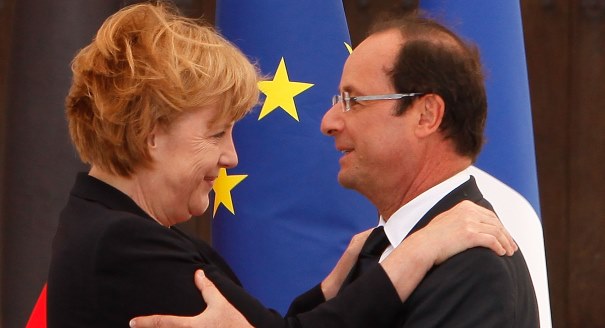
Prime Minister Narendra Modi’s visit to France, Germany, and Canada should help New Delhi consolidate three of India’s very special relationships.
Source: Indian Express
Prime Minister Narendra Modi’s visit to France, Germany and Canada beginning Thursday should help New Delhi consolidate three of India’s very special relationships. France was the first Western power to become a strategic partner for India and can now turbocharge India’s high technology sectors. Germany is an economic powerhouse with growing political clout in Europe and beyond. Canada and India are colonial cousins, with a shared Anglo-Saxon political heritage and massive economic synergies. Canada is also home to one of our most important overseas communities.
Until now, Modi has been preoccupied with rejuvenating ties with America and China. He has had two quick summits with US President Barack Obama and is preparing for the second round with Chinese President Xi Jinping next month in Beijing. The Modi government has also sought to improve relations with neighbours in the subcontinent and reconnect with the extended neighbourhood in Asia and the Indian Ocean.
Under Modi’s “Act East Policy”, India has intensified engagement with key regional powers like Japan, South Korea, Vietnam and Australia. More recently, Modi had a successful “Sagar Yatra” to Seychelles, Mauritius and Sri Lanka. The same, however, cannot be said about other regions of the world, including Europe, the Middle East, Africa and the Americas beyond the US.Modi’s visit to Europe and Canada should help restore some balance to India’s international engagement. India is preparing to host the Africa Summit later this year and raise its game in the Middle East, where political turbulence is shaking up the old regional order. If geographic regions are one way of organising foreign policy, there is no substitute for boosting bilateral ties to a few pivotal countries around the world, three of which are on Modi’s itinerary this week.
All three are Western middle powers. Despite their longstanding alliances with America, all three of them have their own national interests and have often pursued policies independent of Washington. Acutely aware of this reality, China has invested significant amount of time and energy in cultivating the middle powers of the West, despite many differences over ideology and policy. The recent European stampede to join China’s Asian Infrastructure Investment Bank, despite American opposition, reflects the depth of realpolitik among the Western middle powers.
If the Indian strategic community tends to think of the multipolar world as an anti-Western platform, China has rightly seen the idea as an instrument to explore the strategic possibilities within the West and build separate partnerships with each of the middle powers. India’s first prime minister, Jawaharlal Nehru, did not view the world in anti-Western terms despite his invention of non-alignment.
Nehru argued against postwar Germany being treated like an enemy state at the United Nations. French Gaullism helped create space for India amidst an all-encompassing rivalry between America and Russia. Genuine commitment to liberal internationalism brought Nehru close to the Canadian prime minister, Lester Pearson, and together they sought to strengthen the UN and international norms at the height of the Cold War.
The end of the Cold War and India’s economic globalisation created a lot more room for India’s engagement with the Western middle powers, especially in the last decade. But the UPA government was unable to seize the moment and turn new opportunities into tangible outcomes.
Despite the fact that Canadian Prime Minister Stephen Harper has travelled twice to India in the last few years and invested much political capital in transforming the bilateral relationship, Canada hardly figured on India’s political radar. That resource-rich Canada would be a natural partner for mineral-hungry India seemed to make no difference to Delhi’s political approach to Ottawa.
Harper had overruled the strong nuclear nonproliferation community in Canada to put an end to the prolonged atomic dispute with India that began after Delhi’s lone nuclear test in 1974 and cast a shadow over political ties. Harper’s Ottawa also became one of the first countries to sign a civil nuclear cooperation agreement with India. He also agreed to reasonable terms on monitoring the uranium bought from Canada.
As the first Indian prime minister to visit Canada on bilateral business in more than four decades, Modi has much catching up to do. The PM’s decision to travel to Canada in the very first year of his tenure signals the recognition that India must not only value its friends but also show its political appreciation. Modi’s now standard outreach to the diaspora during his travels abroad will have an additional dimension in Canada — to end the alienation of the Canadian Sikh community from India.
The problem with France and Germany has not been a lack of high-level interaction over the last decade. Both Paris and Berlin have relentlessly pursued cooperation — strategic, economic and political — with India. But the UPA government smothered the possibilities with Paris and Berlin with its lack of political coherence and ceding of strategic decision-making to the bureaucracy.
India is not going to get the best terms from France on the long-pending nuclear and defence deals by letting its accountants run riot. For, the mega deals at hand are not just about buying equipment at the lowest price. They are about leveraging Delhi’s purchasing power to expand the defence industrial base, build a modern nuclear industry, strengthen the aerospace sector, and gain access to advanced technologies.
Paris, Berlin and Ottawa can each contribute substantially to the realisation of India’s new national goals — from ensuring energy security to creating jobs in the manufacturing sector and addressing climate change to building smart cities. Modi can only unlock the multiple possibilities with these middle powers in the West by injecting a strategic perspective into the talks with the three nations.
This article was originally published in the Indian Express.
Former Nonresident Senior Fellow, Carnegie India
A leading analyst of India’s foreign policy, Mohan is also an expert on South Asian security, great-power relations in Asia, and arms control.
Recent Work

C. Raja Mohan, Darshana M. Baruah


Alexander Gabuev, Paul Haenle, C. Raja Mohan, …
Carnegie India does not take institutional positions on public policy issues; the views represented herein are those of the author(s) and do not necessarily reflect the views of Carnegie, its staff, or its trustees.

This piece argues that India’s central challenge is not managing a single flashpoint but resolving the underlying tension between expansion and institutional coherency of the BRICS grouping.

Vrinda Sahai
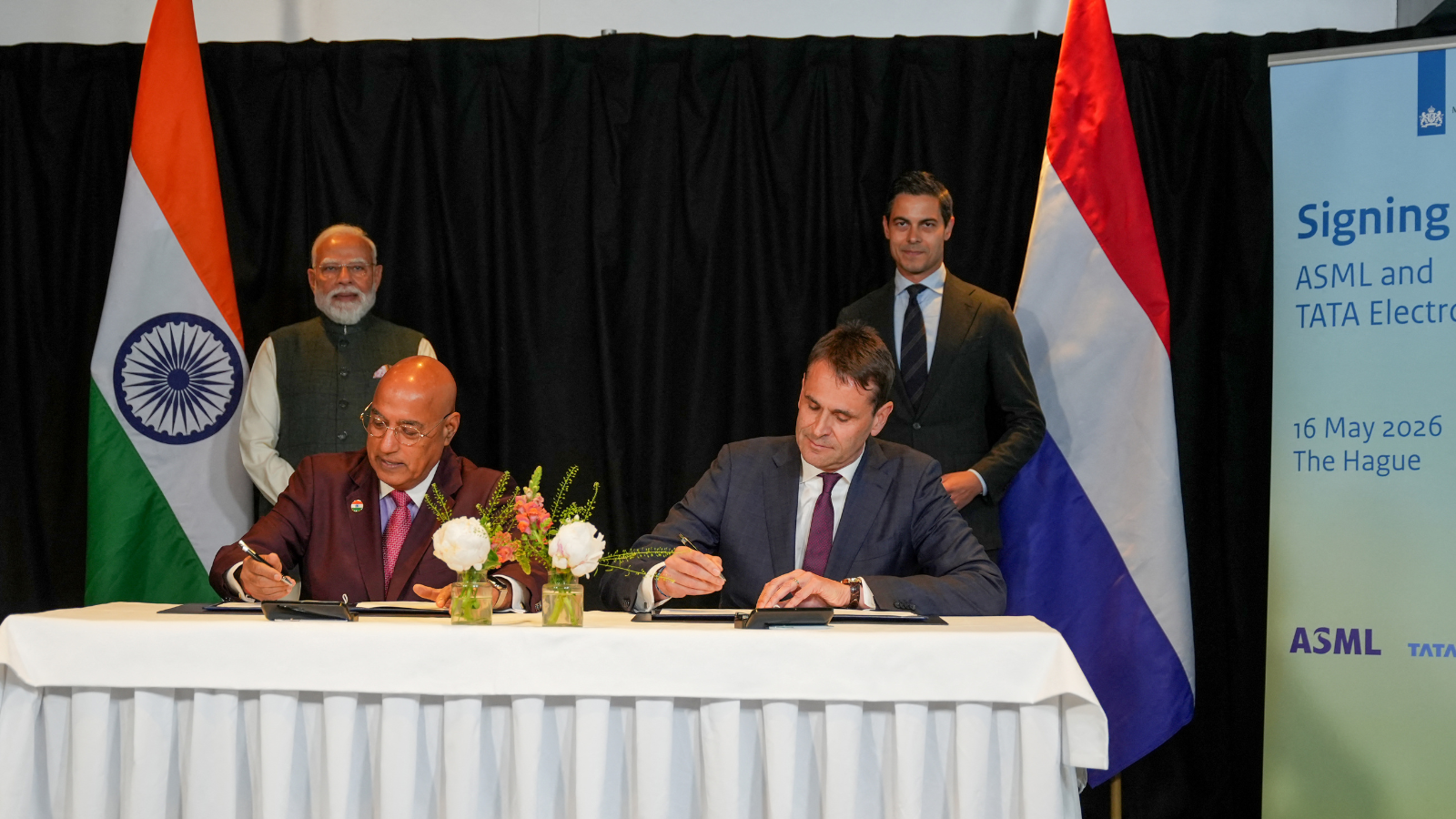
The ASML MoU with Tata Electronics is an indicator of how far the Indian semiconductor ecosystem has come. This ecosystem has been years in the making and represents real commercial logic.

Konark Bhandari
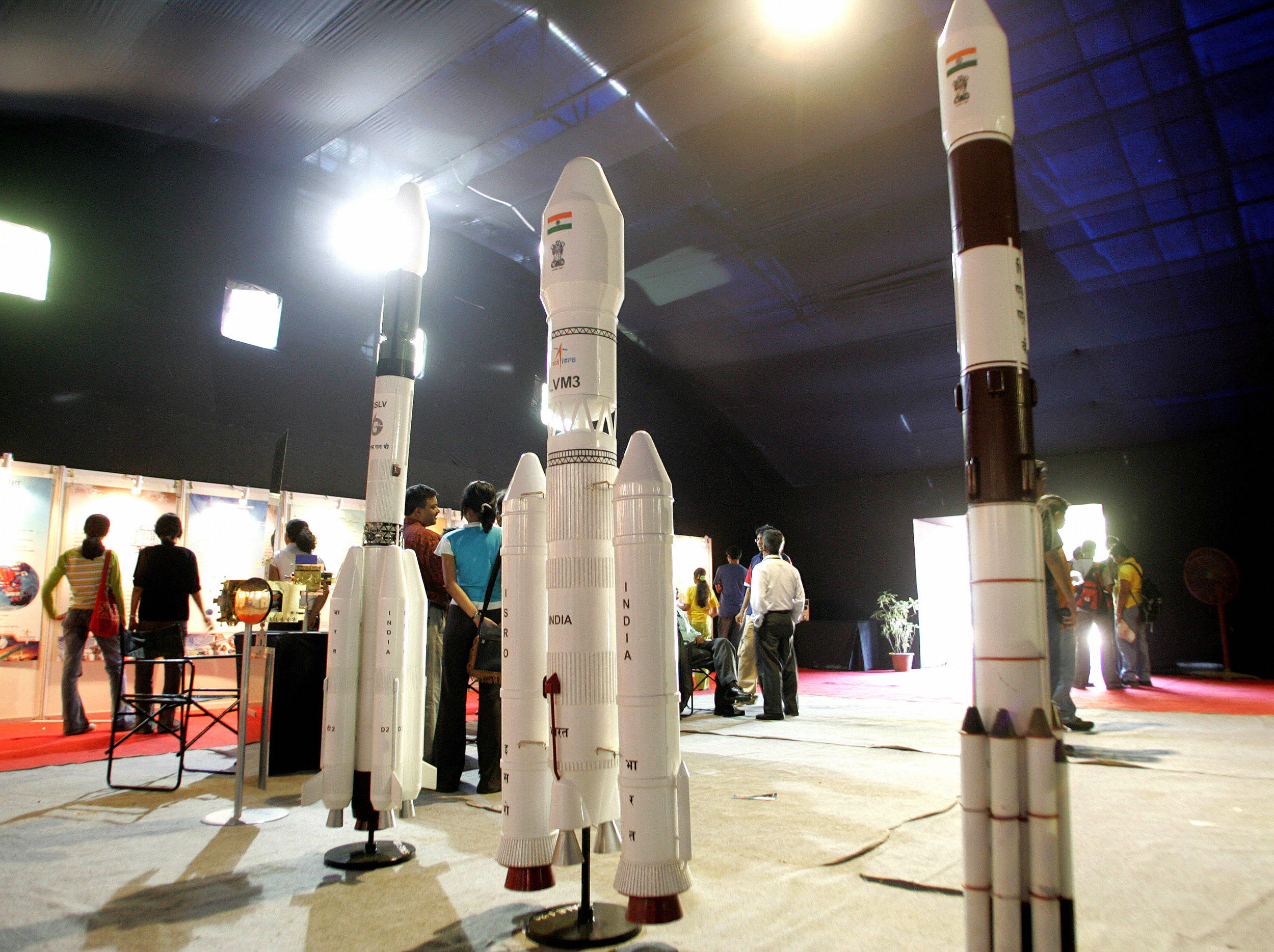
This paper examines the relationship between India’s evolving space policy and the corresponding growth in private space ventures. It analyzes both the enabling factors created by recent regulatory changes and the persistent challenges facing entrepreneurs in this capital-intensive, highly regulated industry.
Harshan Vazhakunnam

A partnership between India, a country of subcontinental size, and Africa, a continent of fifty-four countries, may seem asymmetric until one notes that both are home to nearly the same number of people—1.4 billion. This essay spells out the existing challenges to the partnership, its optimal potential, and the possible pathways to realize it over the next quarter-century.

Rajiv Bhatia

The U.S.–India semiconductor cooperation story is well-stocked with top-level strategic intent. What remains unresolved, however, are some underlying challenges that will determine whether the cooperation actually functions. Three such friction points stand out.

Shruti Mittal