

Paper
James M. Acton, Ankit Panda
{
  "authors": [
    "James M. Acton"
  ],
  "type": "other",
  "centerAffiliationAll": "dc",
  "centers": [
    "Carnegie Endowment for International Peace"
  ],
  "collections": [
    "Hypersonic Weapons"
  ],
  "englishNewsletterAll": "ctw",
  "nonEnglishNewsletterAll": "",
  "primaryCenter": "Carnegie Endowment for International Peace",
  "programAffiliation": "NPP",
  "programs": [
    "Nuclear Policy"
  ],
  "projects": [],
  "regions": [],
  "topics": [
    "Security",
    "Military",
    "Nuclear Policy"
  ]
}
Source: Getty
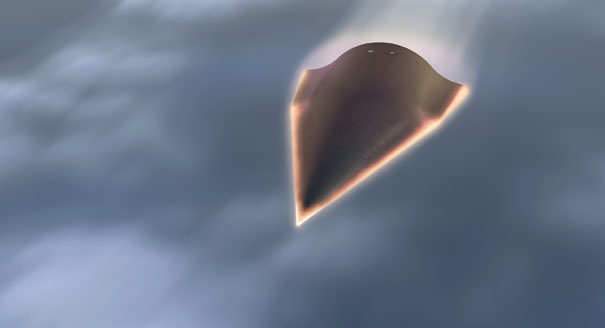
How do boost-glide weapons work? How effective will they be from a military standpoint?
Source: Science & Global Security
The United States, Russia and China are developing hypersonic boost-glide vehicles. A simple model of their trajectory is developed by assuming that the vehicle does not oscillate during the transition to equilibrium gliding. This model is used to analyze U.S. Department of Defense data on test flights for the Hypersonic Technology Vehicle-2. This glider's lift-to-drag ratio—a key performance parameter—is estimated to be 2.6. The model is also used to calculate the tactical warning time that a boost-glide attack would afford an adversary. Other aspects of boost-glide weapons’ military effectiveness are explored. Approximate calculations suggest that, compared to existing non-nuclear weapons, boost-glide weapons could penetrate more deeply but would be less effective at destroying silos. The distance at which a boost-glide weapon armed with a particle dispersion warhead could destroy a mobile missile is also calculated; it is expected to be significantly larger than for an explosive warhead....
This article was originally published in Science & Global Security. A supplement to the article can be found here.

Jessica T. Mathews Chair, Co-director, Nuclear Policy Program
Acton holds the Jessica T. Mathews Chair and is co-director of the Nuclear Policy Program at the Carnegie Endowment for International Peace.
Recent Work

James M. Acton, Ankit Panda
James M. Acton
Carnegie India does not take institutional positions on public policy issues; the views represented herein are those of the author(s) and do not necessarily reflect the views of Carnegie, its staff, or its trustees.

In any defense establishment, change is an ongoing process. However, despite the best of intentions, existing bureaucracies, bound by habit and years of socialization, have their limits in implementing transformative change.

Anit Mukherjee

After the chill in ties between 2020 and 2024 that brought India–China relations to their lowest point in several decades, the two countries have engaged each other afresh. This paper argues that there are predominantly four imperatives guiding India’s approach to China, and they exist in an order of priority.

Saheb Singh Chadha
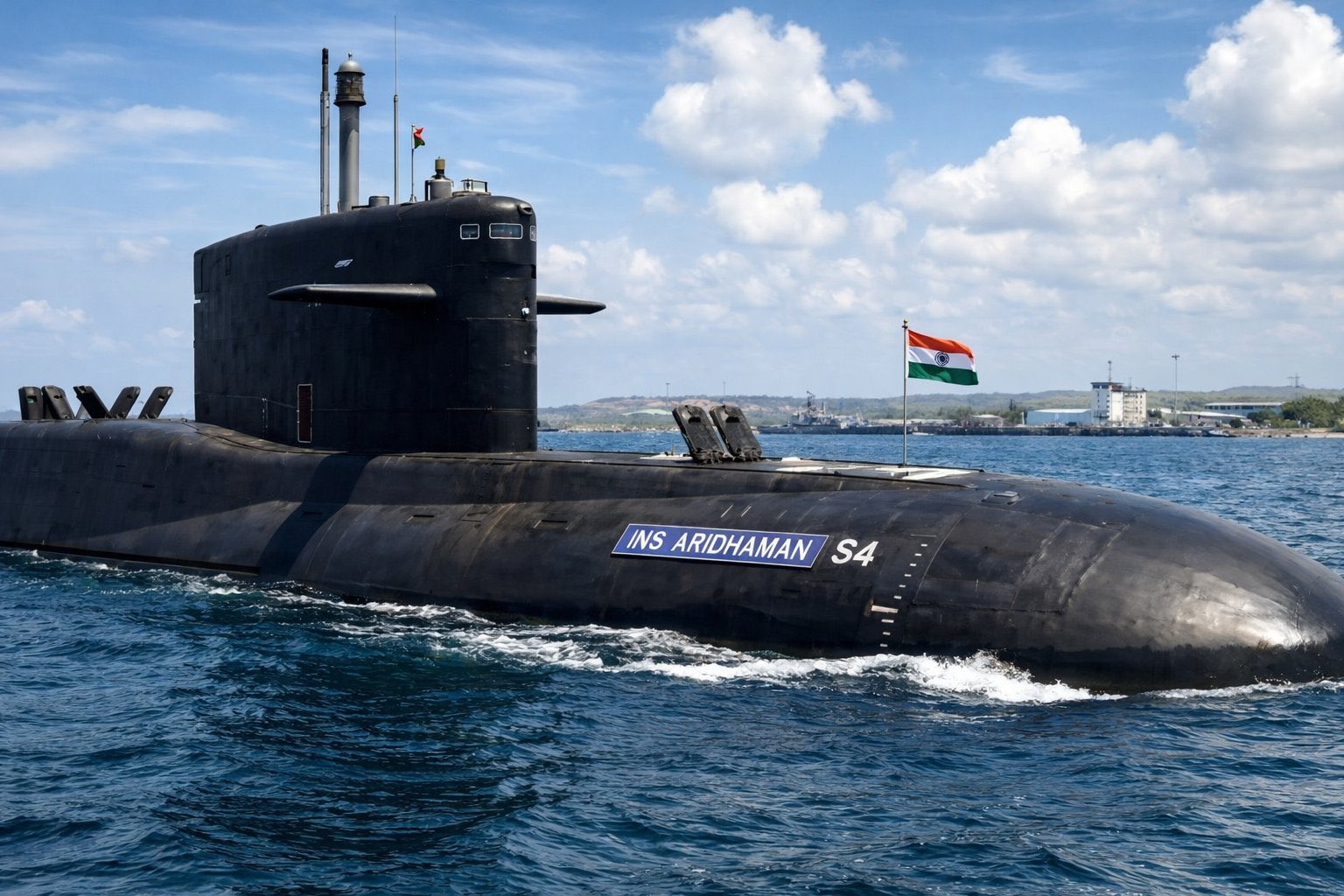
The induction of INS Aridhaman, which features several technological enhancements, now gives India the third nuclear ballistic missile submarine to ensure continuous at-sea deterrent.

Dinakar Peri

This piece argues that the present Indian strategy, based on opportunistic diversification and utilization of limited strategic reserves, remains inadequate when confronting supply disruptions. It evaluates India’s options in the short, medium, and long terms.

Vrinda Sahai

This piece examines India’s response to U.S. sanctions and tariffs, specifically assessing the immediate market consequences, such as alterations in import costs, and the broader strategic implications for India’s energy security and foreign policy orientation.
Vrinda Sahai