

Paper
Renad Mansour, Faleh A. Jabar
{
  "authors": [
    "Renad Mansour"
  ],
  "type": "legacyinthemedia",
  "centerAffiliationAll": "",
  "centers": [
    "Carnegie Endowment for International Peace",
    "Malcolm H. Kerr Carnegie Middle East Center"
  ],
  "collections": [],
  "englishNewsletterAll": "",
  "nonEnglishNewsletterAll": "",
  "primaryCenter": "Malcolm H. Kerr Carnegie Middle East Center",
  "programAffiliation": "",
  "programs": [],
  "projects": [],
  "regions": [
    "Levant",
    "Iraq",
    "Middle East"
  ],
  "topics": [
    "Political Reform",
    "Security"
  ]
}
Source: Getty
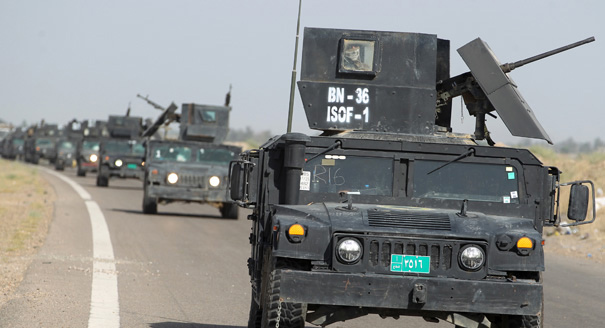
The Iraqi Army is facing some significant challenges as it seeks to retake Fallujah from the self-proclaimed Islamic State.
Source: Al Jazeera
Carnegie’s Renad Mansour spoke with Laura Kyle on Al Jazeera’s Inside Story, alongside Matthew Glanville, former special adviser to the governor of Anbar Province, and Matthew Henman, head of IHS Jane’s Terrorism and Insurgency Centre, to discuss the Iraqi army’s offensive to retake Fallujah from the self-proclaimed Islamic State.
Mansour argued that Mosul was more of a symbolic target to retake than Fallujah. Previously, he explained, strategists thought that the way to defeat the Islamic State was to retake Mosul and then move onwards, given that the Islamic State had declared it’s self-described caliphate after taking the Mosul. Iraqi military strategies have had to change, however, with the Islamic State’s return to asymmetric warfare tactics, such as suicide bombings and targeting Baghdad directly.
Mansour pointed out that Fallujah is a somewhat of a quagmire and that occupiers have often faced difficulties in retaking the city. He argued that Iraqi state forces must find a way to win the hearts and minds of Fallujah residents. A significant amount of the Fallujah population support the Islamic State, he explained, which means that a viable alternative needs to be established and the Iraqi forces must convince the population that it is a better option.
Mansour added that there are lessons to be learned from Ramadi, particularly with regards to reconciliation. He argued that the Shia paramilitary groups, particularly those close to Maliki and Iran, cannot serve a large role in reconciliation or liberation, and that there should be a renewed focus on emergining leaders.

Former El-Erian Fellow, Middle East Center
Mansour was an El-Erian fellow at the Carnegie Middle East Center, where his research focuses on Iraq, Iran, and Kurdish affairs.
Recent Work
Renad Mansour, Faleh A. Jabar
Renad Mansour
Carnegie India does not take institutional positions on public policy issues; the views represented herein are those of the author(s) and do not necessarily reflect the views of Carnegie, its staff, or its trustees.

In any defense establishment, change is an ongoing process. However, despite the best of intentions, existing bureaucracies, bound by habit and years of socialization, have their limits in implementing transformative change.

Anit Mukherjee

After the chill in ties between 2020 and 2024 that brought India–China relations to their lowest point in several decades, the two countries have engaged each other afresh. This paper argues that there are predominantly four imperatives guiding India’s approach to China, and they exist in an order of priority.

Saheb Singh Chadha

This piece argues that the present Indian strategy, based on opportunistic diversification and utilization of limited strategic reserves, remains inadequate when confronting supply disruptions. It evaluates India’s options in the short, medium, and long terms.

Vrinda Sahai

This piece examines India’s response to U.S. sanctions and tariffs, specifically assessing the immediate market consequences, such as alterations in import costs, and the broader strategic implications for India’s energy security and foreign policy orientation.
Vrinda Sahai
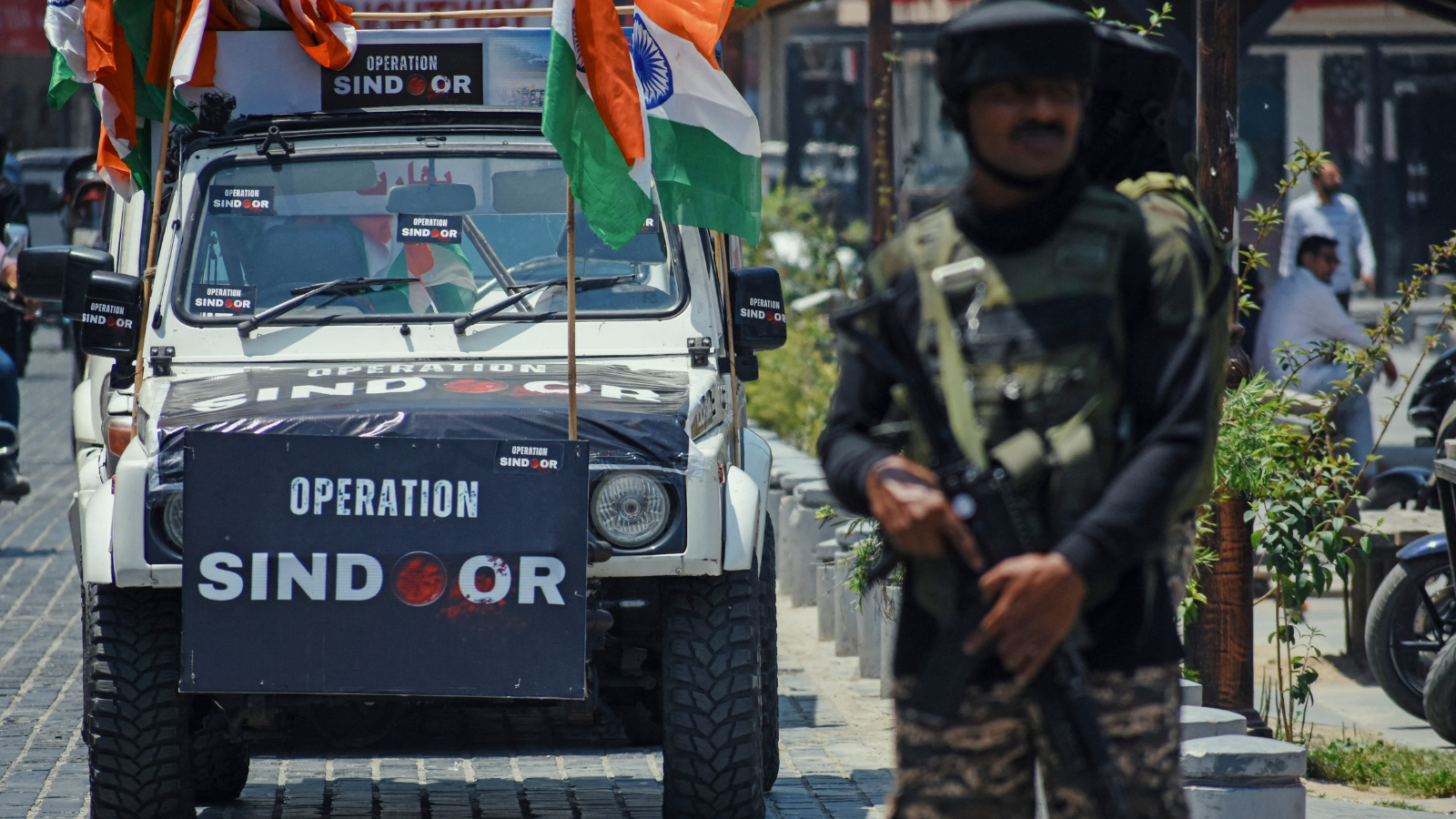
The India-Pakistan conflict that played out between May 6 and May 10, 2025, offers several military lessons. This article presents key takeaways from Operation Sindoor and breaks down how India’s preparations shaped the outcome and what more is needed to strengthen future readiness.
Dinakar Peri