

Article
C. Raja Mohan, Darshana M. Baruah
{
  "authors": [
    "C. Raja Mohan"
  ],
  "type": "legacyinthemedia",
  "centerAffiliationAll": "dc",
  "centers": [
    "Carnegie Endowment for International Peace",
    "Carnegie India"
  ],
  "collections": [],
  "englishNewsletterAll": "ctw",
  "nonEnglishNewsletterAll": "",
  "primaryCenter": "Carnegie India",
  "programAffiliation": "SAP",
  "programs": [
    "South Asia"
  ],
  "projects": [],
  "regions": [
    "Asia",
    "South Asia",
    "India",
    "East Asia",
    "China"
  ],
  "topics": [
    "Foreign Policy"
  ]
}
Source: Getty
New Delhi might find that frankness is a lot more useful with Beijing than nursing grievances in private and feigning convergence in public.
Source: Indian Express
As it comes to terms with China’s unambiguous opposition to India’s membership of the Nuclear Suppliers Group (NSG), Delhi must brace for an extended period of structural tension with Beijing. Managing this tension and limiting the political fallout from it constitutes the single most important external challenge for India.
After the Seoul plenary of the NSG, Delhi signalled its displeasure at Beijing’s procedural tactics to block the consideration of Indian membership. At the same time, Delhi emphasised its commitment to continued engagement with Beijing. Adopting a measured tone towards Beijing in a TV interview last week, Prime Minister Narendra Modi noted the complex nature of India’s bilateral relationship with China and underlined the importance of accommodating each other’s interests, concerns and priorities.
This certainly is a sensible diplomatic approach. At the level of strategy, though, there is no escaping the growing contradictions with China that are sharpened by the huge gap in the material capabilities of the two Asian giants. China’s GDP right now is nearly five times larger than that of India. Its defence spending is four times more. Even if China’s economy slows down and India grows a little faster in the coming years, the strategic gap will remain very large for the foreseeable future.
Any practical Indian policy towards China must begin with two propositions rooted in realism. First, the idea of “strategic parity” between Delhi and Beijing that has long animated India’s view of China is no longer sustainable. The second, growing Chinese power capabilities have a significant impact on India’s room for regional and global manoeuvre.
China’s economic influence, political clout, and military presence in South Asia and the Indian Ocean region, long claimed by Delhi as India’s natural sphere of influence, is growing by the day. At the global level, China’s influence in international institutions has grown rapidly. Beijing has also begun to build its own regional and global institutions.
To deal with this reality, Delhi must question some of its recent assumptions about engaging China. One of those assumptions is the differentiation between bilateral problems and global opportunities. Notwithstanding the territorial and other disputes at the bilateral level, the argument goes, India and China have the potential to develop a shared global agenda.
That belief, however, has come under severe stress amidst China’s ambivalence towards India’s campaign for the permanent membership of the UN Security Council some years ago and the more recent effort to reintegrate with the global nuclear order. This is not surprising and fits a long-standing pattern. Despite their frequent claims of shared global interests, India and China have found it hard to align their positions at critical moments in world politics.
Consider the following: When they connected for the first time in the late 1920s on an anti-colonial platform, the national movements of India and China outlined an expansive vision for joint struggle against imperialism. Yet when World War II broke out barely a decade later, China’s focus was on fighting Japan and the Indian National Congress refused to support the British war effort against imperial Tokyo. The Chinese leader Chiang Kai Shek came to India in an unsuccessful attempt to persuade Mahatma Gandhi and Jawaharlal Nehru to join the war against Japan with the promise that China would fully support India’s struggle for independence after the War.
After the emergence of independent India and the People’s Republic of China, Delhi and Beijing claimed a very special brotherhood. Yet differences on Tibet and the boundary dispute resulted in not just a brief border conflict in 1962 but a prolonged divergence in their regional and international outlook. After 1962, Delhi steadily moved towards an alliance with the Soviet Union, as Beijing broke the communist solidarity with Moscow and drew closer to the US and laid the foundations for an enduring partnership with Pakistan.
At the end of the Cold War, India and China sought to limit the boundary tensions, negotiate a peaceful resolution, and build a multipolar world. A quarter century later, China sees itself in the same league as the US and wants to construct a bilateral relationship with the US on its own terms. Delhi, which joined hands with China and Russia for an ostensible multipolar world, now has woken up to the dangers of an unipolar Asia dominated by Beijing.
The Seoul NSG plenary was a reminder — if Delhi needed one — of China’s new international weight and its constricting impact on India’s own global aspirations. Once we acknowledge that reality and respect it, it should be possible to develop an effective response.
Dealing with Chinese power demands an agile policy that seeks to expand cooperation with Beijing where possible and compete where India’s vital interests are at risk. Above all, Delhi needs to be more open about differences with China and purposeful about managing the problems arising from them. Given China’s realist tradition, Delhi might find that frankness is a lot more useful with Beijing than nursing grievances in private and feigning convergence in public.
This article was originally published in the Indian Express.
Former Nonresident Senior Fellow, Carnegie India
A leading analyst of India’s foreign policy, Mohan is also an expert on South Asian security, great-power relations in Asia, and arms control.
Recent Work

C. Raja Mohan, Darshana M. Baruah


Alexander Gabuev, Paul Haenle, C. Raja Mohan, …
Carnegie India does not take institutional positions on public policy issues; the views represented herein are those of the author(s) and do not necessarily reflect the views of Carnegie, its staff, or its trustees.
In any defense establishment, change is an ongoing process. However, despite the best of intentions, existing bureaucracies, bound by habit and years of socialization, have their limits in implementing transformative change.
Anit Mukherjee
As AI grows more sophisticated, as the supply chains that power it become more contested, and as access to frontier models becomes geopolitically charged, India must begin to ask a different set of questions. Not what applications it can build on someone else’s infrastructure but what the world needs.
Konark Bhandari

The Indian Ocean Region hosts one of the densest concentrations of subsea cables in the world. Yet, despite accounting for a significant share of global internet traffic, India’s participation remains limited.

Charukeshi Bhatt

How is AI reshaping space security, creating governance challenges, and where does international diplomacy stand today?


Tejas Bharadwaj, Almudena Azcárate Ortega
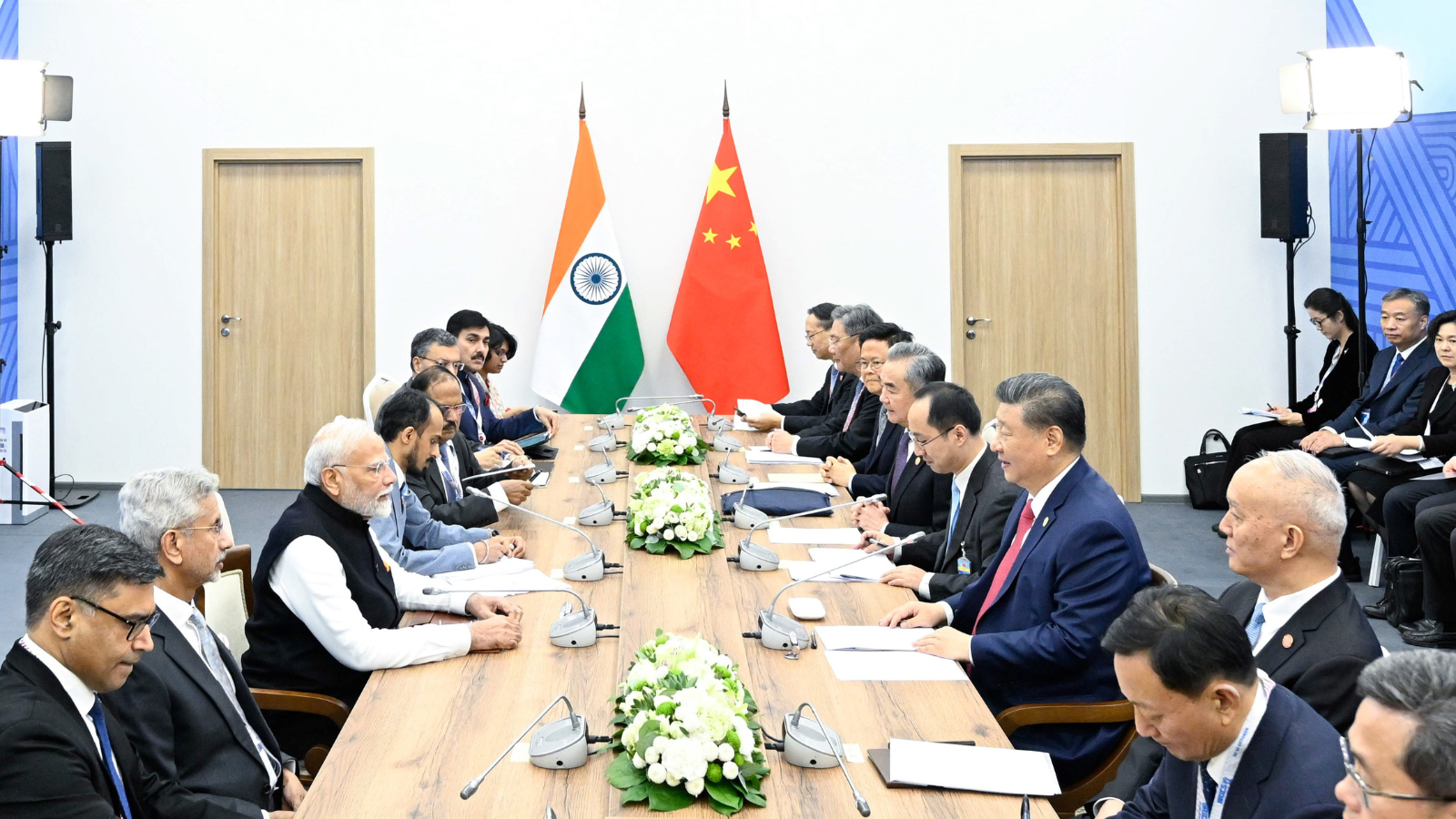
After the chill in ties between 2020 and 2024 that brought India–China relations to their lowest point in several decades, the two countries have engaged each other afresh. This paper argues that there are predominantly four imperatives guiding India’s approach to China, and they exist in an order of priority.
Saheb Singh Chadha