

Research
- +6
Yasmine Farouk, Nathan J. Brown, Maysaa Shuja Al-Deen, …
{
  "authors": [
    "Michele Dunne"
  ],
  "type": "legacyinthemedia",
  "centerAffiliationAll": "dc",
  "centers": [
    "Carnegie Endowment for International Peace"
  ],
  "collections": [],
  "englishNewsletterAll": "menaTransitions",
  "nonEnglishNewsletterAll": "",
  "primaryCenter": "Carnegie Endowment for International Peace",
  "programAffiliation": "MEP",
  "programs": [
    "Middle East"
  ],
  "projects": [],
  "regions": [
    "Middle East",
    "Israel",
    "North Africa",
    "Egypt"
  ],
  "topics": [
    "Security",
    "Military",
    "Foreign Policy"
  ]
}
Source: Getty
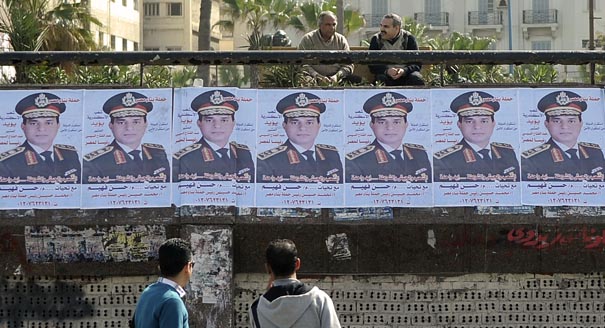
While military and intelligence cooperation between Israel and Egypt has become increasingly close, these ties don’t exist at the people-to-people level.
Source: Cipher Brief
In a surprising move last week, Egypt postponed a UN Security Council vote on a resolution it had proposed demanding an end to Israeli settlement building in the West Bank. Although the resolution eventually passed, the event provided another of example of the increasingly close cooperation between Egypt and Israel. The Cipher Brief sat down with Michele Dunne, Director of the Middle East Program at the Carnegie Endowment for International Peace, to discuss the current state of relations between Egypt and Israel.
Michele Dunne: Egyptian-Israeli military and intelligence cooperation has long been close. That continued during the presidency of Mohammed Morsi (2012-2013), and has grown even closer since the 2013 military coup. In June 2015, Sisi sent a new Egyptian ambassador to Tel Aviv; his predecessor had been withdrawn at the time of the Israel-Gaza war in 2012.
But although official relations have improved, that is not true at the people-to-people level or even in other parts of the government. In spring 2016, an Egyptian member of parliament was expelled from the assembly for hosting the Israeli ambassador at his home. Anti-Israel (and anti-American) material continues to appear in Egypt’s state-run media as well as privately owned media.
MD: Israel and Egypt share information about Sinai and Gaza, and Israel has allowed Egypt to increase its military presence in Sinai beyond what is strictly allowed under the 1979 peace treaty. There is some level of coordination about when and how Egypt opens its border with Gaza, as well as how to treat Hamas, although it seems the two sides do not always agree on such matters. In general, Israel would like Egypt to take more responsibility for Gaza, and Egypt resists. Other aspects of their military cooperation are secret; there are reports of Israeli operations in or over Sinai such as drone flights.
MD: There is not significant trade or tourism between the two countries at this point, due to Egyptian popular opposition to "normalization" with Israel and to terrorist threats against destinations once frequented by Israelis in the Sinai.
There are several Qualifying Industrial Zones (QIZs) in Egypt, where goods with Israeli inputs are produced and exported to the United States duty free. Egyptian exports of natural gas to Israel were disrupted after 2011, due to militant attacks on the pipeline as well as political controversies about the terms of the deal.
MD: Egypt could certainly benefit from Israeli technology in agriculture, education, and other areas, but there remains opposition from many Egyptians to such contacts.
MD: Egypt under former President Hosni Mubarak, and even under Morsi, played a useful mediating role between Israel and Palestinians as well as among different Palestinian factions. That has been much less the case under Sisi; his enmity with the Muslim Brotherhood has meant he can no longer play the same brokering role with Hamas. In any case, successive Egyptian leaders have been preoccupied with domestic problems for at least a decade now and have not played the sort of active regional role their predecessors once played.
MD: Probably more of the same: military and intelligence cooperation regarding Sinai (although not enough to end the insurgency there), some differences over how to handle Gaza and Hamas, correct diplomatic relations, and that is about it.
MD: All U.S. Administrations have wanted to foster Egyptian-Israeli cooperation and have used that objective to justify continued military assistance to Egypt. Ironically, the two parties got closer at the very time (2013-14) when the United States temporarily suspended military assistance due to the coup—which shows that the Egyptian-Israeli relationship has long since developed its own dynamic, and that what the United States does will not affect it significantly. This is likely to continue to be the case under President-elect Donald Trump.
This interview was originally published at the Cipher Brief.

Former Nonresident Scholar, Middle East Program
Michele Dunne was a nonresident scholar in Carnegie’s Middle East Program, where her research focuses on political and economic change in Arab countries, particularly Egypt, as well as U.S. policy in the Middle East.
Recent Work



Yasmine Farouk, Nathan J. Brown, Maysaa Shuja Al-Deen, …
Robert Springborg, Emile Hokayem, Becca Wasser, …
Carnegie India does not take institutional positions on public policy issues; the views represented herein are those of the author(s) and do not necessarily reflect the views of Carnegie, its staff, or its trustees.

In any defense establishment, change is an ongoing process. However, despite the best of intentions, existing bureaucracies, bound by habit and years of socialization, have their limits in implementing transformative change.

Anit Mukherjee

After the chill in ties between 2020 and 2024 that brought India–China relations to their lowest point in several decades, the two countries have engaged each other afresh. This paper argues that there are predominantly four imperatives guiding India’s approach to China, and they exist in an order of priority.

Saheb Singh Chadha

This piece argues that India’s central challenge is not managing a single flashpoint but resolving the underlying tension between expansion and institutional coherency of the BRICS grouping.

Vrinda Sahai

A partnership between India, a country of subcontinental size, and Africa, a continent of fifty-four countries, may seem asymmetric until one notes that both are home to nearly the same number of people—1.4 billion. This essay spells out the existing challenges to the partnership, its optimal potential, and the possible pathways to realize it over the next quarter-century.

Rajiv Bhatia

The India–EU Free Trade Agreement (FTA) is shaping up to be one of the most consequential trade negotiations, both economically and strategically. But, what’s in the agreement, what’s missing, and what will determine its success in the years ahead
Vrinda Sahai, Nicolas Köhler-Suzuki