

Article
C. Raja Mohan, Darshana M. Baruah
{
  "authors": [
    "C. Raja Mohan"
  ],
  "type": "legacyinthemedia",
  "centerAffiliationAll": "dc",
  "centers": [
    "Carnegie Endowment for International Peace",
    "Carnegie India"
  ],
  "collections": [],
  "englishNewsletterAll": "ctw",
  "nonEnglishNewsletterAll": "",
  "primaryCenter": "Carnegie India",
  "programAffiliation": "SAP",
  "programs": [
    "South Asia"
  ],
  "projects": [],
  "regions": [
    "Asia",
    "South Asia",
    "India",
    "East Asia",
    "China"
  ],
  "topics": [
    "Economy",
    "Foreign Policy",
    "Global Governance"
  ]
}
Source: Getty
As one of the world’s oldest civilizations whose comprehensive national power has rapidly risen, China has the right to play a leading role in shaping the global order. Beijing’s current unilateralism, however, is likely to limit China’s global possibilities.
Source: Indian Express
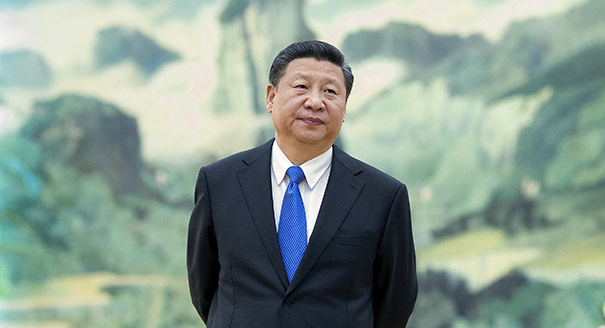
Gathering in the snowy Alps this week, the “Davos men” will cheer the first ever presence of a top Chinese leader in their midst. Shocked by the anti-globalist Donald Trump and surprised by the backlash against regional integration in Europe, they are ready to hail Xi Jinping as the saviour of global capitalism. On his part, Xi is eager to appropriate the language of globalisation. But Beijing might be some distance away from replacing Washington as the conductor of the global economic orchestra. Although China has vast amounts of money, it is constrained by the lack of sufficient economic openness, the capacity to impose political order and the hegemony over global public discourse. However, that is not stopping the ambitious Xi, who seems unafraid of reaching way beyond his grasp.
As China steps into the vacuum, India will have to confront a different problem. India has long been ambivalent about US-led globalisation. It has supported Beijing’s efforts to construct non-Western institutions in the name of Asian solidarity and global multipolarity. Yet, in the last few years, Delhi has found itself at the receiving end of China’s new clout in the multilateral arena, including at the United Nations, the Asian Development Bank, and the Nuclear Suppliers Group, to name a few. Given that experience, might Delhi want to jump from the frying pan of Western economic primacy to the fire of China-led globalisation?
But first to Davos and its men. Some years ago, the Harvard political scientist Samuel Huntington had pointed to the “denationalisation” of the American (and Western) elite that scoffed at the patriotism of common folk, their concern for the local and preached the virtues of international trade, unhindered migration and supra-national institutions that transcended territorial sovereignty.
Huntington also underlined the emergence of a super class of “Davos men” who have “little need for national loyalty, view national boundaries as obstacles that thankfully are vanishing, and see national governments as residues from the past whose only function is to facilitate the elite’s global operations.” These trends have clearly matured in 2016 as Trump made relentless attacks on the “false song of globalism” and emphasised the slogan of “America First”.
The British prime minister, Theresa May, who took charge of the nation after Brexit, warned last October that “too many people in positions of power behave as though they have more in common with international elites than with the people down the road. But if you believe you’re a citizen of the world, you’re a citizen of nowhere, you don’t understand what the very word ‘citizenship’ means.”
As Britain renegotiates its economic relationship with the European Union, Trump threatens to tear up the free trade agreements that his predecessors had signed or negotiated and is putting pressure on US companies to stop outsourcing production and insourcing labour to ensure jobs remain in America. With Trump showing no signs of moderating his campaign rhetoric opposing globalisation, Xi has seen an opportunity for China in Davos.
In a preview of his speech, Chinese officials said Xi will talk of “inclusive globalisation” and present himself as the “new torch bearer of free trade” and “champion of global governance”. While many in Europe and America might raise a toast for Xi, not all Asians would be impressed with the Chinese rhetoric. Beijing’s Asian neighbours have watched in consternation China’s contemptuous rejection of an international tribunal’s award on the South China Sea dispute last year. China’s muscular nationalism stands in contrast to Xi’s cosmopolitan claims at Davos.
Xi’s promise in Davos, that China’s globalisation would be more equitable and inclusive is negated by popular opposition in many countries, including in Burma and Sri Lanka, to the terms of China’s investments. Two of China’s large Asian neighbours, India and Japan, are yet to endorse Xi Jinping’s massive One Belt One Road project. Although neither can stop the march of the OBOR, they have signalled the intent to contest China-led regional integration.
Making matters complicated for Xi is the new bonhomie between Putin’s Russia and Trump’s America at precisely the moment that the US president-elect promises to challenge China’s economic and regional policies. Although Russia can’t shape the global economic framework, it has the capacity to undermine the regional political order in Eurasia. Putin does not see himself in permanent wedlock with Beijing; if he has surprised the West by dividing Europe, he could trip up China in Asia.
A China that is yet to pacify its own neighbourhood will find it hard to shape global governance. China’s dramatic rise over the last three decades has been founded upon a cooperative relationship with America and avoiding conflict with its Asian neighbours. In abandoning the great Deng Xiaoping’s legacy of pragmatism, the current leadership in Beijing may have underestimated the potential push back from America and Asia. As one of the world’s oldest civilisations whose comprehensive national power has rapidly risen, China has the right to play a leading role in shaping the global order. Beijing’s current unilateralism, however, is likely to limit China’s global possibilities.
This article was originally published in the Indian Express.
Former Nonresident Senior Fellow, Carnegie India
A leading analyst of India’s foreign policy, Mohan is also an expert on South Asian security, great-power relations in Asia, and arms control.
Recent Work

C. Raja Mohan, Darshana M. Baruah


Alexander Gabuev, Paul Haenle, C. Raja Mohan, …
Carnegie India does not take institutional positions on public policy issues; the views represented herein are those of the author(s) and do not necessarily reflect the views of Carnegie, its staff, or its trustees.
In any defense establishment, change is an ongoing process. However, despite the best of intentions, existing bureaucracies, bound by habit and years of socialization, have their limits in implementing transformative change.
Anit Mukherjee
As AI grows more sophisticated, as the supply chains that power it become more contested, and as access to frontier models becomes geopolitically charged, India must begin to ask a different set of questions. Not what applications it can build on someone else’s infrastructure but what the world needs.
Konark Bhandari

The Indian Ocean Region hosts one of the densest concentrations of subsea cables in the world. Yet, despite accounting for a significant share of global internet traffic, India’s participation remains limited.

Charukeshi Bhatt

How is AI reshaping space security, creating governance challenges, and where does international diplomacy stand today?


Tejas Bharadwaj, Almudena Azcárate Ortega
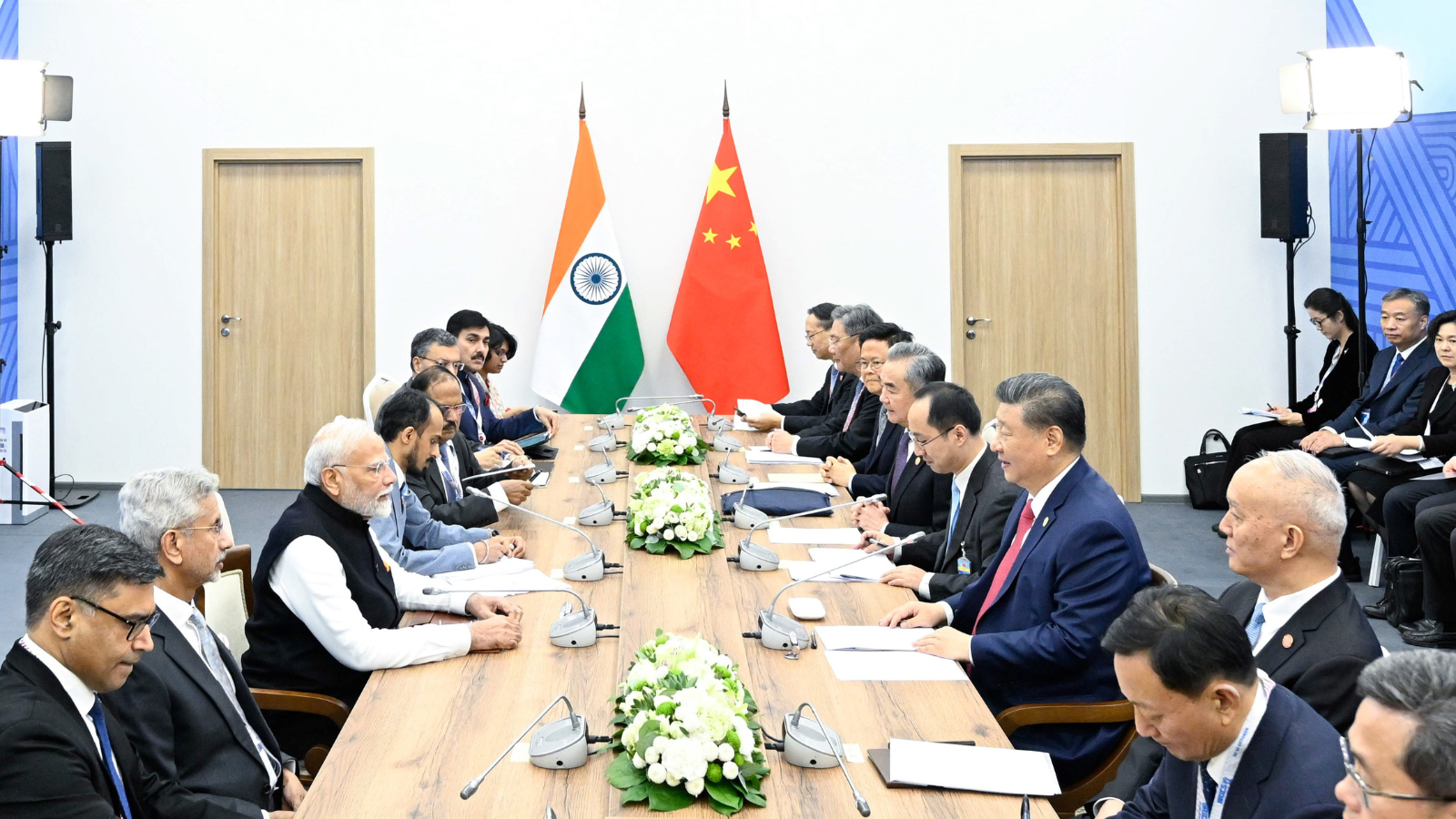
After the chill in ties between 2020 and 2024 that brought India–China relations to their lowest point in several decades, the two countries have engaged each other afresh. This paper argues that there are predominantly four imperatives guiding India’s approach to China, and they exist in an order of priority.
Saheb Singh Chadha