

Commentary
Asia’s two largest nuclear powers have never threatened each other with nuclear weapons. How much will the recent deadly border clashes between China and India change the security landscape?
Toby Dalton, Tong Zhao, Rukmani Gupta
{
  "authors": [
    "Ulrich Kühn",
    "Sergi Kapanadze",
    "Wolfgang Richter",
    "Wolfgang Zellner",
    "Ulrich Kühn"
  ],
  "type": "other",
  "centerAffiliationAll": "dc",
  "centers": [
    "Carnegie Endowment for International Peace"
  ],
  "collections": [],
  "englishNewsletterAll": "ctw",
  "nonEnglishNewsletterAll": "",
  "primaryCenter": "Carnegie Endowment for International Peace",
  "programAffiliation": "NPP",
  "programs": [
    "Nuclear Policy"
  ],
  "projects": [],
  "regions": [
    "Caucasus",
    "Georgia"
  ],
  "topics": [
    "Nuclear Policy"
  ]
}
Source: Getty
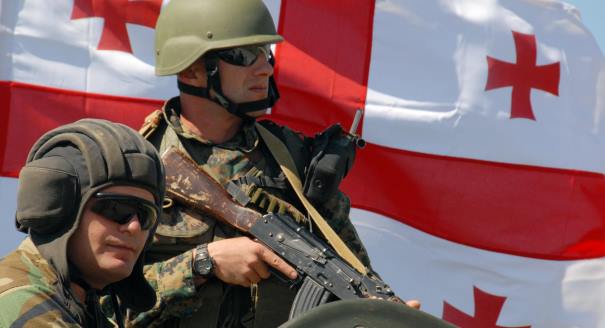
Territorial conflicts in Southeastern Europe have hampered the implementation of international agreements on arms control and confidence- and security-building measures (CSBMs) in disputed territories under the effective control of de facto regimes.
Source: Institute for Peace Research and Security Policy Hamburg
1. Territorial conflicts in Southeastern Europe have hampered the implementation of international agreements on arms control and confidence- and security-building measures (CSBMs) in disputed territories under the effective control of de facto regimes. These grey areas have resulted in uncertainties about the capabilities and activities of irregular and stationed forces, produced unchecked risk perceptions and aggravated sub-regional instability and insecurity.
2. At the same time, disputes over the status of de facto regimes and host nation consent for the stationing of foreign forces in disputed territories have also obstructed the development of all-European arms control mechanisms and produced spillover effects detrimental to security and stability.
3. There is no unified opinion in international law about the position of de facto regimes. In ceasefire agreements and informal talks, de facto regimes are sometimes referred to as “parties to the conflict”, with limited rights and obligations. It is an incontrovertible fact that, in the absence of international recognition, only recognized central governments are entitled to carry out state functions in international relations and to exercise the rights and fulfil the obligations of States Parties to international agreements, such as arms control treaties and CSBMs. However, de facto regimes can also be included in agreements if there is the political will to do so.
4. De facto regimes categorically reject central governments’ claims to implementing these rights in territories under their actual control, such as acting as the host state for observations of or collecting and distributing data on armaments, which are subject to international information exchanges or limitations and are held by irregular forces. De facto regimes either want to exercise such rights themselves or deny that the disputed territories belong to the area of application of arms control and CSBM agreements.
5. Third states that have not recognized de facto regimes are not permitted by international law to neglect the positions of central governments seeking to implement such agreements in disputed territories, even if de facto regimes do not object to inspections on the spot. Thus, third states are not allowed to elevate their status by agreeing to procedures that would cede to their representatives state functions, such as the rights of a “host state” (e.g. determining the points of entry/exit, providing escort teams, signing inspection reports etc.).
6. Consequently, state-centric CSBMs can be implemented in disputed territories only if all sides involved are prepared to make compromises that value transparency and stability more highly than status-related positions. In practice, almost all attempts to bring about a compromise on mutually acceptable procedures have failed.
7. The recognition by certain states of the independence of breakaway regions and their claim that de facto regimes have provided “host nation consent” to the stationing of forces in such territories have complicated the situation. By contrast, central governments of internationally recognized states categorically reject this interpretation and regard stationing in disputed territories as unlawful occupation in violation of their sovereignty and territorial integrity.
8. Ceasefire agreements usually have only limited transparency and limitation provisions, which are mainly confined to small, partially demilitarized, “security zones” or “restricted weapon zones”. However, wider geographical areas, which are relevant to transparency and the restraint of military capabilities and activities in the sub-region, remain unrestricted and inaccessible. In the case of Abkhazia and South Ossetia, the EU Monitoring Mission (EUMM) has access only to areas controlled by the Georgian government adjoining the two breakaway regions.
9. Against this background, status-neutral arms control and CSBMs aim at enhancing sub-regional security in and around disputed territories and creating a peaceful and stable environment for talks without detriment to status-related positions of principle by parties involved and without pre-empting the outcome of conflict settlement processes, which will ultimately define the eventual political status of such territories.
10. To that end, status-neutral arms control and CSBMs avoid any procedures and terms that could be interpreted as providing political status, such as references to state functions or rights and obligations reserved for states (“inspecting”/“inspected state”, “host state”, official titles of persons, “borders” or contested geographical names of disputed territories, etc.).
11. Consequently, status-neutral arms control and CSBMs should be formulated beyond the existing framework of state-related international agreements. This requires facilitation by an impartial third party that is trusted by both sides, such as a neutral state, an international organization or a private enterprise. In such a framework, status-bound functions and personnel would be replaced by status-neutral functions and personnel.
12. Status-neutral arms control and CSBMs should provide for information, observation and, as far as possible, limitation of certain military capabilities and activities, particularly in areas close to the Lines of Contact. In such areas, reciprocity of rights and obligations may be an indispensable condition for an agreement, provided it can be attained without compromising government positions that reject equality vis-à-vis breakaway regions. At the same time, both sides may see the value of increasing trust and stability and, thus, enhancing security in a fragile political environment without relinquishing status-related positions of principle.
13. To ensure smooth implementation, avoid misunderstandings and prevent escalation, the establishment of an impartial coordination and conflict resolution mechanism is advisable. It can be linked to existing informal formats geared to enhancing the implementation of ceasefire agreements or other relevant mechanisms to prevent and respond to incidents.
14. This paper discusses the limitations of existing international arms control and CSBM agreements and outlines, in considerable detail, a status-neutral approach towards increasing security and stability in and around disputed territories. An illustrative example of how such an approach could be modelled is given in the annex.
Read the full report here.

Former Nonresident Scholar, Nuclear Policy Program
Ulrich Kühn was a nonresident scholar at the Carnegie Endowment for International Peace, and the head of the arms control and emerging technologies program at the Institute for Peace Research and Security Policy at the University of Hamburg.
Sergi Kapanadze
Wolfgang Richter
Wolfgang Zellner
Former Nonresident Scholar, Nuclear Policy Program
Ulrich Kühn was a nonresident scholar at the Carnegie Endowment for International Peace, and the head of the arms control and emerging technologies program at the Institute for Peace Research and Security Policy at the University of Hamburg.
Carnegie India does not take institutional positions on public policy issues; the views represented herein are those of the author(s) and do not necessarily reflect the views of Carnegie, its staff, or its trustees.
Asia’s two largest nuclear powers have never threatened each other with nuclear weapons. How much will the recent deadly border clashes between China and India change the security landscape?


Toby Dalton, Tong Zhao, Rukmani Gupta
Pitched as a new Silk Road sweeping from Asia to Europe, China’s enormous Belt and Road Initiative is an ambitious, multinational infrastructure project. Experts from four Carnegie global centers explain other countries’ perspectives.


Paul Haenle, Dmitri Trenin, Alexander Gabuev, …
In the course of one morning in Singapore, U.S. President Donald Trump and the North Korean leader Kim Jong-un have begun to loosen a deeply entrenched and hostile relationship.
C. Raja Mohan
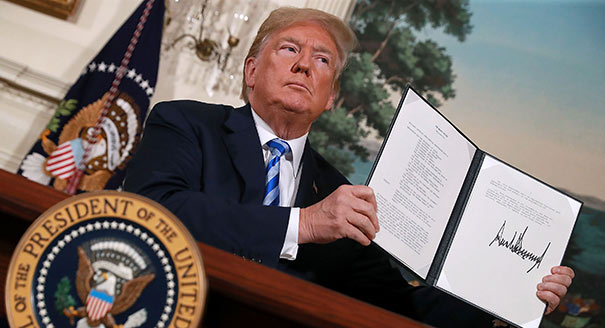
U.S. President Donald Trump’s decision to pull out of the Iran nuclear deal appears to have put regime change at the very center of the new American power play against Tehran.
C. Raja Mohan
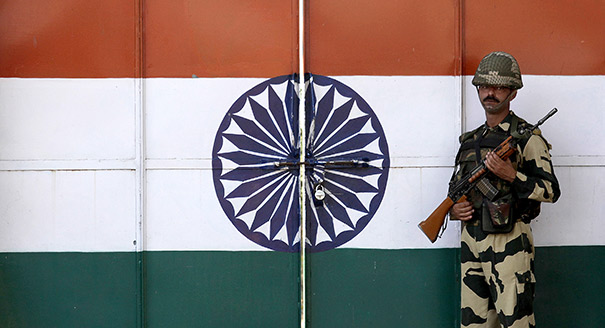
The South Asian stalemate is likely to endure even as South and North Korea appear poised to turn the page.
C. Raja Mohan