

Research
- +6
Yasmine Farouk, Nathan J. Brown, Maysaa Shuja Al-Deen, …
{
  "authors": [
    "Anouar Boukhars"
  ],
  "type": "legacyinthemedia",
  "centerAffiliationAll": "dc",
  "centers": [
    "Carnegie Endowment for International Peace"
  ],
  "collections": [],
  "englishNewsletterAll": "menaTransitions",
  "nonEnglishNewsletterAll": "",
  "primaryCenter": "Carnegie Endowment for International Peace",
  "programAffiliation": "MEP",
  "programs": [
    "Middle East"
  ],
  "projects": [],
  "regions": [
    "North Africa"
  ],
  "topics": [
    "Democracy",
    "Security",
    "Military"
  ]
}
Source: Getty
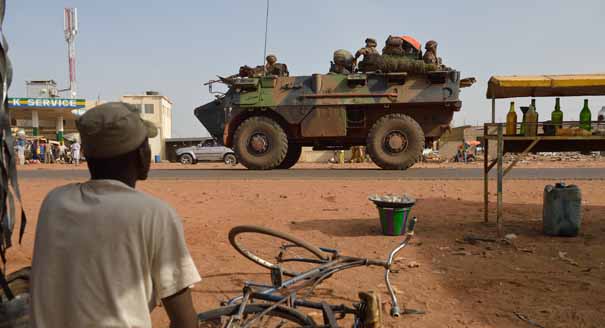
The need for a more cooperative regional context in the Sahel and West Africa has never been as pressing, but in order for key players to harness their catalytic power, the region’s leaders must do better domestically.
Source: World Politics Review
Crises and upheaval in the Sahel and West Africa have altered the regional security terrain. Challenges that were once disparate and manageable are increasingly becoming intertwined and more pronounced. With the growing mobility of conflicts, the need for a more cooperative regional context has never been as pressing. Each country in the region has a stake in improving stability, and collectively they have the capacity to tackle the threats to peace and security—but first, they each must overcome a host of domestic obstacles.
The influence of four countries in particular—Morocco, Algeria, Chad and Nigeria—is a central fact of geopolitics in West Africa and the Sahel. For good or ill, their domestic structures, power capabilities, threat perceptions and strategic outlooks illustrate the potentials and pitfalls of their roles in boosting regional security and cooperation. When they fall into hard times—political stasis, economic turmoil or internal violence—their neighbors bear the brunt of their difficulties.Nigeria and Algeria are examples of regional powers that perform well below their potential; Chad, by contrast, is a single-dimensional military power that punches well above its weight. Despite significant governance and developmental deficits, Chad has emerged as a critical player in the fight against violent extremism. And of the four powers, Morocco has demonstrated the centrality of soft power as a complement to hard power—in strengthening both counterterrorism measures and regional cohesion more broadly...
Former Nonresident Fellow, Middle East Program
Boukhars was a nonresident fellow in Carnegie’s Middle East Program. He is a professor of countering violent extremism and counter-terrorism at the Africa Center for Strategic Studies, National Defense University.
Recent Work



Yasmine Farouk, Nathan J. Brown, Maysaa Shuja Al-Deen, …

Frederic Wehrey, Nathan J. Brown, Bader Al-Saif, …
Carnegie India does not take institutional positions on public policy issues; the views represented herein are those of the author(s) and do not necessarily reflect the views of Carnegie, its staff, or its trustees.

In any defense establishment, change is an ongoing process. However, despite the best of intentions, existing bureaucracies, bound by habit and years of socialization, have their limits in implementing transformative change.

Anit Mukherjee

After the chill in ties between 2020 and 2024 that brought India–China relations to their lowest point in several decades, the two countries have engaged each other afresh. This paper argues that there are predominantly four imperatives guiding India’s approach to China, and they exist in an order of priority.

Saheb Singh Chadha

A partnership between India, a country of subcontinental size, and Africa, a continent of fifty-four countries, may seem asymmetric until one notes that both are home to nearly the same number of people—1.4 billion. This essay spells out the existing challenges to the partnership, its optimal potential, and the possible pathways to realize it over the next quarter-century.

Rajiv Bhatia
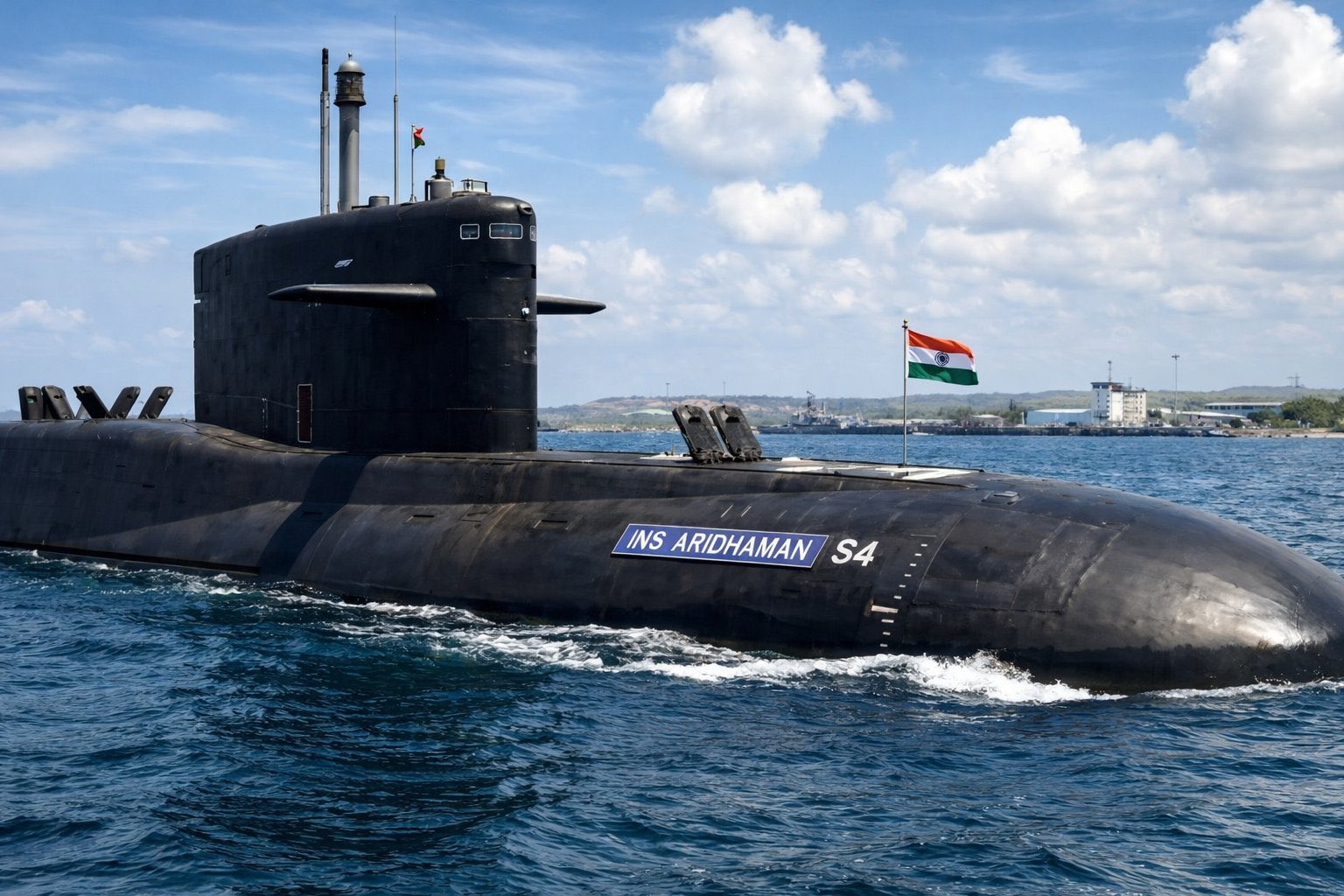
The induction of INS Aridhaman, which features several technological enhancements, now gives India the third nuclear ballistic missile submarine to ensure continuous at-sea deterrent.

Dinakar Peri

This piece argues that the present Indian strategy, based on opportunistic diversification and utilization of limited strategic reserves, remains inadequate when confronting supply disruptions. It evaluates India’s options in the short, medium, and long terms.

Vrinda Sahai