

Commentary
Andrey Pertsev
{
  "authors": [
    "Andrey Pertsev"
  ],
  "type": "commentary",
  "centerAffiliationAll": "",
  "centers": [
    "Carnegie Endowment for International Peace",
    "Carnegie Russia Eurasia Center"
  ],
  "collections": [
    "Inside Russia"
  ],
  "englishNewsletterAll": "",
  "nonEnglishNewsletterAll": "",
  "primaryCenter": "Carnegie Russia Eurasia Center",
  "programAffiliation": "",
  "programs": [],
  "projects": [],
  "regions": [],
  "topics": [
    "Economy"
  ]
}
Source: Getty
The Kremlin may refrain from curbing ultraconservative activism and Kadyrov’s insurgence because it is afraid of losing popular support. But perhaps more likely is that the regime fears engaging its supporters, as they may prove to be more powerful. The growing strength of radical actors has collided with an impotent regime and generated demand for an alternative force, creating an opening for the opposition.
Recent rallies held by Alexei Navalny have shown the unthinkable: that a Russian politician can draw crowds of thousands without the helping hand of the Kremlin or any true catalyst. Navalny’s campaign tour across Russia has been a striking success, despite his ineligibility for the office of president. From Murmansk to Yekaterinburg to Omsk—none particularly known for their political activity—droves have turned out to hear the opposition leader speak. Navalny’s tour has demonstrated to the Putin regime and the Russian public his growing political strength.
Navalny is not the only figure in Russian politics to show strength through numbers. Demonstrations of force—mainly in the form of street activism—are increasingly prevalent as the Kremlin’s grip on the opposition has weakened. The regime no longer has the loudest voice or the final say in politics. Other ambitious and autonomous players have emerged, including Chechen leader Ramzan Kadyrov and the ultraconservatives represented by Duma member Natalya Poklonskaya.
Ultraconservatives have few qualms about violent protest. This was made explicit by their reaction to Alexei Uchitel’s new film Matilda, when they took to burning cars and threatening to escalate to movie theaters. The regime’s proxies—Putin’s press secretary Dmitry Peskov, Culture Minister Vladimir Medinsky, and Duma members—have fallen on the side of Uchitel, condemning violent activism and arresting the most extreme members of the movement. Yet ultraconservatives haven’t been cowed. Poklonskaya’s rhetoric continues, and many movie theaters refuse to show the film and play with the fire that may ensue.
The authorities were equally stymied by rallies in support of Myanmar’s Rohingya Muslims in Moscow and Grozny. When a protester in front of Myanmar’s embassy was captured on film with a gun proudly displayed, the takeaway for the opposition was clear: the authorities defer to force and violence. Ramzan Kadyrov and a number of Russian Muslims have come out in opposition to Moscow on the Rohingya issue, which finds Russia siding with China and, by proxy, the government of Myanmar. Kadyrov will support the Russian regime as long as its behavior is in line with his convictions. The point of divergence could spell trouble for the Kremlin.
The Kremlin’s strength has long rested in its ability to manage the polyphonic Putin majority. It has done so by adjusting its message to appeal to different factions, losing an identity of its own in the process. Kremlin watchers could discern where the regime stood by analyzing the messages coming from Moscow. The regime has ceased to be an effective conductor of its orchestra, and with the breakdown of its ability to manage its supporters, cracks in the Kremlin have begun to show.
The heightened activism of the radical fringe groups was the first sign of the regime’s weakness. The center could no longer keep opposition elements within the accepted framework, and once free, radicals began to express their views. Players like Ramzan Kadyrov and Natalya Poklonskaya occupy an uneasy ground between the regime and the fringes, restricted from upward mobility in Putin’s power structure but newly emboldened to incite radical activism.
Did Poklonskaya or Kadyrov set out to expose the Kremlin’s weakness? No. On the contrary, they picked fights with the regime to showcase their own strength and ability to push back against dictates from on high. But the state has faltered in its response to insubordination among its ranks, causing the provocateurs to doubt their leader.
What will be the fates of the insurgent figures who revealed the Kremlin’s weakness? Some posit that Moscow can’t replace the current Chechen leadership without provoking another war in the Caucasus. Yet Kadyrov’s statements last year, before his term was set to expire, indicate that he feels deep uncertainty about his position. A significant number of military and security officials have come out against him, and there are other candidates lining up to fill his post.
Conversely, there are no notable social groups behind Natalya Poklonskaya. Putin à la 2007 would have had little trouble restoring the status quo by putting Poklonskaya back in her place, but Putin à la 2017 finds himself unable to do so. As the Kremlin no longer understands what forces are at play in Russia, cracking down on any one group poses a danger. What if those that take to the streets (Navalny, Kadyrov, and ultraconservatives) are indeed the majority?
It would be erroneous to suggest that the regime is now weaker than its radical supporters. It can still resort to force and call the rebels to order, and it still controls the mechanisms of power—but it has lost its nerve to act decisively. The radicals, on the other hand, firmly believe they are in the right and are prepared to fight for those beliefs.
The most ardent supporters of the regime have inflicted more damage upon it than its opponents. In the process, moderate supporters—who value stability and order above all—have realized that the authorities can no longer protect them from the radicals. As the opposition gains strength and numbers, it could become more attractive to stability-seeking moderates.
Ultimately, the order that the majority craves is out of sight. The growing strength of radical actors has collided with an impotent regime and generated demand for an alternative force, creating an opening for the opposition. The Kremlin cannot afford to lose popular support, and thus may refrain from curbing Kadyrov and ultraconservative activism. More troubling for the regime is that it fears engaging its supporters, for they may prove more powerful.

Andrey Pertsev is a journalist with Meduza website.
Recent Work
Andrey Pertsev
Andrey Pertsev
Carnegie India does not take institutional positions on public policy issues; the views represented herein are those of the author(s) and do not necessarily reflect the views of Carnegie, its staff, or its trustees.

On March 10, 2026, India’s Union Cabinet approved amendments to Press Note 3, a regulation that mandated government approval on all foreign direct investment (FDI) from countries sharing a land border with India. This amendment raises questions primarily about whether its stated benefits will materialize and if the risks have been adequately weighed. This piece will address the same.

Konark Bhandari

This piece examines India’s response to U.S. sanctions and tariffs, specifically assessing the immediate market consequences, such as alterations in import costs, and the broader strategic implications for India’s energy security and foreign policy orientation.

Vrinda Sahai

This paper examines the evolution of India-China economic ties from 2005 to 2025. It explores the impact of global events, bilateral political ties, and domestic policies on distinct spheres of the economic relationship.

Santosh Pai
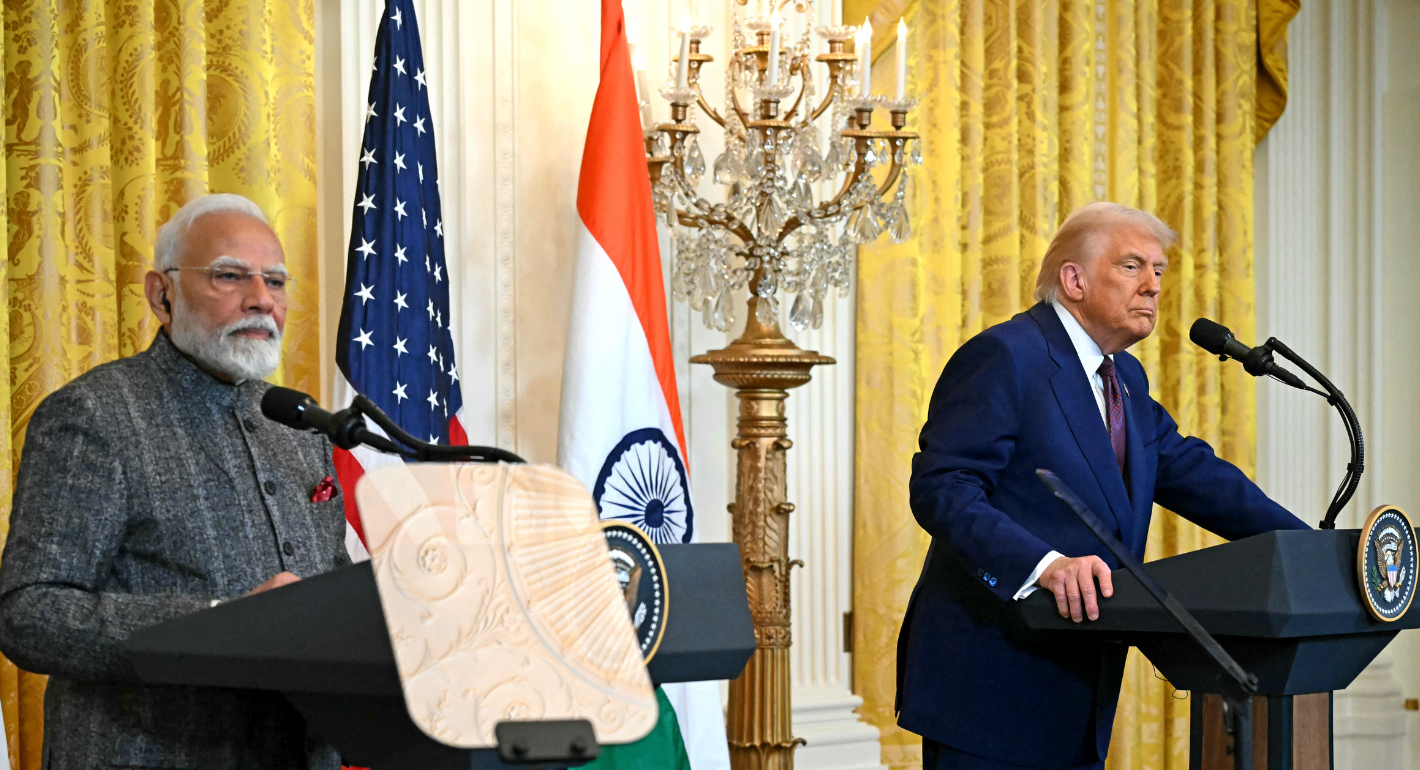
The India-U.S. relationship currently appears buffeted between three “Ts”—TRUST, Tariffs, and Trump.
Arun K. Singh
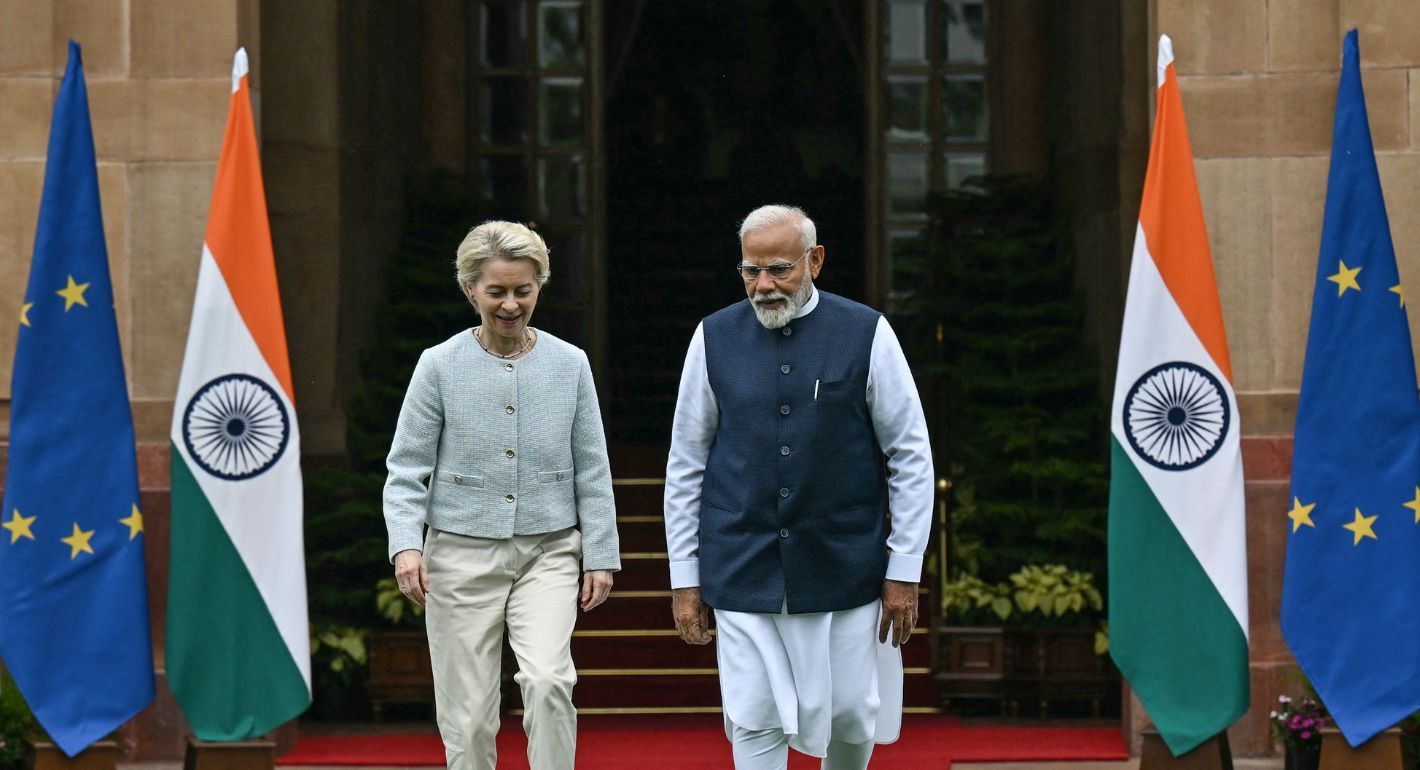
This article argues that the geopolitical circumstances have never been more conducive, not merely for the early conclusion of the free trade agreement (FTA) between India and the EU, but also for crafting a substantive and comprehensive strategic partnership.
Mohan Kumar